Middle East Shipping Squeezed at Both Chokepoints as Houthis Tighten Red Sea Grip and Hormuz Attacks Continue
🔔 Subscribe to ShipUniverse Weekly →
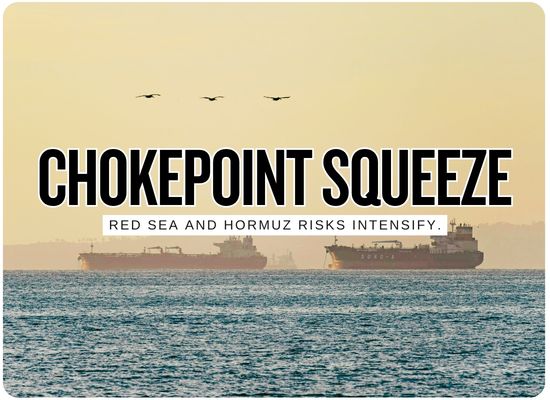
Yemen's Houthis have expanded their physical presence around the southern Red Sea after seizing the port of Mokha, Mayun Island inside the Bab el-Mandeb Strait and, most recently, Greater and Lesser Hanish islands. Commercial traffic through Bab el-Mandeb has not stopped, with 24 commodity vessels recorded Saturday and 27 Sunday, roughly matching the recent 10-day average, but the advances place additional Houthi-controlled positions around a waterway the group has declared closed to Saudi-linked shipping. At the opposite end of the Arabian Peninsula, Strait of Hormuz traffic remains sharply depressed and commercial vessels continue to be struck: UKMTO reported a vessel hit by an unknown projectile over the weekend, followed by a fire and crew evacuation, after several other attacks and military-related incidents earlier in September. The pressure intensified after attacks forced Saudi Arabia to shut its East-West Pipeline, which had been moving roughly 4 million barrels per day to Yanbu as a bypass around Hormuz
Two-Chokepoint Shipping Squeeze
Houthi territorial gains are increasing pressure around Bab el-Mandeb while vessel attacks and sharply reduced commercial traffic continue around the Strait of Hormuz.
Recent captures have expanded the group's physical presence around the southern Red Sea and Bab el-Mandeb approaches.
Preliminary tracking showed traffic below the recent 10-day average of 14 commodity vessels per day.
UKMTO reported a vessel struck while transiting the strait. Local authorities later evacuated the crew.
Weekend traffic remained close to the recent 10-day average of approximately 27 vessels.
Saudi Arabia's East-West Pipeline was shut after multiple attacks, removing a major alternative to Gulf export routes.
Middle East Maritime Pressure Board
The current disruption is no longer concentrated in one waterway. Commercial shipping is dealing with separate but connected pressure around Hormuz, Bab el-Mandeb and Saudi Arabia's overland bypass to the Red Sea.
| Route / System | Status | Latest Development | Traffic / Volume | Vessel Exposure | Commercial Effect |
|---|---|---|---|---|---|
| Strait of Hormuz | HIGH DISRUPTION Single-Digit Daily Traffic | A commercial vessel was struck by an unknown projectile during the weekend, followed by a fire and crew evacuation. Multiple additional vessel incidents were reported by UKMTO during the preceding two weeks. | Four tracked commodity vessels exited and 10 entered over the weekend. Daily movements remained below the 10-day average of approximately 14. | Tankers, bulk carriers, gas carriers and other commercial vessels remain exposed to military action, unidentified projectiles and reduced freedom of movement. | Before the February war, roughly 125 large commercial ships crossed daily and the strait handled flows associated with about 20% of global crude oil and LNG supply. |
| Bab el-Mandeb | STRATEGIC PRESSURE Traffic Still Flowing | Houthi forces have taken Mokha, Mayun Island inside the strait and the Greater and Lesser Hanish islands farther north in the Red Sea. | Tracking data showed 24 commodity ships Saturday and 27 Sunday, close to the recent average of about 27 per day. | The Houthis have declared a maritime blockade against Saudi Arabia and have attacked Saudi-linked shipping and oil infrastructure. | Bab el-Mandeb has become more important to Saudi exports because Hormuz remains severely disrupted, concentrating additional energy traffic around the Red Sea corridor. |
| Saudi-Linked Red Sea Shipping | TARGETED Blockade Since July 20 | Houthi forces announced a maritime embargo against Saudi Arabia in July and subsequently began attacking Saudi-linked vessels and infrastructure. | Red Sea traffic remains materially below historical levels even though the immediate Bab el-Mandeb flow continues. | The August 11 attack on cargo ship Tihamah near Bab el-Mandeb killed four crew members and two rescuers. | Saudi-linked tonnage has faced additional routing, security and insurance complications while some international vessels continue using the corridor. |
| Saudi East-West Pipeline | OFFLINE Hormuz Bypass Interrupted | Saudi Arabia shut the 1,200-km pipeline as a precaution following multiple attacks in the Riyadh and Madinah regions. | The line had been rerouting approximately 4 million barrels per day from eastern Saudi fields toward the Red Sea port of Yanbu. | The pipeline itself is an energy-infrastructure target rather than a maritime asset, but its outage directly reduces the volume that can avoid Hormuz. | Industry sources estimated Yanbu had enough export-ready oil stocks for roughly five to seven days without resumed pipeline flows. |
| Long-Distance Tanker Routing | COST PRESSURE Record Tanker Rates | Longer routing, military risk and bunker availability have tightened the tanker market as owners and charterers work around Middle East disruptions. | Reuters reported record tanker freight rates last week and shortages of bunker fuel in parts of the market. | Rerouting can shift exposure away from one chokepoint while substantially increasing voyage distance, vessel employment and fuel consumption. | For some Red Sea-origin tanker movements to Asian markets, the long fallback route can add approximately 22 days. |
Middle East Reroute & Delay Cost Analyzer
Estimate the additional vessel time, fuel and war-risk cost created by a Middle East chokepoint disruption or extended rerouting scenario.
We welcome your feedback, suggestions, corrections, and ideas for enhancements.
Please click here to get in touch