
🔔 Subscribe to ShipUniverse Weekly →
AI agents are moving from dashboards into the daily shipping desk
The shift is simple: older maritime software recommended actions. Agentic software starts handling the coordination around those actions. Voyage plans, master emails, bunker checks, emissions updates and port-change alerts are the first targets because they are repetitive, data-heavy and still require human approval.
The automation target is coordination, not command
The first fleet agents will not run shipping companies by themselves. They will remove the slow middle layer: copying data between systems, checking exceptions, drafting messages, updating voyage plans and reminding people when the plan has changed.
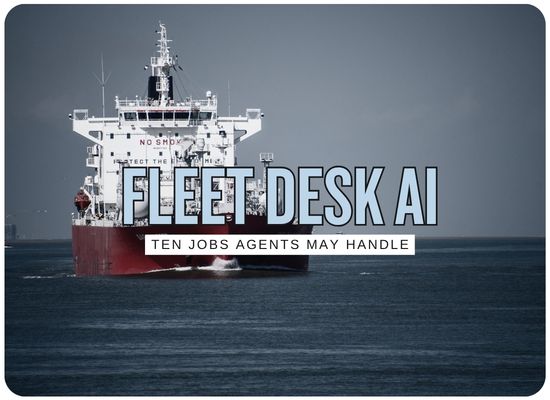
The first work AI agents could automate
Voyage plan drafting
Build the first plan from vessel data, weather, route limits, ETA target, speed range and charter-party constraints.
Master communication loops
Draft voyage recommendations, receive feedback, update the plan and flag disagreements for the operator.
Weather re-optimization alerts
Watch forecast changes and trigger route, speed or ETA updates before the vessel burns fuel correcting late.
Noon report validation
Check position, ROB, speed, fuel use, weather, draft and ETA against expected ranges before bad data spreads.
Bunker planning checks
Flag ROB risk, next-port availability, price exposure, grade constraints and whether the plan still covers margin.
Port call update handling
Track berth windows, agent messages, arrival changes, NOR timing and knock-on effects across the voyage.
Emissions compliance prep
Pre-check EU ETS, FuelEU, CII, fuel records and voyage emissions before month-end reporting pressure hits.
Exception triage
Rank which vessels need attention: late ETA, high fuel burn, weather deviation, ROB issue or missing report.
Vendor and agent follow-ups
Draft routine reminders for agents, bunker suppliers, weather vendors, superintendents and vessel teams.
Voyage closeout packets
Assemble the final operating record: route, fuel, weather, delay notes, emissions, claims support and lessons learned.
The first winners are repetitive, auditable and already digital
| Desk task | Agent role | Human role | Automation fit | Main risk | Buyer proof |
|---|---|---|---|---|---|
| Voyage plan drafting | Create first plan and update options | Approve, reject or modify | Very high | Bad assumptions | Plan quality and acceptance rate |
| Master communication | Draft, send within limits, track reply | Handle disagreement or safety issue | Very high | Wrong tone or unclear authority | Full message audit trail |
| Noon report validation | Check outliers and missing fields | Resolve exceptions | Very high | False confidence in bad data | Error rate before and after |
| Bunker management | Flag ROB, price and port risk | Make purchase decision | High | Commercial exposure | Missed-risk reduction |
| Port call updates | Track changes and notify parties | Negotiate and decide | High | Bad source data | Fewer missed updates |
| Claims and closeout | Assemble evidence packet | Legal and commercial review | Selective | Disputed wording | Source-linked packet |
Fleet Desk Agent Readiness Scorecard
Use this quick screen to decide whether a fleet operations process is ready for AI-agent automation.
Ask for controls before autonomy
| Requirement | Reason | Weak answer | Strong answer | Priority |
|---|---|---|---|---|
| Action limits | Agent must know what it can and cannot do | Operator remains in control | Clear permission levels by task, vessel and dollar impact | Very high |
| Source traceability | Every recommendation needs evidence | AI explains itself | Each action links back to weather, AIS, noon, fuel, contract or email source | Very high |
| Approval workflow | Human judgment stays central | Review before final action | Named approver, timeout rule, escalation and override log | Very high |
| Data validation | Bad data makes confident mistakes | Uses trusted data | Outlier checks, missing-data flags and confidence score before action | High |
| Integration map | Agents need clean system access | API-ready | Voyage, bunker, vessel, email, weather, AIS and emissions systems mapped | High |
| Failure mode | Desk must know when the agent is wrong or silent | Alerts users | Fallback process, missed-alert rule and manual recovery workflow | High |
AI agents will automate the coordination layer first: plans, checks, updates, reminders, drafts and exception queues. The desks that benefit earliest will already have clean voyage data, clear approval rules and enough repetitive work to justify integration.
We welcome your feedback, suggestions, corrections, and ideas for enhancements.
Please click here to get in touch