
🔔 Subscribe to ShipUniverse Weekly →
Inside the digital warship
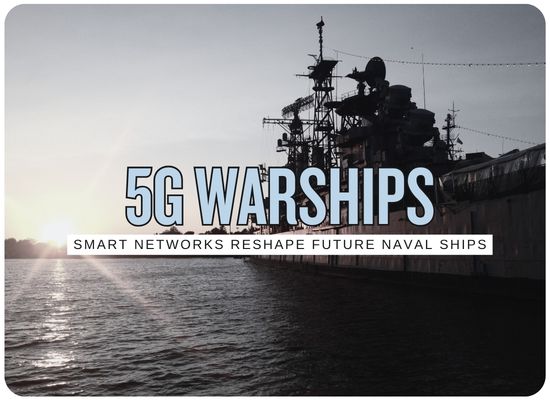
Spend enough time around ship programs and one lesson keeps coming back: the headline weapon is rarely the whole story. South Korea’s KDDX is being sold as a next-generation destroyer, but the real shift is underneath the deck plates: 5G connectivity, electric power, digital twins, sensors, cybersecurity and automation all tied into one fighting platform.
The data in 30 seconds
Six-ship KDDX destroyer program moving into detailed design and lead-ship construction.
Target delivery year for the first KDDX to the Republic of Korea Navy.
High-bandwidth onboard communications environment planned across the ship.
Integrated electric propulsion supports lower acoustic signature and future high-power systems.
The digital warship stack
Connect the ship
Private 5G, wired backbone, edge nodes and secure gateways move data between sailors, sensors, weapons and unmanned systems.
Model the ship
Digital twins support design, construction, test, maintenance and future upgrades before expensive physical changes are locked in.
Power the payloads
Integrated electric propulsion gives the ship a common electrical architecture for propulsion, sensors, radars and future directed-energy systems.
Fuse the fight
Radar, sonar, EW, C-UAS, weapons and combat management have to operate as one system, not separate consoles.
Defend the network
The more connected the warship becomes, the more cybersecurity becomes part of survivability.
10 systems behind the move toward 5G-connected frigates and destroyers
-
01
Private 5G
Shipwide high-bandwidth communications
Private 5G gives the ship a faster internal wireless layer for sailors, sensors, unmanned systems, video, maintenance devices and command tools.
ValueMore data moved around the ship with less wiring rigidity.RiskRF control, cyber approval and EMCON discipline. -
02
Wired backbone
Fiber, switches and deterministic ship networks
The wireless layer only works if the wired backbone is strong. Combat systems, machinery control and secure data flows still need hardened, segmented, high-reliability paths.
ValueLow-latency foundation for the digital ship.RiskRetrofit cable routes, zoning and redundancy. -
03
Edge compute
Processing power close to the mission
Radar video, EO/IR feeds, sonar data, C-UAS tracks and unmanned-system streams create too much data to push everywhere. Edge compute filters and acts locally.
ValueFaster decisions and less bandwidth waste.RiskCooling, accreditation and software update control. -
04
Digital twin
A live model for design, build and sustainment
The digital twin is not a marketing render. Done correctly, it becomes the ship’s test bench for construction sequencing, equipment fit, maintenance planning and future upgrades.
ValueFind problems before cutting steel.RiskBad sensor data makes a bad twin. -
05
Electric propulsion
Integrated power for propulsion and payload growth
Integrated electric propulsion can reduce acoustic signature and create a more flexible power architecture for radars, weapons, cooling and future high-energy systems.
ValuePower flexibility for future combat loads.RiskPower quality, redundancy and battle damage. -
06
Integrated mast
Radar, IRST, EW and comms in one topside system
A connected warship needs cleaner topside architecture. Integrated masts reduce clutter while concentrating sensors, apertures, cables, cooling and maintenance into one critical zone.
ValueBetter sensor placement and lower signature.RiskOne mast becomes a high-value failure point. -
07
Combat system
CMS software that turns data into engagements
The network matters only if the combat system can fuse tracks, rank threats, assign effectors and support missiles, guns, EW, C-UAS and future weapons.
ValueOne tactical picture instead of console clutter.RiskIntegration delays and certification bottlenecks. -
08
C-UAS layer
Drone defense built into the ship design
KDDX is expected to add a layered anti-drone defense architecture. That signals counter-UAS moving from bolt-on gear into the main warship design brief.
ValueBetter answer to cheap-drone saturation.RiskToo many sensors without automated fire control. -
09
Cyber defense
Shipboard security operations and network zoning
A 5G-connected warship expands the attack surface. Cyber monitoring, segmentation, identity control, anomaly detection and secure updates become part of the combat system.
ValueDetect attacks before they become casualties.RiskIT tools that do not fit OT reality. -
10
Smart bridge
Automation for lower crew burden
Smart bridge, navigation assistance and automated ship operations matter because future navies face manpower pressure. The digital warship must reduce workload, not just add screens.
ValueFewer sailors managing more systems.RiskAutomation that crews do not trust.
Supplier opportunity map
| System layer | High-value spend | Buyer question | Failure point |
|---|---|---|---|
| Private 5G | 5G core, radios, handsets, gateways, spectrum tools | Can it work under EMCON, damage and cyber limits? | Commercial network thinking applied to warships |
| Wired backbone | Fiber, switches, routers, hardened cabling, redundancy | Can combat, admin, OT and mission data stay segmented? | Flat network architecture |
| Edge compute | Rugged servers, GPUs, storage, AI accelerators | Can data be processed locally when links are degraded? | Too much cloud dependence |
| Digital twin | Modeling, simulation, sensor data, lifecycle analytics | Can the model guide design and maintenance decisions? | Static model with weak live data |
| Electric propulsion | Motors, drives, converters, generators, power control | Can the ship feed propulsion and future weapons? | Power quality and cooling bottlenecks |
| Integrated mast | Radar, IRST, EW, antennas, apertures, cooling | Can topside systems work without interference? | High-density mast with poor maintainability |
| Combat system | CMS software, sensor fusion, fire control, test labs | Can data become weapon-quality decisions? | Integration lag after hardware is installed |
| Cyber defense | SOC tools, anomaly detection, zoning, secure updates | Can the ship detect and contain cyber faults at sea? | No clean boundary between IT and OT |
Procurement heat map
What KDDX signals for future frigates and destroyers
| Signal | Meaning | Supplier opening |
|---|---|---|
| 5G is moving onboard | The ship becomes a high-bandwidth internal data environment, not only a radio platform. | Private 5G, tactical devices, gateways, spectrum control, rugged endpoints. |
| Digital twins are becoming core | Ship design, construction and maintenance can be tested before physical rework. | Digital engineering, MBSE, simulation, lifecycle analytics, sensor data platforms. |
| Electric propulsion supports future loads | Radars, lasers, EW, sensors and unmanned systems need more flexible ship power. | Motors, drives, converters, switchboards, power quality, thermal management. |
| C-UAS is in the design brief | Cheap drones are no longer a later upgrade problem. | AESA radar, RF detection, EO/IR, jammers, guns, interceptors, CMS automation. |
| Cyber becomes ship survivability | Connected ships need real-time cyber monitoring and segmented control networks. | Maritime cyber, anomaly detection, zero trust, secure updates, OT monitoring. |
Digital Warship Readiness Meter
Use this quick screen to judge whether a frigate or destroyer is ready for a 5G-connected, digitally integrated architecture.
This is a practical screening aid, not procurement advice. Real programs should test cybersecurity, electromagnetic compatibility, combat-system integration, power quality, damage resilience, crew workload, spectrum control and lifecycle support.
KDDX matters because it points toward the warship as a connected system. The missile count will get attention, but the real supplier opportunity sits in the digital layer: 5G, fiber, edge compute, digital twins, electric propulsion, integrated masts, combat management, counter-UAS, cyber defense and smart-bridge automation.
The winners will be suppliers that can make the ship easier to upgrade without making it easier to hack, overload or confuse. That is the new standard for frigates and destroyers: more connected, more electric, more automated and still survivable when the network is under stress.