Robotic Hull Cleaning vs Traditional Cleaning: When Does a $100M Fleet Need Its Own Hull-Care Strategy?
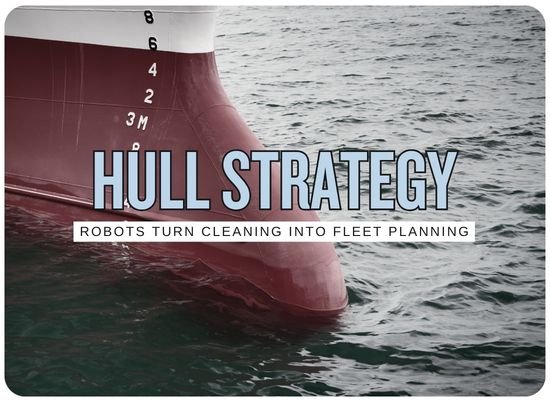
I keep coming back to robotic hull cleaning because it turns a maintenance task into a fleet strategy question. Traditional cleaning asks when the hull is dirty enough to send divers or a cleaning crew. Robotic hull care asks a bigger question: should a $100M fleet keep buying one-off cleanings, contract a robotic service, move into continuous grooming, or eventually own the equipment and data layer itself? As Singapore funds live-port robotic trials and HD Hyundai moves toward a robot-and-data hull-care platform, owners now have to compare cleaning methods, not just cleaning prices.
Fleet strategy snapshot
The right hull-care model depends on vessel value, coating condition, trading pattern, port access, fouling rate, emissions pressure, data quality and whether the owner wants a cleaning vendor or a performance partner.
Hull cleaning is moving from task buying to strategy buying
For years, many owners treated hull cleaning as a periodic service call. A vessel underperformed, a diver report showed growth, fuel consumption drifted, a port window opened, and the cleaning order followed. That model still has a place, especially for ships with occasional fouling spikes or small fleets that do not need a dedicated system. But robotic inspection, waste capture, automated reports and performance analytics change the economics.
The owner-level question is no longer just whether robotic cleaning is safer or more efficient than traditional cleaning. The question is whether the fleet is large enough, valuable enough and data-driven enough to justify a full hull-care strategy. A five-vessel fleet may still buy cleanings one at a time. A $100M fleet with repeated routes, high fuel exposure, CII pressure and measurable fouling cycles may need contracted robotic service. A ferry, cruise, offshore or harbor fleet with short cycles and high local visibility may eventually need continuous grooming. A very large owner may start asking whether hull-care data belongs inside the company’s own performance system.
Owner takeaway Robotic hull cleaning should not be bought because it sounds advanced. It should be bought when it improves the owner’s cleaning timing, coating protection, inspection evidence, fuel-performance verification, emissions file and port-compliance position better than traditional cleaning alone.
7 decisions before a $100M fleet picks a hull-care model
Cleaning only after performance loss
This is the traditional reactive model. It can be reasonable when fouling is occasional, the vessel trades irregularly, cleaning access is simple and the fuel penalty is not large enough to justify a higher-touch program. The risk is that the owner waits until drag, fuel burn or emissions have already moved against the vessel.
- Best fit Small fleets, low utilization, older assets, limited port access or vessels with slow fouling rates.
- Hidden weakness Owners often lack consistent inspection data, coating history and pre-cleaning performance evidence.
- Commercial test If a cleaning delay costs more in fuel than the service itself, reactive cleaning is probably too late.
- Supplier role Traditional divers, ROV support, emergency cleaning and drydock-linked hull service.
Scheduled traditional cleaning
A scheduled program is a step up from pure reaction. The owner defines cleaning intervals by route, season, hull coating and vessel class. It works best when the fleet is predictable and local providers are available, but it can still over-clean some vessels and under-clean others because the schedule may not reflect actual fouling condition.
- Best fit Fleets with repeat routes, familiar ports and moderate fouling exposure.
- Hidden weakness A calendar schedule can miss warm-water spikes, idle periods, coating damage and niche-area growth.
- Commercial test If some ships return clean and others return heavily fouled, the schedule needs inspection data.
- Supplier role Planned diver cleaning, coating-safe brushes, propeller polishing and photo documentation.
Robotic inspection before cleaning
This is the first serious shift toward hull-care strategy. Instead of cleaning because the vessel feels slow, the owner uses robotic or remote inspection to classify fouling, map problem zones and decide whether cleaning is worth the cost. The value is not only inspection speed. It is better evidence before spending money.
- Best fit Owners unsure whether fouling, weather, trim, loading or coating condition is driving performance loss.
- Hidden weakness Inspection quality depends on image clarity, coverage, classification method and niche-area access.
- Commercial test If inspection prevents one unnecessary cleaning or catches one costly fouling spike early, it may pay for itself.
- Supplier role Robotic inspection, automated reports, fouling classification, coating condition notes and performance-data integration.
Contracted robotic cleaning service
This is the most likely near-term model for many commercial owners. The fleet does not buy robots. It contracts a provider that brings robotic cleaning, operator expertise, environmental controls, inspection reports and sometimes performance verification. The owner pays for availability and outcome, not equipment ownership.
- Best fit Medium to large fleets with repeated calls in ports where robotic vendors can operate legally and efficiently.
- Hidden weakness Service availability may be limited by port rules, currents, berth space, vessel schedule and provider capacity.
- Commercial test If the fleet can route multiple vessels through robotic-service ports, the strategy becomes more bankable.
- Supplier role Robotic cleaning, waste capture, coating-safe method, productivity guarantee and digital closeout package.
Continuous grooming for high-utilization fleets
Continuous grooming changes the mindset from removing heavy fouling to preventing it from becoming a drag problem. It is most interesting for ferries, harbor craft, offshore vessels, cruise operations, naval support craft and other assets with repeat routes or accessible operating areas. The economic case depends on frequent access and measurable fuel response.
- Best fit Fleets with predictable routes, short voyage cycles, high fuel use, high public emissions visibility or local port concentration.
- Hidden weakness Grooming requires coating compatibility, frequent operations, strong scheduling discipline and clear environmental permissions.
- Commercial test If small fouling changes quickly affect fuel burn, grooming may beat periodic cleaning.
- Supplier role Routine robotic grooming, light-touch cleaning, coating monitoring, fuel-performance reporting and emissions support.
Integrated hull-care platform
This is the direction suggested by larger technology partnerships: inspection, diagnosis, cleaning, coating assessment, performance verification and fuel optimization in one system. Instead of asking who cleaned the hull, the owner asks whether the hull-care platform can prove when cleaning is needed and whether the cleaning delivered measurable value.
- Best fit Larger owners with digital fleet performance teams, decarbonization targets and enough vessel volume to justify analytics.
- Hidden weakness Integrated platforms can become expensive if the data does not translate into cleaner scheduling and verified savings.
- Commercial test If the system cannot prove avoided fuel burn, better CII performance or coating protection, it is only a maintenance dashboard.
- Supplier role Robotics, coating partner, ship-performance analytics, onboard data link, class-friendly reporting and lifecycle hull records.
Owner-operated equipment and data
This is the most ambitious model. A fleet owner, port operator, ferry company, naval operator or offshore service group may eventually operate its own hull-care equipment or dedicated vendor team. The appeal is control over timing, data, availability and repeated use. The risk is that the company becomes responsible for robotics maintenance, training, safety, port approvals, environmental compliance and utilization.
- Best fit Large fleets concentrated in a few ports, ferry networks, cruise terminals, naval bases or offshore hubs.
- Hidden weakness Low utilization can make owned equipment more expensive than buying robotic service.
- Commercial test If the owner cannot keep the robot busy, serviced and permitted, ownership is premature.
- Supplier role Robot lease, training, maintenance contract, software license, environmental kit and performance-data support.
Hull-care model comparison
| Hull-care model | Best fit | Main advantage | Risk owners miss | Fleet signal |
|---|---|---|---|---|
| Reactive traditional cleaning | Small or older fleets with occasional fouling. | Simple procurement and broad vendor availability. | Fuel penalty builds before cleaning is approved. | Basic |
| Scheduled traditional cleaning | Predictable trading and moderate fouling exposure. | Better planning and fewer emergency calls. | Calendar may not match actual hull condition. | Practical |
| Robotic inspection | Owners needing better proof before cleaning. | Data-driven cleaning decision and better records. | Weak image quality or poor coverage can mislead decisions. | Smart entry point |
| Contracted robotic cleaning | Medium to large fleets with repeat port calls. | Cleaner reports, lower diver exposure and possible waste capture. | Service availability and port permissions may limit rollout. | Strong candidate |
| Continuous grooming | Ferries, harbor craft, cruise, offshore and local fleets. | Prevents growth before major drag develops. | Requires frequent access, coating compatibility and scheduling discipline. | High potential |
| Integrated hull-care platform | Large owners with performance teams and emissions targets. | Links fouling, cleaning, coating and fuel verification. | Can become a dashboard without operational authority. | Strategic |
| Owner-operated equipment | Very concentrated fleets or controlled port networks. | Maximum timing and data control. | Utilization, training, permits and maintenance burden can overwhelm savings. | Only for select fleets |
Practical test A $100M fleet should not ask whether robots are cheaper than divers on one cleaning. It should ask whether a hull-care strategy can reduce total fuel drift, improve cleaning timing, protect coatings, produce better compliance evidence and create a repeatable fleet decision system.
Evidence owners should demand from robotic providers
- 01. Coverage map showing the percentage of flat hull, bilge keel, sea chest area, rudder, propeller zone and niche areas reached by the system.
- 02. Coating compatibility file confirming brush, cavitation, water jet, suction, magnetic or crawler method limits for the vessel’s coating system.
- 03. Waste capture evidence documenting how macrofouling, particulate matter and biological debris are collected, filtered, retained and disposed of.
- 04. Productivity rate measured in square meters cleaned or inspected per hour under real port conditions, not only calm-water trials.
- 05. Before-and-after reporting with fouling classification, image archive, cleaning map, untreated zones, coating alerts and date-stamped closeout.
- 06. Performance verification method connecting cleaning to speed-power, fuel, shaft power, weather correction and operating profile where data is available.
- 07. Port approval path confirming whether the service can operate at berth, anchorage, terminal, drydock, mooring or port limits.
- 08. Safety and cybersecurity file covering remote operations, robot control, vessel interface, data transfer, crew interaction and emergency recovery.
- 09. Service availability promise showing technician capacity, robot fleet size, spare parts, response time and number of vessels handled per month.
When robots beat traditional cleaning
| Fleet condition | Robotic advantage | Traditional advantage | Owner decision |
|---|---|---|---|
| Frequent calls at robot-enabled ports | Repeatable inspection and cleaning schedule can be built. | Traditional providers may still be cheaper for one-off jobs. | Contract robotic service if multiple vessels can use the same network. |
| High fuel exposure | Small drag reductions can justify more frequent cleaning. | Traditional cleaning works if access is fast and coating-safe. | Use performance data to choose cleaning frequency, not calendar alone. |
| Strict biofouling or waste rules | Waste capture and digital evidence may become valuable. | Traditional service may be constrained by local discharge rules. | Prioritize providers with environmental closeout documentation. |
| Coating warranty sensitivity | Light-touch robotic grooming may reduce aggressive cleaning events. | Experienced divers can inspect coating damage directly. | Require coating-maker compatibility and photo evidence. |
| Heavy macrofouling | Some robots may struggle depending on growth type and waste capture needs. | Traditional heavy cleaning may be more practical. | Use robotic inspection first, then choose the right cleaning method. |
| Port space and current limitations | Advanced systems may operate in tight areas if proven locally. | Divers or workboats may have more flexible improvisation. | Check real port operating limits before signing fleet contract. |
| Large fleet performance program | Robots can generate repeatable inspection and cleaning data. | Traditional cleaning may lack standardized digital evidence. | Move hull care into the fleet performance team, not only purchasing. |
Owner decision gate before buying a hull-care strategy
A $100M fleet should pass a practical gate before it moves beyond one-off cleaning into contracted robotics, grooming or equipment ownership.
- Fleet gate The owner has enough vessels, port overlap and utilization to benefit from a repeatable hull-care program.
- Fuel gate The fleet has measurable fuel or speed-power data that can show whether cleaning timing changes performance.
- Port gate The chosen providers can legally and safely operate where the vessels actually trade.
- Coating gate Cleaning or grooming methods are compatible with the coating system and warranty expectations.
- Environment gate Waste capture, filtration, disposal and reporting meet the target port’s requirements.
- Data gate Inspection and cleaning reports can feed the owner’s maintenance, performance and compliance files.
- Commercial gate The total strategy cost is lower than the avoided fuel drift, delay, cleaning waste, coating damage and compliance uncertainty.
Robotic hull-care strategy calculator
This planning screen helps owners compare one-off traditional cleaning with a more structured robotic hull-care program. It is not a vendor quote, coating warranty decision, port approval or fuel-performance guarantee.
Fleet hull-care economics screen
Adjust the inputs to test when a fleet needs a hull-care strategy instead of one-off cleanings.
Planning note: This simplified tool does not include coating damage, drydock effects, propeller polishing, niche-area fouling, port bans, waste disposal fees, warranty limits, robot downtime, crew coordination, class rules, tax, financing, emissions pricing, charter-party recovery or exact ISO 19030-style performance verification.
The owner mindset shift
Robotic hull cleaning is not automatically better than traditional cleaning. Traditional cleaning still works for many ships, especially when fouling is heavy, access is simple, vendors are trusted and the vessel does not need a continuous data record. The mistake is treating every fleet the same. A small owner may need better cleaning discipline. A large owner may need a full hull-care strategy.
The strongest strategy starts with evidence. Know the fouling rate, inspect before cleaning, protect the coating, verify fuel response, demand environmental controls, check port availability and build repeatable reports. For a $100M fleet, the real decision is not robot versus diver. It is whether hull condition should remain a maintenance event or become a managed performance asset.
We welcome your feedback, suggestions, corrections, and ideas for enhancements.
Please click here to get in touch