
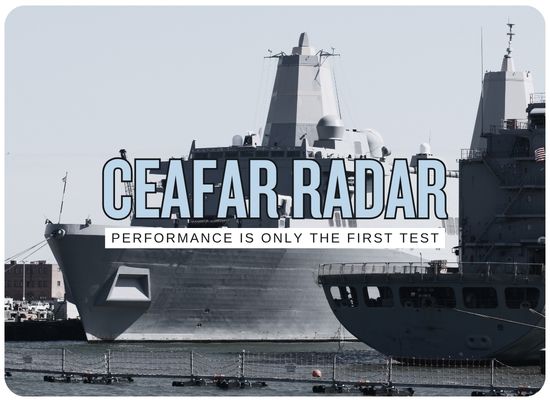
CEAFAR Radar vs Next-Generation Naval Radar: 9 Questions Navies Should Ask Before Switching AESA Suppliers

Naval radar switching and AESA supplier report

CEAFAR vs the next generation of naval radar

CEAFAR is suddenly one of the most interesting radar questions in the allied naval market. I thnk the real decision is not whether the array is impressive. It is whether a navy can switch AESA suppliers without creating a hidden bill in ship integration, power, cooling, weapons, software, IP and sustainment.

The no-brochure rule for naval radar buying

A next-generation AESA radar should never be evaluated as a sensor alone. It is a combat-system input, a missile-support system, a topside design driver, an electrical load, a cooling load, a software baseline, a cyber asset and an industrial-policy choice.

That is especially true for CEAFAR. CEA Technologies describes itself as designing, developing and manufacturing active phased-array radars, with programs across the Anzac and Hunter-class frigates, air defence and range applications. Its sovereignty story is also unusually strong because CEA says its radar IP is Australian-owned and controlled with high Australian industry content.

Buyer read
The best radar is not the one with the strongest claim in isolation. It is the one that makes the whole ship more lethal, more upgradeable, more supportable and more sovereign across a 30-year fleet life.

Radar decision signal board

Fresh trigger

UK-Australia cooperation gives CEAFAR a live export pathway

QinetiQ says the UK Ministry of Defence, the Australian Department of Defence and CEA are progressing potential adoption of Australian radar technology by the UK, with QinetiQ supporting integration, testing and assurance.

CEAFAR strength

Operational pedigree plus sovereignty story

CEAFAR is already tied to the Anzac upgrade and Hunter-class future frigate program, giving it a stronger reference base than a pure development radar.

Hunter warning

Capability can add ship-design complexity

Hunter combines Australian radar, the U.S. Aegis combat system and a Saab Australia interface. That is a powerful architecture, but it also proves radar choices affect ship design, CMS integration and sustainment.

Competitive field

SPY-6, SPY-7, Sea Fire and SAMPSON are not static targets

The comparison is against other radar families that also offer modularity, Aegis integration, missile-defense paths, European sovereignty or existing national industrial depth.

Risk

Switching radar suppliers can become a combat-system modernization

The danger is that the navy budgets for a radar decision but later discovers a larger program around mast design, power, cooling, software, weapons testing and IP rights.

The practical comparison set

CEAFAR should be compared with the radar families and national upgrade paths that navies are already evaluating, not with generic “legacy radar.”

AESA paths navies may compare
CEAFAR path Australian-developed phased-array radar family with Anzac and Hunter references, a strong sovereignty story and possible UK adoption pathway through CEA and QinetiQ cooperation.
SPY-6 path U.S. Navy next-generation air and missile defense radar family using scalable Radar Modular Assemblies, digital beamforming and Aegis integration across multiple U.S. surface-combatant variants.
SPY-7 path Lockheed Martin solid-state AESA radar path tied to Aegis and international users including Japan, Spain and Canada, with air and missile defense positioning.
Sea Fire path French four-fixed-panel digital AESA radar designed into the FDI frigate architecture, with European combat-system and Aster-missile ecosystem advantages.
SAMPSON and UK radar path Domestic UK radar sustainment and upgrade path tied to Type 45, Sea Viper Evolution, BAE Systems radar expertise and existing Royal Navy industrial depth.
Practical takeaway
CEAFAR may be the right answer for some navies, but the comparison should be against the actual fleet architecture: ship class, combat system, missile family, support base, software rights and industrial strategy.

The radar switching stack

A radar supplier switch becomes expensive when it crosses multiple layers of the warship at once.

Sensor layer Array architecture, frequency band, digital beamforming, sensitivity, clutter handling, low-altitude detection, electronic protection and track quality determine the sensor value.
Ship services layer Electrical load, power quality, chilled water, seawater cooling, cable routes, topside weight, mast design, shock and maintenance access determine the physical cost.
Combat-system layer Sensor fusion, track management, Aegis or CMS integration, missile uplinks, fire-control logic, operator displays and kill assessment determine whether radar data becomes combat power.
Software and IP layer APIs, data rights, mission-data control, cyber patches, radar mode updates, threat-library updates and national modification rights determine whether the radar stays relevant.
Industrial layer Local production, test facilities, T/R module repair, depot support, export pathways, training and obsolescence planning determine who captures value after the first ship is delivered.

9 questions navies should ask before switching AESA suppliers

These questions are designed to keep the decision anchored in ship reality, not radar brochure language.

  1. 01 Mission fit Does the radar solve the ship’s real threat problem? Switching risk: Extreme if mission need is vague

    Decision test

    Is the navy buying better anti-air warfare, anti-ship missile defense, ballistic-missile defense, drone detection, sea-skimmer tracking, surface search, electronic protection or multi-domain track quality?

    CEAFAR angle

    CEAFAR has strong relevance for frigates and self-defense architectures because of the Anzac upgrade and Hunter pathway. That does not automatically make it the right radar for every destroyer, frigate or future fleet role.

    Comparison pressure

    SPY-6 and SPY-7 are especially strong comparison points where integrated air and missile defense and Aegis pathways dominate. Sea Fire and SAMPSON matter where European missile integration or UK industrial continuity is the priority.

    Supplier market

    Threat modeling, low-altitude target testing, drone and missile surrogate trials, electronic-protection assessment, operator workload studies and mission simulation.

  2. 02 Ship fit Can the ship carry the radar without becoming a redesign project? Switching risk: Extreme for existing hulls

    Decision test

    Does the radar fit the mast, deckhouse, topside weight budget, stability margin, shock and vibration rules, cable routes, panel access and electromagnetic environment?

    CEAFAR angle

    CEA emphasizes modularity and scalability, which helps. But fixed-panel AESA integration still needs ship-specific studies around array placement, structure, cooling, cabling and interference.

    Comparison pressure

    Some radar families are easier when designed into a new ship from the beginning. Retrofitting or switching late can create unexpected ship alteration costs.

    Supplier market

    Naval architecture, mast design, topside integration, EMI/EMC testing, shock qualification, cable-route planning, radomes, shipchecks and alteration packages.

  3. 03 Power and cooling Can the ship support the radar at combat tempo? Switching risk: Very high

    Decision test

    Can the ship support the radar’s electrical load, power quality, cooling demand, thermal rejection, duty cycle and future software-driven modes under combat conditions?

    CEAFAR angle

    CEA’s own land-domain radar material references power generation and thermal management, which is a useful reminder that AESA performance is inseparable from services behind the array.

    Comparison pressure

    SPY-6, SPY-7, Sea Fire, CEAFAR and other AESA systems all bring different electrical and thermal footprints. The winner on performance can become the loser if it consumes too much ship growth margin.

    Supplier market

    Power converters, switchboards, chilled-water upgrades, heat exchangers, pumps, thermal monitoring, power-quality analysis, cable suppliers and ship-service integration.

  4. 04 Weapons link Can the radar support the missile family and engagement doctrine? Switching risk: Extreme for air-defense ships

    Decision test

    Which weapons must the radar support: ESSM, SM-2, SM-6, Aster, CAMM, future interceptors, decoys, guns or directed-energy cueing?

    CEAFAR angle

    The Anzac ASMD upgrade paired CEAFAR with CEAMOUNT and Saab 9LV, while Hunter lists Aegis with a Saab Australia interface and CEAFAR2 sensors. That proves serious integration experience, but also proves weapons integration is central to the radar decision.

    Comparison pressure

    Aegis-linked radar options may reduce risk for navies already committed to Aegis and U.S. missile families. European radar paths may reduce risk for Aster-centric fleets.

    Supplier market

    Fire-control software, missile uplink integration, weapons-interface labs, hardware-in-the-loop testing, live-fire trials, kill assessment and combat-system certification.

  5. 05 Combat system Will the radar cooperate with the fleet’s combat-management architecture? Switching risk: Very high

    Decision test

    Is the fleet built around Aegis, Saab 9LV, TACTICOS, SETIS, CMS-330, a national CMS or a mixed architecture?

    CEAFAR angle

    CEAFAR’s experience with Saab 9LV and Hunter’s Aegis-plus-Saab architecture may be valuable for navies considering similar hybrid pathways.

    Comparison pressure

    A radar that looks attractive on a data sheet can lose value if track fusion, operator displays, sensor control and weapons assignment require major CMS rewrites.

    Supplier market

    Combat-system integration, middleware, sensor fusion, tactical displays, interface-control documents, cyber accreditation, software test labs and operator training.

  6. 06 Software access Who controls updates, APIs, radar modes and threat libraries? Switching risk: High

    Decision test

    Can the navy access APIs, mission data, software update pathways, radar-mode controls, diagnostics, cyber patches, threat libraries and electronic-protection settings?

    CEAFAR angle

    CEA’s Australian-owned IP story is a strength for Australia and a powerful export message. But export customers still need to negotiate what software access, modification rights and national update authority actually mean.

    Comparison pressure

    Some suppliers may offer deeper access but require greater national engineering responsibility. Others may reduce integration risk but leave more future updates under supplier control.

    Supplier market

    Radar DevSecOps, mission-data tools, API governance, configuration management, cyber hardening, classified labs, software escrow and digital twins.

  7. 07 IP and sovereignty Is the navy buying sovereign capability or licensed dependency? Switching risk: High

    Decision test

    Who controls the radar IP, export approvals, design data, production rights, module repair, test equipment, software changes, obsolescence fixes and derivative development?

    CEAFAR angle

    CEA says the underlying IP is Australian-owned and controlled. For export customers, the hard question is whether that sovereignty can be shared through real production, repair and software rights or whether it remains mostly Australian sovereignty.

    Comparison pressure

    SPY-6, SPY-7, Sea Fire and national radar paths each come with different alliances, export rules, industrial workshare options and dependency risks.

    Supplier market

    IP licensing, export-control counsel, sovereign test facilities, module manufacturing, depot repair tooling, knowledge transfer and through-life support agreements.

  8. 08 Fleet commonality Does switching simplify the fleet or create another radar island? Switching risk: Medium-high

    Decision test

    Will the radar become a family across frigates, destroyers, land systems, test ranges and future unmanned platforms, or will it serve one ship class only?

    CEAFAR angle

    CEA’s cross-domain radar positioning helps because a radar family can create common training, support and software baselines across multiple applications.

    Comparison pressure

    SPY-6 also sells a modular family logic, while SPY-7 has an international Aegis customer base. Sea Fire’s strongest argument is tight fit inside the FDI and European missile ecosystem.

    Supplier market

    Fleet baseline management, shared spares, training systems, depot tooling, radar-family sustainment, common software releases and cross-domain test ranges.

  9. 09 Lifecycle cost What is the 30-year upgrade and sustainment bill? Switching risk: Extreme over lifecycle

    Decision test

    What is the full cost of installation, software updates, T/R module replacement, cooling support, calibration, cybersecurity, depot repair, training, missile refreshes and obsolescence management?

    CEAFAR angle

    CEA positions itself around design, development, manufacturing and sustainment. That is exactly the right lifecycle frame, but export customers must define which support functions move locally and which stay with the original supplier.

    Comparison pressure

    A radar that wins on acquisition price can lose over time through software bottlenecks, module obsolescence, cooling support, test equipment dependence or expensive weapons integration refreshes.

    Supplier market

    Through-life support, depot test benches, T/R module repair, calibration, software baselines, cyber updates, training simulators, reliability analytics and obsolescence planning.

Radar supplier switching matrix

This matrix turns the nine questions into a practical buyer screen for CEAFAR, SPY-6, SPY-7, Sea Fire, SAMPSON upgrades and other AESA options.

Decision area CEAFAR buyer question Next-gen radar comparison Hidden supplier spend
Mission fit Does CEAFAR improve the fleet’s real threat picture? Compare by mission: area air defense, BMD, frigate self-defense, drone defense, ASW escort or surface surveillance. Threat modeling, missile surrogates, drone targets, operator workload, electronic-protection analysis.
Ship fit Can the hull accept the panels, mast changes, cables and access routes? Fixed-panel AESA, rotating AESA and dual-radar architectures create different ship-design costs. Mast design, stability analysis, EMI/EMC, shock, cabling, shipcheck and alteration work.
Power and cooling Can the ship support CEAFAR at high operating tempo? Every AESA family has a different electrical and thermal footprint. Switchboards, converters, chillers, heat exchangers, pumps, thermal sensors and power-quality studies.
Weapons Which missiles and engagement timelines must the radar support? Aegis, Aster, CAMM and national CMS paths are not interchangeable. Fire-control software, uplink testing, HIL labs, live-fire trials and certification.
Software What update and mission-data rights does the navy receive? Some suppliers offer deeper access, while others reduce risk through more closed and controlled baselines. DevSecOps, cyber accreditation, APIs, configuration control and classified software labs.
IP and sovereignty Does the customer gain real repair, production and modification authority? Industrial workshare may matter as much as radar physics. Licensing, local production, depot tools, export approvals and knowledge transfer.
Commonality Can CEAFAR become a fleet family instead of a one-class island? SPY-6 and SPY-7 also bring modular family arguments, while Sea Fire is tied strongly to FDI. Shared spares, common training, common test facilities and fleet-baseline management.
Sustainment Can the radar remain current for 30 years? The best radar can still become a support bottleneck if modules, software or test gear stay supplier-locked. T/R module repair, software support, cyber updates, depot repair, calibration and reliability analytics.

Switching-risk heat gauge

The highest-risk areas are not always the most visible. Software, weapons integration and lifecycle sovereignty can matter more than headline radar range.

Weapons and combat-system integration Extreme
Power, cooling and ship-service margin Very high
Software access, IP rights and update authority Very high
Mast design, topside weight and physical fit High
Fleet commonality, training and sustainment Underpriced
Industrial workshare and export pathway Strategic

Four supplier markets opened by the CEAFAR debate

The ship integration lane

This includes mast design, panel placement, shock, EMI/EMC, power quality, cooling, cable routing, structural foundations and radar maintenance access.

  • Best fit for naval architects, topside integrators, ship-service engineers and alteration specialists.
  • Strongest value comes from proving the radar can fit the hull without destroying future growth margin.
  • Main trap is choosing the radar before the ship-integration bill is visible.

The combat-system and weapons lane

This includes sensor fusion, track management, missile support, engagement timelines, operator displays, Aegis or CMS interfaces, and live-fire validation.

  • Best fit for combat-system integrators, missile-interface labs and simulation providers.
  • Strongest value comes from turning radar tracks into weapon-quality engagements.
  • Main trap is treating surveillance performance and weapons support as the same thing.

The software, cyber and IP lane

This includes APIs, software update authority, mission-data control, cyber hardening, threat-library updates, radar digital twins and configuration governance.

  • Best fit for secure software firms, radar DevSecOps teams, IP advisors and cyber accreditation providers.
  • Strongest value comes from helping the navy evolve the radar without waiting for a foreign bottleneck.
  • Main trap is signing a radar contract without clear rights to upgrade, test, modify and secure the baseline.

The sovereign sustainment lane

This includes local manufacturing, depot repair, T/R module replacement, calibration, training, test equipment, obsolescence planning and through-life support.

  • Best fit for radar module suppliers, depot contractors, electronics MRO providers and training firms.
  • Strongest value comes from keeping the radar alive for decades after the initial contract award.
  • Main trap is mistaking assembly workshare for real sovereign repair and software authority.

Red flags before switching AESA suppliers

These warning signs should slow any radar-switch decision, even when the advertised performance is strong.

Red flag Problem underneath Buyer check
Radar range dominates the debate The navy may be ignoring ship fit, weapons integration, software access and sustainment. Score radar performance only after ship and combat-system constraints are priced.
Cooling and electrical load are deferred The ship may not support the radar’s real operating modes without costly service upgrades. Demand power and cooling profiles by mission condition and future-growth path.
Missile support is assumed Track quality does not automatically equal fire-control integration. Require missile-interface, uplink, engagement and live-fire evidence.
Software access is vague The navy may not control radar updates, threat libraries or future mode development. Define APIs, software rights, mission-data rights and national modification authority.
Industrial sovereignty is only a slogan Local jobs may exist without real design, repair or upgrade control. Map which work is local: modules, software, depot repair, testing, calibration and sustainment.
Fleet commonality is ignored A new radar can create a new island of spares, training, test equipment and software baselines. Compare radar-family strategy across ships, land systems, test ranges and autonomous platforms.
Through-life support is left for later The radar may be affordable to buy but expensive to keep current. Price 30-year software, modules, cooling support, training, obsolescence and cyber updates.

AESA Radar Switching Risk Meter

Use this quick tool to estimate whether switching AESA radar suppliers looks like a clean fleet upgrade or a hidden combat-system modernization project.

Result
0/155

    This tool is a practical screening aid, not procurement advice. Real radar decisions should include classified performance data, ship-class design studies, combat-system authority, missile integration testing, cyber accreditation, export controls, software rights, industrial participation and lifecycle cost modeling.

    Bottom line for navies

    CEAFAR is now a serious radar question beyond Australia because it combines AESA performance, modularity, operational references, sovereign IP and a live UK-Australia cooperation pathway. But switching radar suppliers cannot be judged by detection claims alone.

    The real test is whether the radar fits the ship, feeds the combat system, supports the weapons, stays inside power and cooling margins, gives the navy enough software and IP control, and creates a sustainment model that still works 30 years from now. The winning radar should be the one that makes the fleet more lethal, more upgradeable and more sovereign, not only the one that looks strongest in a brochure.

    Feedback Welcome

    We welcome your feedback, suggestions, corrections, and ideas for enhancements.

    Please click here to get in touch
    By the ShipUniverse Editorial Team — About Us | Contact