CEAFAR vs the Next Generation of Naval Radar: 9 Questions Navies Should Ask Before Switching AESA Suppliers
🔔 Subscribe to ShipUniverse Weekly →
CEAFAR vs the next generation of naval radar
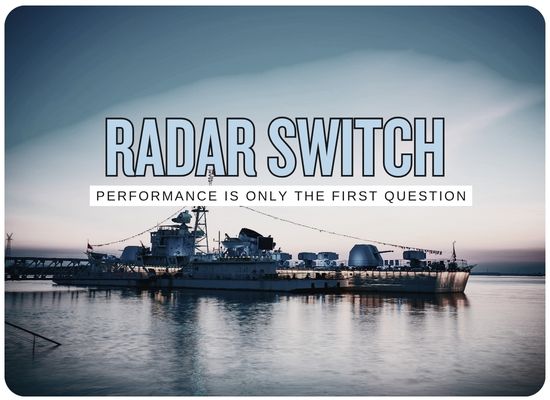
I think the real question for navies is not whether CEAFAR is impressive. It is whether switching AESA suppliers improves the ship as a fighting system once integration, power, cooling, software access, weapons control, IP and industrial sovereignty are priced honestly.
The radar decision is becoming a ship-design decision
CEAFAR is suddenly more than an Australian radar success story. The UK-Australia cooperation framework makes it a live export, integration and sovereignty question for future fleets. That matters because a modern naval radar is not a black box on top of the mast. It is a power load, a cooling load, a software baseline, a weapons sensor, an industrial-policy choice and a lifetime sustainment commitment.
For navies considering CEAFAR against other next-generation AESA options, the useful question is not “which radar is best?” The better question is “which radar gives the fleet the best combination of combat performance, integration speed, sovereign control, weapons compatibility and lifecycle affordability on the ships we actually plan to build?”
A radar switch should be treated like a combat-system architecture decision. The winner is the radar that improves the total ship, not only the radar spec sheet.
Decision signal board
UK-Australia AESA cooperation is now active
UK and Australian officials signed a new statement of intent in Canberra in August 2026 involving CEA Technologies and QinetiQ, with QinetiQ positioned for integration, testing and assurance work across the UK defence enterprise.
Modular, scalable and sovereign radar technology
CEA describes its AESA systems as modular, scalable and configurable across sea, land and air, with Australian-owned and controlled IP and high Australian industry content.
Hunter shows capability and complexity together
The Hunter-class design combines CEAFAR2, Aegis and a Saab Australian interface. That is powerful, but it also proves radar selection flows into combat-system integration, ship design and sustainment.
The competitors are not standing still
SPY-6, SPY-7, Sea Fire, SAMPSON upgrades and other AESA systems are all part of a wider race around GaN modules, digital beamforming, missile integration, open architecture and fleet baselines.
The hidden cost is the ship around the radar
Electrical load, cooling, mast design, software access, missile interfaces, cyber, training and industrial rights can overwhelm a simple radar-performance comparison.
CEAFAR versus next-generation radar: the real comparison
Navies do not buy “a radar” in isolation. They buy a sensor architecture that must fit a fleet concept, combat system, missile family and sovereign industry plan.
A navy should not ask whether CEAFAR can outperform a legacy radar in isolation. It should ask whether CEAFAR improves the total ship when compared with SPY-6, SPY-7, Sea Fire, SAMPSON evolution and other AESA options under real ship constraints.
The radar switching stack
A radar supplier switch becomes expensive when the decision crosses multiple layers of the warship at once.
9 questions navies should ask before switching AESA suppliers
These are the questions that keep a radar decision from turning into an avoidable combat-system, ship-design or sovereignty problem.
-
01
Mission fit
Does the radar improve the mission that ship actually needs to fight?
Switching risk: Extreme if mission fit is vague
The decision question
Is the navy buying better anti-air warfare, ballistic missile defense, drone detection, sea-skimming missile defense, surface surveillance, IFF, electronic protection, weapons support or all-domain track quality?
CEAFAR angle
CEAFAR has a strong anti-ship missile defense pedigree through the Anzac upgrade and is being scaled into Hunter through CEAFAR2. That makes it attractive where a navy values modular AESA growth and a proven self-defense-to-frigate pathway.
Switching trap
A radar can look excellent in generic performance terms but still be the wrong fit if the ship’s main mission is area air defense, ballistic missile defense, distributed sensing, anti-drone defense or ASW escort.
Supplier market
Radar performance modeling, threat libraries, mission simulation, electronic-protection analysis, low-altitude target testing, drone and missile surrogate testing, and operator workload studies.
-
02
Ship integration
Can the ship carry the radar without redesigning the ship around it?
Switching risk: Extreme for existing hulls
The decision question
What does the radar require in mast height, panel placement, structural support, topside weight, shock, vibration, cableways, maintenance access, radomes, deckhouse changes and electromagnetic compatibility?
CEAFAR angle
CEA emphasizes modularity and scalability, which is valuable. But every fixed-panel AESA still needs a ship-specific arrangement that protects radar horizon, array placement, cooling, access and interference margins.
Switching trap
The radar is selected for capability, then the ship design discovers added weight, mast changes, cooling routes, cable runs or stability impacts that were not in the early radar comparison.
Supplier market
Naval architects, mast designers, topside-integration firms, EMI/EMC engineers, shock qualification labs, cable-route planners, radome suppliers and ship alteration teams.
-
03
Power and cooling
Is there enough electrical and thermal margin for realistic operations?
Switching risk: Very high
The decision question
Does the radar fit the ship’s generator margin, switchboard capacity, power quality, chilled-water plant, seawater cooling, heat exchangers, air handling and future-growth reserve?
CEAFAR angle
CEA’s land AESA language explicitly references power generation and thermal management on mobile systems, which is a reminder that radar performance is inseparable from services behind the panel.
Switching trap
Radar performance is compared without pricing the electrical and cooling plant needed to support peak duty cycles, high-tempo operations and future software-driven modes.
Supplier market
Power converters, switchboards, cooling skids, chilled-water upgrades, heat exchangers, pumps, thermal sensors, power-quality studies, cable suppliers and integrated ship-service modeling.
-
04
Weapons link
Can the radar actually support the missiles and engagement doctrine?
Switching risk: Extreme for air-defense ships
The decision question
Which weapons must the radar support: ESSM, SM-2, SM-6, Aster, CAMM, future hypersonic defense interceptors, gunfire support, decoys or directed-energy cueing?
CEAFAR angle
The Anzac upgrade paired CEAFAR with CEAMOUNT illuminator technology and Saab 9LV, while Hunter pairs CEAFAR2 with Aegis and a Saab Australian interface. That proves the radar can sit inside serious missile-defense architectures, but also proves integration is the heart of the decision.
Switching trap
The navy chooses a radar but underestimates missile uplink, fire-control timing, engagement doctrine, launcher integration, kill assessment and operational test cost.
Supplier market
Fire-control software, missile uplink integration, combat-system labs, hardware-in-the-loop testing, weapon-system certification, operator displays and live-fire test support.
-
05
Combat system
Will the radar cooperate with the combat-management architecture?
Switching risk: Very high
The decision question
Is the fleet built around Aegis, Saab 9LV, TACTICOS, SETIS, CMS-330, a national CMS or a mixed architecture? Who owns track fusion, sensor control, weapons assignment and operator workflow?
CEAFAR angle
CEAFAR already has experience with Saab 9LV on Anzac and is planned with Aegis plus a Saab interface on Hunter. For a navy using similar architectures, that history matters.
Switching trap
The radar is treated as a sensor upgrade, but the combat-management system requires major software, interface, certification and operator changes before the radar’s performance can be used.
Supplier market
Combat-system integrators, middleware firms, tactical-display designers, sensor-fusion vendors, interface-control teams, cyber accreditation teams and simulation environments.
-
06
Software access
Who controls updates, algorithms, APIs and threat libraries?
Switching risk: High
The decision question
Can the navy access software interfaces, mission data, diagnostic data, radar modes, threat-library updates, electronic-protection settings and long-term software upgrade paths?
CEAFAR angle
CEA’s sovereignty message is a major advantage for Australia and potentially attractive to partners seeking co-development. But export customers still need clear rules on software access, update authority and national modification rights.
Switching trap
A navy wins radar performance but loses agility because software updates, mode changes, cyber patches or threat-library changes depend on a slow foreign approval chain.
Supplier market
Radar software support, DevSecOps pipelines, mission-data tools, API governance, cyber hardening, digital twins, configuration management and classified software labs.
-
07
IP and export
Is the navy buying sovereign capability or licensed dependency?
Switching risk: High
The decision question
Who owns the radar IP, export rights, design data, production workshare, repair authority, depot test equipment, electronic modules, software change rights and future derivative opportunities?
CEAFAR angle
CEA says its technology is Australian-owned and controlled, and the company is now a Commonwealth company with strong Australian industry content. That creates a powerful sovereignty story, but export customers must negotiate what sovereignty means for them.
Switching trap
The navy frames the buy as sovereign because production workshare exists, while the real control remains in foreign software, test equipment, T/R modules, algorithms or approval authority.
Supplier market
IP licensing, export-control counsel, sovereign test facilities, local production transfer, depot repair tooling, module manufacturing, training pipelines and through-life support contracts.
-
08
Fleet commonality
Does switching simplify the fleet or create another island?
Switching risk: Medium-high
The decision question
Will the radar be used across destroyers, frigates, corvettes, patrol ships, autonomous vessels, land air-defense systems and test ranges, or will it sit on one class only?
CEAFAR angle
CEA’s sea, land and air-domain positioning gives CEAFAR a broader commonality argument. A navy may value a radar family that can scale across ships and land-based air defense or testing applications.
Switching trap
The navy buys a great radar for one ship class but creates a new training, spares, software and support chain that does not match the rest of the fleet.
Supplier market
Fleet baseline management, spares modeling, common training systems, shared depot facilities, radar-family sustainment, simulation libraries and cross-domain test ranges.
-
09
Lifecycle cost
What is the 30-year upgrade and sustainment bill?
Switching risk: Extreme over lifecycle
The decision question
What does the radar cost across installation, software updates, module replacement, cooling support, calibration, cybersecurity, training, depot repair, future modes, obsolescence and missile-integration refreshes?
CEAFAR angle
CEA’s through-life support and sustainment positioning is central to its value case. For export customers, the question becomes how much sustainment can be done locally and how much remains controlled by the original supplier.
Switching trap
The radar wins on acquisition price or political appeal, then loses over time through software fees, module obsolescence, test-equipment dependency, upgrade bottlenecks or sustainment bottlenecks.
Supplier market
Through-life support, depot test benches, T/R module repair, cooling MRO, cyber updates, training simulators, software baseline support, reliability analytics and obsolescence planning.
Radar supplier switching matrix
This matrix turns the nine questions into a practical buyer screen.
| Decision area | CEAFAR buyer question | Next-gen radar comparison | Hidden supplier spend |
|---|---|---|---|
| Mission fit | Does CEAFAR improve the fleet’s real threat picture? | Compare against SPY-6, SPY-7, Sea Fire and upgraded national radar paths by mission, not headline range. | Threat modeling, drone testing, missile-surrogate testing, operator workload analysis. |
| Ship fit | Can the array size, mast layout and service needs fit the chosen hull? | Fixed-panel AESA, rotating AESA and dual-radar architectures create different ship-design costs. | Mast redesign, shock, EMI/EMC, cable routes, stability analysis, panel access. |
| Power and cooling | Can the ship support CEAFAR modes during combat operations? | Every AESA supplier has a different electrical and thermal profile that affects future growth margin. | Switchboards, converters, chillers, pumps, heat exchangers, thermal monitoring. |
| Weapons | Which missiles and engagement timelines must CEAFAR support? | Aegis-linked, Aster-linked, CAMM-linked and national combat-system paths are not interchangeable. | Fire-control software, missile uplink testing, live-fire trials, HIL labs. |
| Software | What mode, algorithm and API access does the navy receive? | Some suppliers sell deeper sovereign access than others, but deeper access also requires more national engineering capacity. | DevSecOps, configuration control, cyber accreditation, classified labs, software support. |
| IP and sovereignty | What production, modification and export rights transfer? | Industrial workshare may matter as much as radar physics if the navy wants sovereign control. | Licensing, local production, depot setup, test equipment, knowledge transfer. |
| Commonality | Can CEAFAR become a radar family across domains? | SPY-6 and SPY-7 also sell modular family logic, while Sea Fire is tied closely to the FDI ecosystem. | Shared spares, common training, fleet baselines, cross-domain sustainment. |
| Sustainment | Can the navy maintain the radar without permanent dependency? | The best radar can become a bottleneck if modules, test equipment or software updates remain supplier-locked. | Depot repair, module overhaul, software baselines, reliability analytics, support contracts. |
Switching-risk heat gauge
The highest-risk areas are not always the most visible. Software, weapons integration and lifecycle sovereignty can be more decisive than the array itself.
Four supplier markets opened by the CEAFAR debate
The ship integration lane
This includes mast design, panel placement, shock, EMI/EMC, cooling, cable routing, power quality, structural foundations and radar-maintenance access.
- Best fit for naval architects, topside integrators, marine electrical firms, cooling suppliers and ship alteration specialists.
- Strongest value comes from proving a radar can fit the actual hull without destroying growth margin.
- Main trap is comparing radar systems before the ship integration bill is visible.
The combat-system and weapons lane
This includes sensor fusion, track management, missile support, engagement timelines, operator displays, Aegis or CMS interfaces, and live-fire validation.
- Best fit for combat-system integrators, fire-control teams, missile-interface labs and simulation providers.
- Strongest value comes from turning radar tracks into weapon-quality engagements.
- Main trap is treating surveillance performance and weapons support as the same thing.
The software, cyber and IP lane
This includes APIs, source access, software update authority, mission-data control, cyber hardening, threat-library updates, digital twins and configuration governance.
- Best fit for secure software firms, radar DevSecOps teams, IP licensing advisors and cyber accreditation providers.
- Strongest value comes from helping the navy evolve the radar without waiting for a foreign bottleneck.
- Main trap is signing a radar deal without clear rights to upgrade, test, modify and secure the software baseline.
The sovereign sustainment lane
This includes local manufacturing, depot repair, T/R module replacement, calibration, training, test equipment, obsolescence planning and through-life support.
- Best fit for radar module suppliers, depot contractors, training firms, electronics MRO providers and industrial-policy advisors.
- Strongest value comes from keeping the radar alive for 30 years after political attention moves elsewhere.
- Main trap is mistaking assembly workshare for sovereign sustainment authority.
Red flags before switching AESA suppliers
These warning signs should slow any radar-switch decision, even if the advertised performance is excellent.
| Red flag | Problem underneath | Buyer check |
|---|---|---|
| Radar range dominates the debate | The navy may be ignoring ship fit, weapons integration, software access and sustainment. | Score radar performance only after ship and combat-system constraints are priced. |
| Cooling and electrical load are deferred | The ship may not support the radar’s real operating modes without costly service upgrades. | Demand power and cooling profiles by mission condition and growth path. |
| Missile support is assumed | Track quality does not automatically equal fire-control integration. | Require missile-interface, uplink, engagement and live-fire evidence. |
| Software access is vague | The navy may not control radar updates, threat libraries or future mode development. | Define APIs, software rights, mission-data rights and national modification authority. |
| Industrial sovereignty is a slogan | Local jobs may exist without real design, repair or upgrade control. | Map which work is local: modules, software, depot repair, testing, calibration and sustainment. |
| Fleet commonality is ignored | A new radar can create a new island of spares, training, test equipment and software baselines. | Compare radar-family strategy across ships, land systems, test ranges and autonomous platforms. |
| Through-life support is left for later | The radar may be affordable to buy but expensive to keep current. | Price 30-year software, modules, cooling support, training, obsolescence and cyber updates. |
AESA Radar Switching Risk Meter
Use this quick tool to estimate whether switching AESA radar suppliers looks like a clean fleet upgrade or a hidden combat-system modernization project.
This tool is a practical screening aid, not procurement advice. Real radar decisions should include classified performance data, ship-class design studies, combat-system authority, missile integration testing, cyber accreditation, export controls, software rights, industrial participation and lifecycle cost modeling.
Bottom line for navies
CEAFAR deserves serious attention because it combines operational credibility, modular AESA design, Australian sovereign technology and a live UK-Australia cooperation pathway. But switching radar suppliers is not a trophy buy. It is a combat-system, ship-design, software-access and industrial-sovereignty decision.
The best choice may be CEAFAR, SPY-6, SPY-7, Sea Fire, a national radar upgrade or a mixed architecture, depending on the fleet. What matters is that navies ask the hard questions before the radar is selected: mission fit, ship fit, power, cooling, weapons, software, IP, commonality and lifecycle sustainment. The radar that wins should be the one that makes the ship more lethal, more upgradeable and more sovereign across decades, not only the one that looks strongest in a brochure.
We welcome your feedback, suggestions, corrections, and ideas for enhancements.
Please click here to get in touch