Tariff Frontloading and the Budget Risks Behind Record July Import Volumes
🔔 Subscribe to ShipUniverse Weekly →
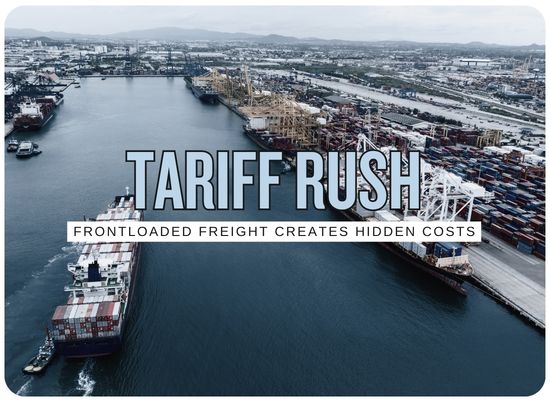
I keep coming back to tariff frontloading because it looks like a smart defensive move until the second invoice cycle begins. Importers rush containers ahead of tariff changes, fuel surcharges and trade-policy uncertainty, then discover that the budget problem did not end at the port. The hidden cost stack can include higher ocean freight, customs value exposure, broker rework, tariff classification mistakes, warehouse overflow, demurrage, detention, cash tied up in early inventory, forced-labor documentation, trade-law review and price concessions to move goods that arrived before demand was ready.
Budget impact snapshot
Record-level import months can hide margin pressure. Pulling cargo forward may avoid one tariff deadline while creating several new budget problems.
The frontloading bill arrives after the vessel
Frontloading is easy to justify in the meeting where tariff deadlines, product shortages and shipping delays are the only risks on the table. The importer pulls orders forward, books space early, accepts higher freight, clears customs, fills the warehouse and tells sales that holiday or seasonal inventory is protected. That decision can be right. But the budget only works if the tariff avoided is larger than the combined carrying cost, duty acceleration, freight premium, compliance cost, warehouse overflow and demand risk.
That is where many importers get squeezed. A July import surge can make the supply chain look strong while the finance team sees a different picture. More inventory lands early. Customs brokers need cleaner data. Forwarders have to manage capacity and surcharges. Warehouse providers face space compression. Tariff consultants and trade lawyers must check classification, country of origin, valuation, forced-labor exposure and refund strategy. The cargo may be physically in the United States, but the landed-cost answer can still be unsettled.
Commercial takeaway Tariff frontloading is not automatically bad. The mistake is pricing it like an ocean freight decision when it is really a customs, cash-flow, warehouse, compliance and sales-margin decision.
9 budget risks behind frontloaded ocean freight
Tariff savings that disappear after classification review
The first budget risk is assuming the tariff answer is simple. If the importer is using rushed product descriptions, old HTS codes, incomplete bills of material or supplier-provided classifications, the “savings” from frontloading may rest on a duty rate that later changes.
- Budget leak Additional duties, post-entry corrections, protests, broker rework and delayed product costing.
- Buyer check Confirm HTS classification, material composition, end use, product specs, assists, kits and related-party issues before mass entry.
- Service opportunity Pre-entry classification audits, binding ruling strategy, landed-cost modeling and classification database cleanup.
- Decision rule Do not frontload a product family faster than the classification file can support it.
Duty cash paid months before revenue
Frontloading may protect duty rate exposure, but it can also pull duty payments, freight bills, insurance, broker fees and storage costs forward. The importer has to fund the inventory before the customer buys it. That can turn a tariff hedge into a working-capital problem.
- Budget leak Higher borrowing, lower cash runway, larger customs bond needs and early inventory financing.
- Buyer check Compare duty paid at entry against expected sell-through dates, payment terms and markdown risk.
- Service opportunity Duty deferment planning, customs bond review, inventory-finance modeling and landed-cost forecasting.
- Decision rule Avoiding a tariff increase can still be expensive if cash is locked too early.
Freight rates and surcharges stay high after demand cools
Importers often assume that once the frontloading wave passes, ocean freight will quickly soften. That may not fully happen if fuel, canal, routing and disruption surcharges keep the cost floor elevated. The result is a budget that expected both tariff protection and cheaper second-half freight, but receives only one of them.
- Budget leak Spot-rate premium, bunker surcharges, canal fees, routing add-ons and peak-season charges.
- Buyer check Separate base rate, BAF, PSS, emergency fuel, canal, congestion and equipment charges in the freight budget.
- Service opportunity Contract benchmarking, surcharge audit, routing optimization and gateway comparison.
- Decision rule Do not assume demand relief will automatically remove the surcharge floor.
Warehouse overflow eats the tariff advantage
Pulling goods forward only works if there is somewhere efficient to put them. Overflow storage, temporary 3PL space, drayage to remote warehouses, double handling, pallet rework and slower order picking can absorb the advantage of beating a tariff deadline.
- Budget leak Overflow rent, long-term storage, extra labor, drayage shuttles, detention risk and mislocated inventory.
- Buyer check Confirm dock doors, labor, racking, yard capacity, peak order profile, parcel cutoffs and inventory aging triggers.
- Service opportunity Temporary warehouse procurement, network redesign, transload planning and overflow cost modeling.
- Decision rule A container that clears customs but sits in the wrong building is still a budget problem.
Demurrage and detention rise when everyone moves early
Frontloading can compress port, drayage and warehouse schedules. More boxes arrive in a shorter window, chassis and appointment pressure builds, and warehouses may not unload quickly enough. That creates the classic penalty stack: demurrage at the terminal, detention on the equipment and storage charges outside the original budget.
- Budget leak Terminal storage, missed appointments, chassis charges, per-diem, yard storage and weekend labor.
- Buyer check Pre-book drayage, verify warehouse receiving windows, monitor free time and identify containers at risk before arrival.
- Service opportunity D&D audit, exception dashboard, appointment management and port-to-warehouse control tower.
- Decision rule Frontloading needs inland capacity, not only vessel space.
Country-of-origin and transshipment files get tested
Tariff changes often push importers to adjust sourcing, routing or supplier documentation. That can be legitimate, but it also raises origin, substantial transformation, transshipment and anti-circumvention questions. A product that moved early to avoid tariffs can still be challenged if the origin file is weak.
- Budget leak Origin disputes, duty increases, shipment holds, supplier audits, legal fees and customer delivery risk.
- Buyer check Review certificates, production records, bill of materials, routing, factory location and substantial-transformation support.
- Service opportunity Country-of-origin audit, supplier documentation program and anti-circumvention risk review.
- Decision rule A new routing plan should not outrun the origin evidence.
Forced-labor documentation becomes a release risk
When tariff frontloading overlaps with forced-labor enforcement, the cost of a weak supplier file rises. Importers may move goods early and still face document requests, detention, exclusion, re-export decisions or customer shortages if they cannot support the supply chain behind the product.
- Budget leak Detention response, storage, legal review, supplier document collection, re-export and delayed sales.
- Buyer check Assemble purchase orders, production records, raw-material traceability, supplier declarations and payment records before arrival.
- Service opportunity Forced-labor documentation packages, supplier due diligence, detention-response planning and traceability audits.
- Decision rule A frontloaded shipment is not protected if it cannot be released.
Inventory arrives before demand proves itself
Frontloading converts trade-policy risk into demand risk. If the product arrives early and the customer buys slowly, the importer may face markdowns, aging stock, lost seasonal relevance, obsolete packaging, insurance cost, shrink, financing charges and less room for higher-margin goods.
- Budget leak Markdown allowance, slow turns, carrying cost, obsolete stock, inventory tax and working-capital drag.
- Buyer check Compare arrival month against sell-through curve, promotional calendar, customer orders and forecast confidence.
- Service opportunity Inventory aging dashboard, liquidation planning, bonded storage review and distribution network prioritization.
- Decision rule The cheapest tariff outcome can still be the wrong inventory outcome.
Refunds, protests and post-entry cleanup become a separate project
Tariff uncertainty creates a second wave of work after entry. Importers may need post-summary corrections, protests, refund tracking, supplier credits, customer rebills, transfer-price adjustments or internal accrual changes. If the company frontloaded thousands of entries, the cleanup file can become a serious project.
- Budget leak Missed refunds, late protests, overpaid duties, customer disputes and accounting reversals.
- Buyer check Track entry dates, liquidation dates, duty rates, tariff basis, product groups and refund eligibility in one file.
- Service opportunity Post-entry audit, refund recovery, protest management, broker file review and duty-drawback analysis.
- Decision rule Frontloading needs a post-entry calendar before the first container lands.
Frontloading budget-risk map
| Budget risk | Cost trigger | Most useful provider | File to build | Priority |
|---|---|---|---|---|
| Classification error | Rushed HTS decisions across many entries. | Customs broker and tariff consultant. | HTS support file with specs, images, materials and rulings. | Immediate |
| Cash-flow squeeze | Duties, freight and inventory funded before sales. | Finance team, broker and lender. | Duty calendar, sell-through forecast and bond forecast. | Immediate |
| Surcharge floor | Freight stays elevated even after import wave cools. | Freight forwarder and procurement advisor. | Base-rate and surcharge audit. | High |
| Warehouse overflow | Containers land before space, labor or demand is ready. | Warehouse provider and 3PL. | Space plan, receiving calendar and overflow budget. | Immediate |
| Demurrage and detention | Port and warehouse capacity compress in the same week. | Forwarder, drayage provider and D&D auditor. | Free-time tracker and appointment control tower. | High |
| Origin challenge | Supplier, routing or country-of-origin file changes under pressure. | Trade lawyer and customs broker. | Origin memo and supplier evidence package. | Immediate |
| Forced-labor hold | Documentation is not ready when CBP requests evidence. | Trade lawyer and traceability consultant. | Supply-chain document package. | Immediate |
| Demand mismatch | Inventory arrives before sell-through catches up. | Warehouse provider and retail planner. | Aging dashboard and markdown reserve. | Watch |
| Post-entry cleanup | Refunds, protests, corrections and rebills lag behind entries. | Trade counsel, broker and duty recovery firm. | Entry audit and protest calendar. | High |
Practical test If the importer can show ocean rate savings but cannot show HTS support, origin evidence, warehouse capacity, forced-labor documentation, D&D controls, bond adequacy and a post-entry calendar, the frontloading decision has not been fully budgeted.
Provider playbook for the frontloading cycle
| Provider | Best service to sell | Importer pain point | High-value deliverable |
|---|---|---|---|
| Customs brokers | Pre-entry review, HTS cleanup, bond monitoring and entry audit. | Too many products entering too quickly with incomplete data. | Frontloaded-entry control sheet with classification, value, origin and bond status. |
| Freight forwarders | Gateway comparison, booking control, surcharge audit and D&D prevention. | Space was secured, but inland execution and surcharge exposure remain unclear. | Port-to-warehouse dashboard with free time, appointments and exception alerts. |
| Tariff consultants | Landed-cost modeling, classification review, duty-reduction options and refund strategy. | Importers do not know whether the tariff hedge actually worked. | SKU-level tariff exposure model with frontload, wait and alternate-source scenarios. |
| Warehouse providers | Overflow planning, transload programs, inventory aging and temporary capacity. | Cargo arrived before sales velocity and building capacity matched the plan. | Capacity calendar with receiving, storage, labor, picks, aging and overflow pricing. |
| Trade lawyers | Origin review, forced-labor response, protest strategy and compliance defense. | Tariff decisions are being made under pressure and may be audited later. | Decision memo preserving reasonable care, origin evidence and post-entry options. |
Importer control file before the next tariff deadline
- 01. SKU-level landed-cost model showing freight, duty, brokerage, surcharges, storage, D&D risk, finance cost and markdown reserve.
- 02. HTS support package with specifications, photos, materials, function, end-use notes, past rulings and broker review notes.
- 03. Origin and supplier file covering factory, production steps, bill of materials, certificates, routing and substantial-transformation support.
- 04. Forced-labor document set including supplier declarations, purchase records, raw-material traceability and detention-response contacts.
- 05. Customs bond forecast measuring whether the frontloaded duty wave creates bond insufficiency or collateral pressure.
- 06. Warehouse capacity calendar linking ETA, discharge, drayage, receiving labor, storage, pick capacity and overflow space.
- 07. Demurrage and detention dashboard tracking vessel arrival, terminal availability, free time, appointments, containers at risk and charge disputes.
- 08. Post-entry calendar showing liquidation dates, protest deadlines, PSC opportunities, refund claims and duty-recovery targets.
- 09. Commercial recovery plan defining whether tariff and freight costs can be passed to customers, absorbed, repriced or offset through sourcing changes.
Budget gate before frontloading the next wave
Importers should pass a practical budget gate before pulling containers forward for the next tariff deadline.
- Duty gate The importer knows the tariff rate, HTS basis, country-of-origin basis and duty cash timing for each major SKU.
- Freight gate The quote separates base rate, bunker, peak, canal, congestion, equipment and emergency surcharges.
- Warehouse gate The importer has confirmed capacity, receiving labor, overflow price and inventory aging risk.
- Compliance gate Forced-labor, valuation, origin and supplier records are ready before arrival.
- Cash gate Duty, freight, storage and financing costs are compared against the tariff avoided.
- Sales gate Sell-through, markdown, customer orders and promotional timing support the early arrival decision.
- Post-entry gate Refund, protest, PSC, duty drawback and rebill options are tracked from day one.
Tariff frontloading budget calculator
This planning screen helps importers compare a frontloading decision against the hidden cost stack that can appear after the cargo arrives. It is not legal advice, customs advice, financial advice or a substitute for broker and counsel review.
Frontloaded import exposure screen
Adjust the inputs to test whether tariff frontloading still works after freight, storage, compliance and cash-flow costs.
Planning note: This simplified tool does not include exact duty law, refunds, drawback, interest, customs penalties, quota exposure, liquidation timing, transfer pricing, related-party valuation, forced-labor detention, insurance, taxes, foreign exchange, customer chargebacks or full warehouse labor modeling.
The importer mindset shift
Tariff frontloading can be a smart move when the product is proven, warehouse capacity is ready, the duty math is clean and the sales curve supports early arrival. But it becomes dangerous when the company moves containers faster than the customs, warehouse and finance files can keep up. The freight team may have won space while the rest of the company inherited the cost.
The better approach is not to stop frontloading. It is to price it completely. Build the SKU-level tariff file, check origin, confirm warehouse capacity, audit freight surcharges, model cash timing, prepare forced-labor documentation, control demurrage and detention, and create a post-entry calendar. If those pieces are missing, the importer may beat the tariff deadline and still lose the budget.
We welcome your feedback, suggestions, corrections, and ideas for enhancements.
Please click here to get in touch