
Cruise Casino Technology ROI: The Square-Foot Case for Progressive Jackpots at Sea

Cruise Ship Casino Technology ROI

The next casino floor upgrade may not be another slot bank

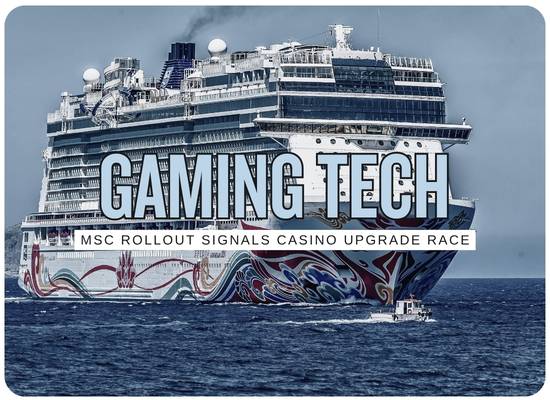
I see MSC Cruises’ progressive blackjack deployment as a useful signal because it reframes the casino floor question. Cruise operators do not always need more square footage, more cabinets, or more machines to grow gaming revenue. They may need better monetization of the tables they already have, better jackpot visibility, stronger player tracking, and a more exciting reason for guests to sit down, stay longer, and return later in the voyage.

30 MSC blackjack tables included in the North America rollout
7 MSC ships included after an evaluation period
2,000+ MSC slot machines advertised across the fleet
$ / ft² The metric operators should use before adding machines

The square-foot problem inside a cruise casino

A land casino can sometimes expand a floor. A cruise ship usually cannot. The casino is competing with bars, shops, lounges, circulation, restaurants, entertainment, photo retail, and guest amenities. That means every new slot machine, table game, kiosk, display, cashier location, jackpot sign, or loyalty desk has an opportunity cost. The best cruise casino technology is not the one with the flashiest screen. It is the one that raises revenue per square foot without breaking passenger flow or the ship’s hotel experience.

Slot machines are the volume engine

Slots usually win on automation, labor efficiency, game count, and breadth of player appeal.

Tables are the social engine

Blackjack, roulette, craps, baccarat, and poker variants create energy, staff interaction, and visible action.

Progressives can turn tables into media

A linked meter, jackpot display, sensor system, dealer pad, and player-tracking layer can make existing tables feel more like an event.

Operator read: the real question is not “progressive jackpots or slots?” It is whether adding a progressive layer to existing tables creates more incremental revenue per square foot than replacing nearby guest space with more slot machines.

Progressive jackpots versus more slot machines

Progressive table jackpot

Better when the table already exists

The progressive case is strongest when a cruise line can add sensors, displays, dealer interfaces, tracking, side-bet meters, reporting, and jackpot logic to tables already occupying the floor. The square footage is already committed. The incremental revenue comes from side-bet participation, longer play, higher excitement, repeat visits, and stronger player data.

More slots

Better when space and power are available

The slot case is strongest when there is available floor area, strong demand, enough electrical and data capacity, and no higher-value competing use for the space. Slots can be extremely efficient, but on a cruise ship the hidden cost is the space removed from another onboard revenue stream.

8 ROI levers cruise casino teams should model

1 Existing table productivity

A progressive layer can monetize tables without expanding the casino

The strongest table-jackpot argument is that the operator is improving an existing asset. If the blackjack pit already consumes the square footage and dealer labor, a progressive system only has to create enough incremental play to beat its technology, service, jackpot funding, and installation costs. That is a different ROI profile than adding machines that need cabinets, chairs, wiring, floor space, and guest traffic.

Best metricIncremental table GGR per occupied table square foot.
Watch itemDo not count existing base blackjack revenue as new jackpot revenue.
Buyer questionCan the system lift table revenue without slowing hands per hour?
2 Side-bet participation

The jackpot only works if enough seated players buy the extra wager

Progressive table ROI depends heavily on participation. A meter can look exciting, but the economics come from how often players add the progressive wager, how much they wager, and whether the jackpot structure feels frequent enough to keep casual players engaged. Cruise casinos have a unique advantage here because the same guests pass the same casino night after night during the voyage.

Best metricProgressive wager penetration by table, sailing night, and player segment.
Watch itemHigh jackpot visibility can fail if the buy-in feels confusing or slow.
Buyer questionCan the dealer explain the progressive wager in less than 20 seconds?
3 Hands per hour

Dealer workflow can make or break the technology

The cruise casino does not benefit if jackpot processing slows the table, creates dealer confusion, increases disputes, or interrupts base-game rhythm. Sensors, dealer pads, digital tracking, and clear displays should reduce friction, not add a second job to the dealer. A progressive system that protects game speed can create incremental revenue without sacrificing ordinary blackjack yield.

Best metricHands per hour before and after installation.
Watch itemA slow jackpot process may reduce base game revenue.
Buyer questionWhat is the observed dealer learning curve after installation?
4 Jackpot visibility

The meter is also an onboard marketing screen

Progressive jackpots are not only math. They are theater. A large visible meter, celebratory display, table signage, winner messaging, and daily jackpot story can pull guests toward the pit. On a cruise ship, that has special value because guests walk past the same casino repeatedly and may decide to play later after seeing the jackpot grow.

Best metricTable approach rate and conversion after jackpot signage changes.
Watch itemVisual clutter can hurt a premium casino feel.
Buyer questionCan jackpot messaging be customized by ship, sailing, event, or promotion?
5 Slot displacement

More machines are not free if they replace another onboard revenue use

Slots can generate strong revenue, but a cruise ship has limited casino floor area. Adding 20 to 40 more machines may require removing seating, widening or narrowing circulation, taking space from a bar, reducing lounge comfort, or crowding an already dense area. Progressive table jackpots may win when the operator wants revenue growth without changing the floor plan.

Best metricAlternative-use revenue per square foot of the space a slot bank would consume.
Watch itemMore machines can dilute performance if weak games are added.
Buyer questionAre you adding productive machines or merely increasing cabinet count?
6 Player data

Table tracking can make casino comps more precise

Slot players are easier to track because machines naturally capture carded play. Tables have historically been harder to measure with the same precision. A modern table system can improve digital tracking, wager detection, session data, player segmentation, promotional targeting, and casino-comp decisions. That may matter as much as the jackpot itself.

Best metricIncrease in rated table play and repeat casino visits by sailing.
Watch itemData has to integrate into the cruise line’s casino rewards strategy.
Buyer questionCan table data improve comp offers without over-rewarding low-value play?
7 Service and uptime

The system needs cruise-grade support, not just casino-floor features

A cruise ship cannot always wait for a land-based technician. Progressive table systems need reliable sensors, dealer tablets, displays, wiring, back-office reporting, spare parts, remote support, technician availability, and installation workflows that survive ship movement, limited maintenance windows, port calls, and multiple jurisdictions. Uptime belongs in the ROI model.

Best metricProgressive-enabled table availability during casino open hours.
Watch itemA high-performing table system loses ROI fast if sensors or displays are unreliable.
Buyer questionWhat is the service plan when the ship changes region?
8 Responsible gaming and guest experience

Jackpot excitement should not weaken trust

Cruise casinos are entertainment spaces inside a family travel product. Jackpot technology should be designed around transparent rules, clear displays, accurate metering, dispute control, staff training, responsible gaming messaging, and a casino experience that feels exciting without becoming predatory or confusing. Long-term ROI depends on guest trust as much as short-term play.

Best metricGuest satisfaction, complaints, disputes, and repeat player participation.
Watch itemConfusing rules or poorly handled payouts can damage the casino brand.
Buyer questionAre rules, odds language, displays, and dealer scripts easy for casual guests?

ROI comparison matrix

The best cruise casino floor decision depends on whether the ship has unused floor area, underperforming tables, low slot density, weak table tracking, or a guest mix that wants more social play.

Decision Area Progressive Table Jackpot More Slot Machines Best Buyer Test Hidden Cost
Square footage Uses existing table area if retrofitted onto current pit. Requires floor space, cabinet space, chairs, access and traffic paths. Compare incremental revenue per existing table square foot against revenue per new slot square foot. Lost bar, lounge, retail, circulation or entertainment space.
Labor Still dealer-dependent, but improves monetization of staffed tables. Lower direct labor per unit, though maintenance and floor service still matter. Measure incremental revenue per dealer hour and per casino open hour. Dealer procedure errors or slower games.
Capex Sensors, displays, dealer pads, back-office software, installation and license fees. Cabinets, bases, chairs, wiring, data, signage, floor work and game fees. Calculate payback after service, license and uptime assumptions. Technology refresh and spare-parts support.
Guest excitement Creates visible jackpot energy around social games. Creates variety, themes, progressive meters and fast solo play. Track walk-up conversion, session length and repeat casino visits. Casino can feel too crowded or visually cluttered.
Data capture Can improve rated table play and comp targeting. Usually strong player tracking through slot systems. Compare carded play, theoretical win accuracy and comp cost per retained player. Poor integration with cruise rewards and onboard account systems.
Risk profile Dependent on side-bet adoption, game speed and support quality. Dependent on machine productivity, location and cabinet demand. Run a limited evaluation period before fleetwide rollout. Overexpansion into low-productivity machines or weak table adoption.
Best fit Ships with active blackjack pits, limited floor space and strong repeat casino traffic. Ships with underdeveloped slot floors, available space and strong machine demand. Use sailing-by-sailing revenue per square foot and per guest day. Assuming land-casino ratios apply perfectly at sea.

Cruise Casino Progressive Jackpot vs Slot Expansion ROI Tool

Use this quick calculator to compare the incremental economics of adding progressive jackpot technology to existing tables versus adding more slot machines.

Result

Revenue profile

Progressive net $0
Slot expansion net $0
Revenue per ft² winner $0

    Investment priority ranking

    For cruise casinos, the highest-value projects are often the ones that improve gaming yield without creating a floor-plan fight.

    Progressive table jackpot on existing blackjack tablesROI priority 94
    Table-game tracking and player rating accuracyROI priority 90
    Slot floor optimization before machine expansionROI priority 86
    Casino loyalty and comp model integrationROI priority 82
    New slot machine expansionROI priority depends on space
    Casino floor enlargementROI priority depends on displacement

    Supplier opportunity map

    The high-value spend is not only the jackpot game. It is the full table technology stack that makes the pit measurable, promotable, supportable, and integrated with the cruise line’s casino program.

    Supplier Lane Buyer Problem Commercial Pitch Proof Buyers Should Request
    Progressive jackpot platforms Tables lack the visible meter excitement of slots. Add jackpot energy to existing tables without major floor-plan change. Incremental GGR, adoption rate, game speed, uptime, payout accuracy.
    Table sensors and dealer pads Manual tracking creates friction and weak data. Detect wagers, simplify dealer procedure, and reduce disputes. Accuracy, learning curve, fault rate, service process, spare parts.
    Digital displays and jackpot signage Table games lack visual pull from across the floor. Turn table games into a visible event with live jackpot messaging. Custom content, meter accuracy, install footprint, glare, durability.
    Casino analytics platforms Operator cannot compare table and slot productivity cleanly. Measure revenue per square foot, per open hour, per player segment. Data integration, dashboard design, export rights, comp-model support.
    Slot optimization vendors More machines may not mean higher floor profit. Remove weak games, improve placement, and expand only where demand supports it. Win per unit per day, occupancy, location heat maps, floor displacement model.
    Installation and service teams Cruise deployment is harder than land casino installation. Support phased rollout, remote troubleshooting, and port-based repairs. Ship references, spares plan, remote support, install hours, technician availability.
    Casino loyalty consultants Table play may not feed comp offers precisely enough. Use better table data to improve reinvestment and future cruise offers. Rated-play improvement, comp cost controls, repeat booking lift, responsible gaming controls.

    Procurement rules before buying the system

    Measure the base pit first

    Know current table win, hands per hour, active seats, carded play, side-bet adoption, dealer procedures, and downtime before installing a progressive system.

    Run a shipboard evaluation period

    A cruise casino is not a Las Vegas floor. Test the system by sailing length, itinerary, passenger demographic, dealer team, and port schedule.

    Compare against slot displacement

    Do not compare progressive table revenue to slot revenue in the abstract. Compare it to the revenue from the specific floor space slots would consume.

    Buy service and data, not just jackpot hardware

    The vendor should support sensors, displays, dealer pads, reporting, spares, ship moves, software, technician availability, and integration with loyalty programs.

    Keep responsible gaming visible

    Rules, wager options, jackpot odds language, guest messaging, staff training, and dispute procedures should be clear before rollout.

    The answer is not slots or jackpots. It is productivity per square foot.

    Progressive table-game jackpots can beat more slot machines in one very specific cruise scenario: the tables already exist, the pit has traffic, guests understand the wager, dealer procedure stays fast, the jackpot display creates visible energy, and the system improves player data without consuming new floor space. Slots still remain the gaming volume engine, but on a ship, every cabinet fights for scarce square footage. The smartest casino operators will stop asking how many machines they can fit and start asking which technology produces the highest incremental revenue from the casino floor they already have.

    Feedback Welcome

    We welcome your feedback, suggestions, corrections, and ideas for enhancements.

    Please click here to get in touch
    By the ShipUniverse Editorial Team — About Us | Contact