
🔔 Subscribe to ShipUniverse Weekly →
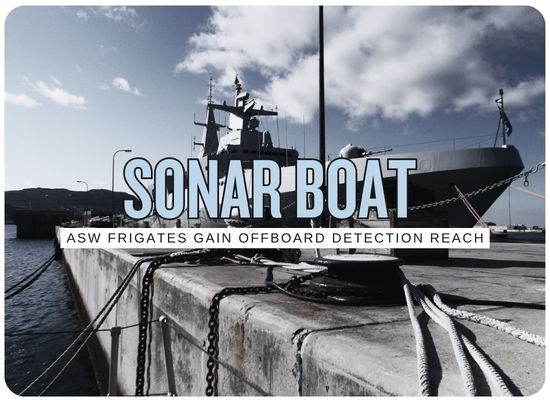
Should every ASW frigate carry its own unmanned sonar boat?
Anyone who has worked around ASW knows the frigate is always balancing reach, noise, weather, helicopter availability and time on station. The Dutch idea is simple enough to understand: put a dipping sonar on a small unmanned boat, push it away from the mothership, and make the submarine problem bigger for the other side.
The data in 30 seconds
Each future Royal Netherlands Navy ASW frigate is planned to receive a 12-meter unmanned surface vessel.
The USV is planned around an adapted Thales Compact FLASH dipping sonar.
Two ships are planned for the Netherlands and two for Belgium, replacing aging M-frigates.
Earlier Dutch concept work discussed a minimum 96-hour endurance target for meaningful time on station.
The new ASW triangle
Frigate
The ship brings endurance, command, hull sonar, variable-depth sonar, weapons, helicopter support, processing power and tactical control.
Helicopter
The helicopter remains the fast-moving ASW asset for sonobuoys, dipping sonar, localization and torpedo delivery when weather, deck cycle and availability allow.
Unmanned sonar boat
The USV can sit away from the frigate, dip a sonar, complicate submarine tracking and reduce the pressure on the helicopter as the only offboard sensor.
10 systems that decide whether the unmanned sonar boat works
-
01
Mission bay
Space reserved before steel is locked
A 12-meter USV is not a small tender. It needs length, height, maintenance access, fuel, spares, lashings and a clear route from stowage to launch.
Best fitNew frigates with mission bays designed around unmanned systems.Failure pointTrying to retrofit a large USV into a bay built for boats and stores. -
02
Launch recovery
Cradle, handling gear and sea-state performance
The sonar boat only matters if the crew can launch and recover it safely in the conditions where submarines still operate.
Best fitDedicated cradle or launch-and-recovery system built into the frigate design.Failure pointDeck handling that works in trials but not in North Atlantic weather. -
03
Dipping sonar
Compact FLASH integration and sonar handling
The payload is the point. The boat needs to lower, stabilize, power, protect and recover the sonar while preserving acoustic performance.
Best fitCentral moonpool or protected deployment path with motion control.Failure pointGood sonar fitted to a hull that cannot keep the sensor stable enough. -
04
Endurance
Enough hours to justify launch and recovery
If the boat has to return too often, handling time eats the mission. The useful target is not only total endurance, but the hours spent actually listening.
Best fitMulti-day missions with time split between transit and stationary sonar work.Failure pointShort endurance that turns the USV into a frequent deck-cycle burden. -
05
Seakeeping
North Atlantic motion, spray and recovery loads
ASW is not a calm-water mission. Pitch, roll, heave, deck motion and sea-state recovery drive the real design, not renderings.
Best fitHull form, propulsion and sonar deployment designed around rough-water duty.Failure pointA boat that can transit but cannot dip effectively in useful conditions. -
06
Connectivity
Secure command links and acoustic data return
The USV has to pass useful data back to the ship without becoming an easy electronic target or losing control at the wrong moment.
Best fitResilient links, fallback modes and clear control authority.Failure pointHigh-bandwidth assumptions that fail under EMCON, jamming or weather. -
07
Combat system
Fusion with hull sonar, VDS, sonobuoys and helicopter data
The unmanned boat cannot become another isolated display. Its value appears when contacts are fused into the frigate’s underwater warfare picture.
Best fitMultistatic ASW architecture with common track management.Failure pointMore acoustic data without better tactical decisions. -
08
Autonomy
Sprint, hold station, avoid collision and return home
The boat does not need to be a free-thinking submarine hunter. It does need reliable autonomy for station keeping, route following, collision avoidance and emergency return.
Best fitSupervised autonomy with predictable fallback behavior.Failure pointA remote-control burden that steals operators from the ASW fight. -
09
Support
Fuel, spares, maintainers and onboard repair
The USV becomes part of the ship’s machinery load. Engines, batteries, winches, sonar handling gear, sensors, software and seals all need support at sea.
Best fitPlanned maintenance routines and shipboard troubleshooting tools.Failure pointA high-end payload sidelined by small mechanical faults. -
10
Doctrine
Clear rules for when to launch, dip, move and recover
Owning the boat is not the same as using it well. Crews need playbooks for barrier search, localization, decoy risk, EMCON, helicopter handoff and torpedo prosecution.
Best fitDoctrine built around frigate, helicopter and USV working as one team.Failure pointThe USV becomes a gadget instead of a repeatable ASW tactic.
Frigate buyer screen
| Question | Good answer | Weak answer | Procurement risk |
|---|---|---|---|
| Does the mission bay fit the boat? | Space, route, service access and handling are designed in. | USV fit is left to late-stage integration. | The ship carries the concept but not the capability. |
| Can the ship launch it in useful weather? | LARS is designed around realistic sea-state operations. | Trial conditions are calmer than expected operating areas. | The boat stays aboard when it is needed most. |
| Does the sonar work away from the ship? | Dipping, stabilization, power and acoustic processing are proven. | Payload integration is treated as a bolt-on. | Expensive offboard sensor gives poor contact quality. |
| Is the data fused into the ASW picture? | Tracks feed the combat system, helicopter and underwater warfare suite. | USV data appears on a separate console. | More data creates slower decisions. |
| Can the crew support it? | Maintenance, spares, diagnostics and training are funded. | The USV depends on contractor support after deployment. | Availability drops after early demonstrations. |
| Does it change the ASW tactic? | The ship has clear launch, dip, handoff and recovery doctrine. | Operators improvise use case by use case. | The USV becomes underused deck cargo. |
USV value heat map
Supplier opportunity map
| System | High-value spend | Buyer question | Failure point |
|---|---|---|---|
| USV hull | Composite or aluminum hull, propulsion, fuel, sensors, autonomy. | Can it sprint, hold station and survive rough-water ASW work? | Boat optimized for transit, not sonar operations. |
| Dipping sonar | Compact FLASH adaptation, winch, moonpool, power, processing. | Can it deliver usable acoustic data while unmanned? | Sonar motion and handling degrade contact quality. |
| LARS | Cradle, davit, stern ramp, rails, restraints and controls. | Can sailors launch and recover it safely in relevant conditions? | Mission value limited by deck handling. |
| Command links | LOS links, fallback modes, encryption, antennas and control stations. | Can it work under EMCON, jamming and weather limits? | Unreliable link turns autonomy into risk. |
| Combat-system fusion | Track management, acoustic processing, CMS integration, operator displays. | Does USV data improve the underwater picture? | Extra console, slower ASW team. |
| Maintenance package | Diagnostics, spares, modular swaps, software support and training. | Can the ship keep the USV available without shore support? | Small failures sideline the system. |
| Training and doctrine | Simulator, mission playbooks, recovery drills, ASW team procedures. | Does the crew know exactly when and how to use it? | Capability never becomes a repeatable tactic. |
Buy one per ship, or share them?
| Fleet model | Best fit | Upside | Risk |
|---|---|---|---|
| One USV per frigate | Dedicated ASW frigates with mission bay designed around the boat. | Immediate organic reach and less dependence on task-group assets. | Higher acquisition and sustainment load across every hull. |
| Shared squadron pool | Fleets with many escorts but limited ASW-specialist deployments. | Lower unit count and better centralized maintenance. | The USV may not be with the ship when needed. |
| Task-group USV node | Carrier or amphibious groups with large support ships nearby. | Concentrates maintenance, data processing and specialists. | Less organic independence for the frigate. |
| Mission-bay reserved, buy later | New frigates where requirements are still moving. | Preserves upgrade path without buying immature hardware too early. | Delay can leave the ship under-equipped for modern ASW. |
Red flags before adding an unmanned sonar boat
| Red flag | Problem underneath | Buyer check |
|---|---|---|
| Render-first design | The concept looks clean, but launch, recovery and maintenance are undercooked. | Demand deck-cycle trials and maintenance workflow reviews. |
| Sonar fitted late | The boat is not shaped around the acoustic payload. | Review moonpool, winch, motion and power design early. |
| No EMCON answer | The USV needs links, but the frigate may need to stay quiet. | Define low-probability-of-intercept, fallback and autonomous return modes. |
| Separate acoustic picture | Operators receive more data without better fusion. | Require CMS and underwater-warfare-suite integration. |
| Weak support plan | Engines, seals, software, sonar handling gear and batteries need maintenance. | Fund spares, diagnostics and crew training from day one. |
| Helicopter replacement language | The USV is being oversold. | Treat it as a complement to helicopters and ship sonars, not a replacement. |
ASW Frigate USV Fit Checker
Use this quick screen to judge whether a frigate should carry its own unmanned sonar boat, reserve the space, or rely on a shared fleet pool.
Generated by ShipUniverse.com. This is a practical screening aid, not engineering or procurement advice. Real programs should test launch/recovery, seakeeping, sonar performance, acoustic processing, cyber resilience, EMCON behavior, crew workload, maintenance access and combat-system integration.
We welcome your feedback, suggestions, corrections, and ideas for enhancements.
Please click here to get in touch