Red Sea Attack Fears Put Tanker Rates on Surge Watch
🔔 Subscribe to ShipUniverse Weekly →
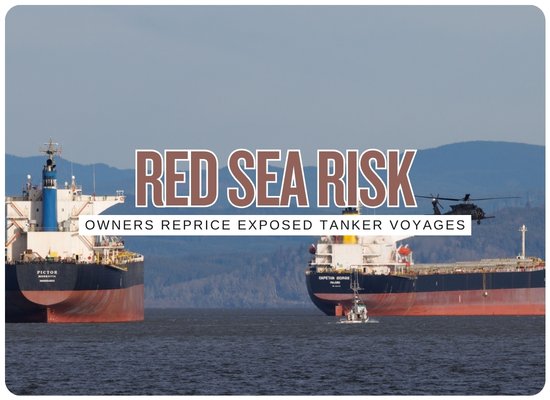
Tanker markets are moving back into a higher-risk pricing cycle as fresh Red Sea attack fears make owners more cautious about sending ships through Bab el-Mandeb and the wider Red Sea corridor. The latest pressure comes after Houthi-linked threats and attacks involving Saudi-linked energy flows, just as Saudi Arabia has been relying more heavily on its Red Sea export route through Yanbu to work around disruption in the Strait of Hormuz.
Red Sea Risk Moves Directly Into Tanker Pricing
Owner caution, insurance pressure, route deviation, and Saudi export flows are all feeding into the rate outlook.
Owner Avoidance Risk
Some owners may require higher rates, stronger indemnities, or clearer voyage protections before accepting Red Sea exposure.
VLCC and Suezmax Sensitivity
Large crude tankers tied to Saudi, Gulf, and Asian flows can reprice quickly when Bab el-Mandeb and Hormuz risk overlap.
Clean Product Spillover
MR and LR product tankers may see support if diesel, gasoline, and refined product routes from the Red Sea become less predictable.
Insurance Cost Shock
War-risk premiums, crew terms, exclusions, and underwriter appetite can raise the delivered cost of moving oil cargoes.
Cape Route Pressure
Eastbound cargoes avoiding Bab el-Mandeb may need longer routes, adding vessel days, bunker cost, and fleet-tightening effects.
Operator Readout
The tanker-rate risk is tied to available tonnage, not only cargo demand. If owners avoid the corridor, ships stay longer on voyages, insurance costs rise, and charterers compete for fewer acceptable vessels. That is the setup that can move rates fast.
Red Sea Tanker Rate Watch
The latest attack fears are pushing charterers, owners, and insurers back into risk-priced voyage discussions.
The market setup is rate-supportive because Red Sea risk can reduce willing tonnage while cargo demand continues. If more owners refuse the corridor, charterers may need to pay higher freight, accept delays, split cargoes, switch loading programs, or absorb longer Cape routing for some eastbound barrels.
Commodity vessels reported through Bab el-Mandeb in one latest daily snapshot, the lowest daily total in months.
Oil tankers included in that same Bab el-Mandeb traffic snapshot.
Brent briefly moved above this level after recent Red Sea attack concerns entered the oil market.
Tanker Rate Pressure Table
| Rate Driver | Latest Readout | Market Meaning | Stakeholders Affected | Watch Level |
|---|---|---|---|---|
| Bab el-Mandeb avoidance | Owners may become more selective on Red Sea voyages | Reduced willing tonnage can lift freight rates even if cargo volume is unchanged. | Owners, charterers, brokers, traders | High |
| Saudi Red Sea exports | Yanbu flows have become more important during Hormuz disruption | Higher reliance on Red Sea loading increases sensitivity to Houthi threats. | Saudi exporters, VLCC owners, refiners, buyers | High |
| War-risk insurance | Premiums and underwriter appetite are under pressure | Insurance cost can become a separate negotiation item on top of freight. | Insurers, P&I clubs, owners, cargo interests | Watch |
| VLCC availability | Large crude carriers face higher route and cargo scrutiny | Rate moves can accelerate if supertankers avoid the corridor or wait for cover. | VLCC owners, charterers, oil majors, traders | High |
| Product tanker support | Clean product flows may face rerouting and longer ton-mile demand | MR and LR rates can benefit if diesel and product trades are redirected. | Product tanker owners, refiners, fuel buyers | Medium |
| Cape routing | Longer voyages may be needed for certain cargoes | Extra voyage days absorb ships, lift fuel cost, and tighten available capacity. | Charterers, freight desks, bunker buyers, ports | Watch |
Planning note: The most important rate signal is owner willingness. A route can remain technically open while the commercial market still reprices because crews, insurers, owners, and charterers do not view the risk in the same way.
Tanker Rate Surge Exposure Calculator
Estimate added voyage cost from higher tanker rates, waiting time, war-risk insurance, and route deviation.
Estimated added rate cost from the selected uplift and vessel class.
Estimated added time and bunker exposure from disruption days.
Estimated total exposure before any commercial recovery.
Estimated unrecovered exposure spread across the cargo volume.
The modeled case shows a large tanker-rate and voyage-cost shock.
Senior reviewThis tool is for editorial and commercial sensitivity only. It does not replace live tanker quotes, Worldscale assessments, war-risk insurance terms, P&I guidance, demurrage clauses, bunker prices, route instructions, cargo contracts, or professional chartering analysis.
We welcome your feedback, suggestions, corrections, and ideas for enhancements.
Please click here to get in touch