Hormuz Bottleneck Holds as Red Sea Traffic Shows a Tentative Recovery
🔔 Subscribe to ShipUniverse Weekly →
The latest Middle East shipping update shows a split picture across the region’s two most watched energy corridors. Bab el-Mandeb traffic has improved from the worst weekend readings, with 28 vessels moving through the strait on Monday, including multiple crude and product tankers, but that recovery is still fragile after Houthi threats against Saudi-linked shipping changed vessel behavior around the Red Sea. Hormuz remains the bigger pressure point. Only six commodity-carrying ships crossed the strait on Monday, following seven on Sunday, and recent weekly tracking showed a steep fall in total transits compared with the previous week. At the same time, Saudi crude movements through Red Sea export routes are becoming harder to track as tanker operators turn off public AIS signals near Yanbu or adjust voyages after Houthi warnings.
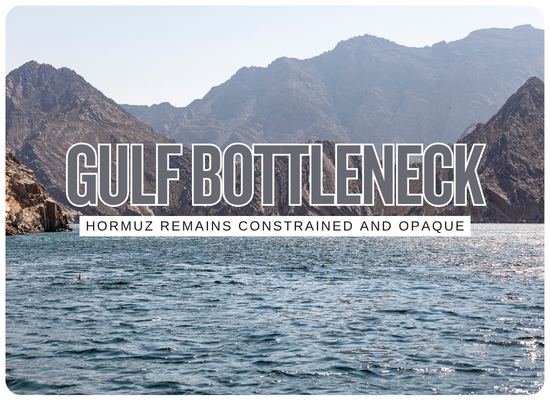
Hormuz Remains the Main Shipping Constraint
Red Sea movement improved, but Gulf traffic remains thin and harder to read because of AIS gaps and security uncertainty.
Hormuz Transit Weakness
Only a small number of commodity-carrying vessels crossed the strait in the latest daily reading, keeping Gulf energy logistics under pressure.
Red Sea Partial Recovery
Bab el-Mandeb movement improved from the weekend low, but traffic remains below the month’s stronger readings.
Saudi Export Visibility
More tanker activity near Yanbu is slipping out of public tracking, making open AIS data less reliable for live cargo-flow assessment.
LNG and VLCC Exposure
Large crude carriers and LNG ships remain highly sensitive to corridor approvals, war-risk cover, charter clauses, and route instructions.
Diplomatic Mechanism
A regional proposal involving Hormuz management and voluntary fees is now part of the shipping-risk discussion.
Operator Readout
The market is not seeing a clean reopening signal yet. Bab el-Mandeb has improved, but Hormuz remains the key constraint for energy shipping, especially when vessel tracking gaps, owner risk appetite, underwriter approvals, and Gulf cargo timing are all moving at once.
Middle East Corridor Status Board
The latest update shows a partial Red Sea improvement while Hormuz continues to lag.
The current traffic picture is uneven. Bab el-Mandeb moved higher on the latest daily reading, helped by outbound tanker movement and a few large crude ships clearing the Red Sea. Hormuz remains much tighter, with low commodity-vessel counts and several signs that operators are either pausing, rerouting, switching off AIS, or moving only under a narrower risk profile.
Latest Bab el-Mandeb daily transit count, the strongest reading in four days but still below the month’s peak.
Latest Hormuz commodity-vessel transit count, showing continued pressure on Gulf cargo movement.
Oil flow through Hormuz averaged about this level in 2024, equal to roughly one-fifth of global petroleum liquids consumption.
Corridor Update Table
| Corridor / Signal | Latest Readout | Commercial Meaning | Stakeholders Affected | Watch Level |
|---|---|---|---|---|
| Strait of Hormuz | Six commodity-carrying vessels in the latest daily reading | Gulf energy flow remains constrained, especially for large crude and LNG-linked trades. | Tankers, LNG carriers, charterers, traders, insurers | High |
| Hormuz weekly trend | Recent weekly transits fell to 78 from 174 in the prior week | The corridor has not returned to normal commercial rhythm despite some isolated crossings. | Owners, brokers, oil buyers, gas buyers | High |
| Bab el-Mandeb | Twenty-eight vessels moved through on the latest daily count | The Red Sea route is showing some movement again, but traffic remains below stronger July levels. | Container lines, tankers, ports, bunker buyers | Medium |
| Saudi Red Sea exports | More tanker activity near Yanbu is disappearing from public AIS tracking | Open vessel data may undercount movement, but hidden transit also signals elevated security concern. | Saudi crude buyers, tanker owners, analysts, insurers | Watch |
| Houthi Red Sea pressure | Saudi-linked shipping remains under threat after the announced blockade | Route access can stay technically open while owner appetite, insurance cover, and cargo timing remain unsettled. | Owners, charterers, P&I clubs, oil traders | High |
| Regional negotiation track | Oman-backed mechanism involving voluntary Hormuz fees is under discussion | Any accepted arrangement could affect transit confidence, cost allocation, and route approval language. | Gulf states, Iran, operators, insurers, cargo interests | Watch |
Planning note: The key split is between visible movement and trusted movement. Bab el-Mandeb is showing a partial improvement, but Hormuz still has low observed crossings and more uncertainty around security control, AIS behavior, insurance clearance, and shipowner willingness.
Hormuz Cargo Exposure Estimator
Model the commercial impact of low transit counts, delay days, AIS uncertainty, and Red Sea backup-route pressure.
Modeled gap between expected and observed daily traffic.
Estimated cargo value moving through the selected corridor case.
Estimated exposure before recovery, including delay, security, and tracking-risk adjustment.
Estimated remaining exposure after selected recovery.
The modeled case shows major transit weakness with meaningful unrecovered cost.
Route economics reviewThis tool is for editorial and commercial sensitivity only. It does not replace live AIS intelligence, charter fixtures, war-risk quotes, port-agent instructions, naval advisories, cargo contracts, P&I guidance, or professional voyage planning.
We welcome your feedback, suggestions, corrections, and ideas for enhancements.
Please click here to get in touch