TKMS vs Hanwha: What Canada’s Submarine Choice Says About Naval Export Competition
🔔 Subscribe to ShipUniverse Weekly →
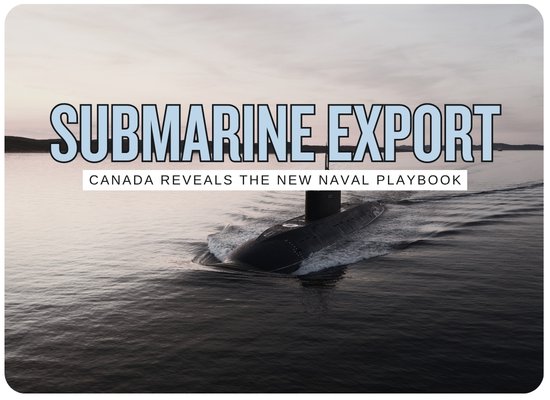
Canada’s submarine decision shows a new export reality. Winning a major naval deal now requires more than a strong platform. It takes alliance credibility, industrial benefits, delivery confidence, Arctic suitability, sustainment depth, and a political package that can survive decades.
The submarine contest became a partnership contest
Canada’s choice of TKMS over Hanwha Ocean does not mean the Korean submarine was dismissed as technically weak. The public message from Ottawa was almost the opposite. Both bidders were described as strong, both platforms were presented as meeting Royal Canadian Navy needs, and Hanwha remains the reserve supplier if final negotiations with TKMS do not reach agreement.
The decision points to something larger in naval exports. Submarine programs are no longer evaluated only by range, endurance, weapons, sensors, and price. Canada needed a fleet that could support Atlantic, Pacific, and Arctic operations while also building a long-term sustainment enterprise at home. That turned the competition into a test of national strategy as much as naval engineering.
Export signal board
Alliance pull mattered
The Type 212CD offer carried a strong NATO-interoperability message, with Germany and Norway positioned as long-term state partners rather than only platform suppliers.
Speed still shaped the race
Hanwha’s pitch leaned hard into active production, schedule confidence, and fast delivery, showing that Korean shipbuilding speed remains a serious export weapon.
Sustainment became central
Canada is not simply buying submarines. It is trying to build infrastructure, workforce, training, maintenance, supply chains, and sovereign support capacity.
Export bids are getting political
Future submarine competitions will likely be won by industrial-state packages, not only by the technically strongest or cheapest platform.
The split between platform and ecosystem
The core lesson from Canada’s choice is that submarine exports are becoming ecosystem exports. A modern conventional submarine is the visible product, but the real program includes training pipelines, dry docks, simulators, torpedo integration, crew development, parts supply, combat-system upgrades, battery support, AIP servicing, shipyard infrastructure, acoustic knowledge, cybersecurity, and allied operational access.
That wider ecosystem may explain why TKMS had an advantage even though Hanwha pushed a strong delivery message. Canada’s decision favored a European and NATO-linked framework that promised interoperability, long-term sustainment, industrial participation, and a shared roadmap with Germany and Norway. For Ottawa, that likely reduced political and operational risk.
7 export lessons from the TKMS and Hanwha contest
Canada’s submarine choice offers a useful map for shipbuilders, naval suppliers, brokers, investors, and governments watching the next round of global undersea competitions.
- ❶ Alliance edge Submarine exports now sell political trust A submarine is one of the most sensitive platforms a country can buy. The winning bidder has to satisfy military operators, intelligence partners, export-control authorities, finance officials, industrial-policy teams, and political leadership. TKMS benefited from a Germany-Norway partnership that fit Canada’s NATO commitments and Arctic posture. In high-end naval exports, trust can be as valuable as tonnage.
- ❷ Delivery race Schedule is becoming a combat feature Canada’s current submarine fleet is nearing the end of its service life, so delivery timing became more than a procurement detail. It became a capability-gap issue. Hanwha used Korean shipbuilding speed as a central part of its pitch, while TKMS countered with accelerated delivery through production-slot reallocation. In future competitions, the bidder with the best paper submarine may still lose if delivery confidence is weak.
- ❸ Arctic credibility Cold-water performance is now export leverage Canada’s submarine requirement is tied to three oceans and Arctic sovereignty. That gives special value to under-ice capability, endurance, quiet operation, sensors, crew safety, long-range patrols, and support infrastructure in harsh regions. Bidders targeting Canada, Norway, Australia, the Netherlands, Japan, or northern European customers need more than general blue-water language. They need a credible cold-water operating story.
- ❹ Sustainment pull The service market can shape the purchase Canada has made sustainment in Canada a major theme. That changes the export competition. Winning the platform deal also means building a long-term Canadian support system: dry docks, homeport maintenance, training, simulators, spares, upgrades, and skilled trades. For suppliers, the money may not sit only in submarine construction. It may sit in the support economy that follows each hull for decades.
- ❺ Industrial offer Jobs and supply chains are part of the weapon Big naval exports now arrive with industrial packages that reach into steel, batteries, critical minerals, torpedoes, simulators, software, clean energy, sensors, research, and shipyard infrastructure. Canada’s language around matched investment and Canadian industry participation shows that the submarine deal is also an economic-security project. A bidder that cannot translate platform value into domestic industrial value starts at a disadvantage.
- ❻ Non-NATO challenge Korean shipbuilders remain serious contenders Hanwha losing Canada should not be read as Korean weakness. The KSS-III campaign demonstrated that South Korea can bring a modern submarine, active production capacity, export ambition, and aggressive delivery messaging into a top-tier Western competition. For countries less anchored to NATO interoperability, Korean yards may remain highly competitive, especially when speed, cost, and industrial co-production matter most.
- ❼ Strategic packaging Future naval exports will look like alliances The old export model was platform first. The new model is platform plus government partnership, plus financing, plus sustainment, plus supply-chain access, plus local jobs, plus shared security posture. Canada’s submarine choice shows that the winning package has to answer military, economic, diplomatic, and industrial questions at the same time.
TKMS and Hanwha comparison matrix
The competition can be understood as two very different strengths colliding. TKMS had the NATO and Arctic partnership story. Hanwha had the speed and production-confidence story.
| Competition factor | TKMS Type 212CD position | Hanwha KSS-III position | Export lesson |
|---|---|---|---|
| Alliance fit | Strong NATO alignment through Germany and Norway | Strong democratic partner, but outside NATO | Alliance status can influence close naval decisions |
| Delivery confidence | Accelerated delivery through production-slot adjustments | Fast schedule message built around active production capacity | Speed is now central to submarine export strategy |
| Arctic messaging | Presented as optimized for Arctic waters and under-ice operations | Presented as meeting Canadian requirements, with emphasis on endurance and capability | Cold-water credibility matters for northern navies |
| Industrial package | Positioned around Canadian jobs, sustainment, technology transfer, and European supply chains | Positioned around Canadian economic impact, delivery certainty, and Korean industrial scale | Economic statecraft is now embedded in naval exports |
| Sustainment model | Strong message around Canadian infrastructure, homeport support, and long-term partnership | Strong message around production line maturity and fleet transition timing | The support economy can be as important as the initial build |
| Procurement politics | Transatlantic security fit helped the final case | Reserve supplier status keeps leverage alive if negotiations fail | Large submarine deals rarely end with a purely technical scorecard |
Export competition pressure gauge
Canada’s decision suggests future submarine bids will be judged across a wider field than platform performance alone.
Supplier lanes created by Canada’s choice
The preferred supplier decision is not the end of the commercial story. If TKMS negotiations proceed to contract, a much larger supplier race begins inside Canada. The opportunity shifts into infrastructure, sustainment, training, torpedoes, batteries, sensors, software, cyber, simulation, dry docks, and long-term fleet support.
| Supplier lane | Opportunity driver | Best positioned firms | Main risk |
|---|---|---|---|
| Submarine sustainment | Canada wants long-term maintenance and support capacity near homeports | Ship repair firms, naval engineering houses, depot support providers | Security clearance, submarine-specific skills, workforce scarcity |
| Training and simulation | New submarine class requires new crew pipeline and training systems | Simulator providers, software firms, naval training specialists | Realism, classification, update burden, operator acceptance |
| Batteries and energy systems | Modern conventional submarines need advanced energy storage and power management | Battery, fuel-cell, clean-energy, power electronics, safety-system companies | Qualification, thermal safety, imported subcomponent exposure |
| Weapons and payload support | Submarine force expansion creates demand around torpedoes, launch systems, test gear, and handling | Munitions, test equipment, depot support, precision manufacturing firms | Certification, export rules, limited supplier base |
| Acoustic and stealth services | Quiet operation requires coatings, mounts, vibration control, signature testing, and maintenance discipline | Acoustic engineering, materials, coatings, sensor, and test-range specialists | Performance can degrade if support practices are weak |
| Combat-system integration | Submarines need secure communications, sensors, data links, cyber-hardening, and mission software | Defense electronics, cyber, command software, secure communications firms | Interoperability, classification, data rights, update approvals |
| Port and dock infrastructure | Canada needs facilities to house, support, maintain, and protect the new fleet | Marine construction, electrical, heavy civil, dry dock, security, and utilities contractors | Permitting, cost growth, schedule compression, skilled trades availability |
Three strategic lanes for naval exporters
The alliance lane
This lane favors bidders backed by close security relationships, shared doctrine, training compatibility, export certainty, and operational trust.
- Best fit for NATO-linked and treaty-aligned suppliers.
- Strong in competitions involving Arctic, intelligence, and allied patrol requirements.
- Weakness appears when delivery timing or industrial benefits lag.
The speed lane
This lane favors builders with active production lines, fast labor mobilization, repeatable shipyard processes, and proven delivery discipline.
- Best fit for Korean and other high-capacity shipbuilding exporters.
- Strong in countries facing urgent fleet replacement gaps.
- Weakness appears when alliance integration carries more weight than schedule.
The sovereign support lane
This lane favors bidders that can help the buyer build local maintenance, training, depot repair, spares, and technology-transfer capacity.
- Best fit for countries that want more than imported platforms.
- Creates long-term value for local suppliers and skilled trades.
- Weakness appears if technical data rights or support control remain limited.
Red flags inside future submarine export bids
The Canada competition shows that platform strength alone is not enough. Buyers will scrutinize whether a bidder can deliver submarines, sustain them, support domestic industry, and fit the buyer’s geopolitical posture.
| Red flag | Problem underneath | Diligence question |
|---|---|---|
| Strong platform but weak state backing | Export approvals, financing, and diplomatic support may become fragile | Does the bidder bring a government-to-government framework or only a commercial offer? |
| Fast delivery with thin sustainment plan | Early arrival may create long-term support strain | Can the buyer maintain the fleet domestically after delivery? |
| Industrial benefits without technical depth | Local jobs may not translate into sovereign capability | Are design knowledge, IP transfer, training, and depot rights included? |
| Alliance pitch without schedule confidence | Political trust may not solve capability gaps | Can the bidder prove production slots, workforce, and delivery timing? |
| Arctic claims without support infrastructure | Cold-water operations require bases, crews, training, sensors, and maintenance | Is the operating ecosystem ready for the claimed environment? |
| Reserve supplier treated as irrelevant | Negotiations can fail, prices can move, and politics can shift | Does the losing bidder remain viable if the preferred path stalls? |
Export scorecard for submarine builders
- ❶ Trust Security alignment supports close decisions Submarine buyers want confidence that the supplier government, export system, industrial base, and military relationship will remain dependable for decades.
- ❷ Time Delivery speed now carries strategic weight A submarine arriving two years earlier can matter if an aging fleet is heading toward retirement and crew experience is already thin.
- ❸ Support Local sustainment is part of sovereignty Buyers increasingly want maintenance, repair, training, spares, and upgrade capacity inside their own country or close to homeports.
- ❹ Interoperability Submarines must fit allied operations Sensors, communications, training, weapons, intelligence sharing, maintenance practices, and crew pipelines all matter when the buyer operates inside an alliance structure.
- ❺ Industry Offset packages are evolving into supply-chain strategy The best industrial packages create lasting supplier capability, not only ribbon-cutting announcements.
- ❻ Resilience Export winners need lifecycle credibility A submarine program can last half a century. Bidders need a credible answer for obsolescence, cyber updates, batteries, propulsion support, combat-system upgrades, and parts availability.
Submarine Export Bid Strength Meter
Use this quick tool to score whether a submarine export bid looks strong across the same factors Canada’s decision brought into focus.
This tool is a practical screening aid, not investment advice. Real diligence should include classified performance, contract terms, delivery slots, government guarantees, export approvals, sustainment rights, training plans, industrial obligations, and lifecycle cost.
Bottom line for naval export competition
Canada’s submarine decision does not simply crown TKMS and dismiss Hanwha. It shows a broader shift in naval export competition. TKMS won the preferred position by presenting a platform inside a transatlantic partnership, while Hanwha showed that Korean delivery speed and industrial ambition can push into the final stage of a major Western submarine race.
The next generation of naval export contests will be fought across more than the ship. Bidders will compete on alliance trust, production speed, sovereign support, local jobs, technology transfer, Arctic or regional fit, and long-term operating confidence. Canada’s choice is a signal to every shipbuilder chasing future submarine work: the export package now matters almost as much as the submarine itself.
We welcome your feedback, suggestions, corrections, and ideas for enhancements.
Please click here to get in touch