Novorossiysk Crude Restart Eases Black Sea Supply Pressure
🔔 Subscribe to ShipUniverse Weekly →
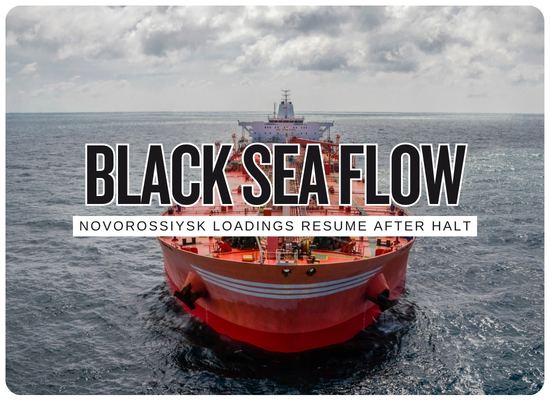
Crude loadings have resumed at Russia’s Novorossiysk oil-export complex after several days of disruption tied to bad weather, drone threats, and attacks on vessels near Black Sea terminals. The restart is important because Novorossiysk is one of the most watched oil gateways in the region, with Russian barrels moving through Sheskharis and Kazakh crude flowing through the nearby Caspian Pipeline Consortium terminal. The outage had forced Kazakhstan to cut production sharply after its main export route was constrained, and the resumption of CPC loadings with two tankers at single-point moorings gives producers a way to restart export flows into the pipeline system.
Ship Universe Black Sea Oil Watch
Operator Impact Snapshot
Novorossiysk loadings have restarted, but the Black Sea crude route remains exposed to security and scheduling risk.
The restart reduces immediate supply pressure, but owners and cargo interests still need to treat the Black Sea export chain as a live risk environment rather than a routine port call.
Crude flow restart
Loadings resuming at Sheskharis and CPC eases near-term export pressure after days of halted or constrained operations.
Kazakh export exposure
The CPC system carries most Kazakh crude exports, so a Black Sea pause can quickly force upstream production adjustments.
Drone-risk overhang
Recent tanker attacks mean shipowner confidence, insurer appetite, and terminal safety windows remain central to sustained loading.
Night movement restrictions
Temporary limits on vessel movement can compress berthing schedules, slow turnarounds, and increase demurrage exposure.
Oil market sensitivity
Even a short halt can affect crude price sentiment because the combined Russian and Kazakh flows are large enough to matter globally.
Commercial Reading
The restart is constructive for crude availability, but operational confidence will depend on several uninterrupted loading cycles, safe tanker approaches, stable weather, and continued pipeline intake.
- Shipowners: check port notices, terminal windows, drone advisories, crew briefings, war-risk cover, and berth timing.
- Charterers: model demurrage, delay, deviation, cancellation, and substitute cargo exposure.
- Oil traders: monitor loading programs, pipeline intake, tanker nominations, and cargo slippage into later dates.
- Insurers: review vessel identity, terminal exposure, approach route, war-risk pricing, and recent attack patterns.
- Suppliers: watch bunker demand, agency services, launch windows, port support work, and credit exposure around delayed calls.
Black Sea Crude Board
Loading Restart, Pipeline Exposure, and Tanker Risk Signals
The restart relieves immediate supply pressure, but vessel confidence and terminal safety remain the key operating tests.
Latest Flow Setup
Average crude volume shipped through the terminal so far this year.
Share of Kazakhstan’s crude exports moving through the CPC route.
Approximate May and June export rate through the CPC terminal.
Reported daily production after the terminal closure, down from 2.16 million bpd in June.
Crude Flow Table
| Issue Area | Latest Detail | Market Effect | Stakeholder Move | Pressure Meter |
|---|---|---|---|---|
| Sheskharis Restart Russian crude route | The terminal resumed crude loadings after several days of disruption linked to weather and drone activity. | Helps restore Russian Black Sea crude flows, but continuity depends on safe tanker movement. | Track tanker departures, berth queues, load program slippage, port notices, and fresh attack warnings. |
High
|
| CPC Terminal Restart Kazakh crude lifeline | CPC restarted loadings at its marine terminal near Novorossiysk after a week-long suspension. | Eases pressure on Kazakhstan’s producers after export constraints forced output cuts. | Watch pipeline intake, SPM availability, tanker nominations, field production recovery, and shipowner participation. |
High
|
| Tanker Security Drone and USV exposure | Recent attacks targeted vessels loading or approaching Black Sea terminals. | Shipowner reluctance can reduce effective terminal capacity even when physical infrastructure is available. | Confirm war-risk terms, vessel identity exposure, AIS policy, approach routing, emergency contacts, and crew briefings. |
Watch
|
| Movement Window Limits Night restrictions | Temporary restrictions on vessel movement at Novorossiysk can compress arrival and departure schedules. | Smaller operating windows can increase waiting time, demurrage, and schedule bunching. | Build buffers into laycans, agency plans, pilot timing, tug bookings, and berth coordination. |
Medium High
|
| Upstream Production Kazakhstan cuts | Kazakhstan’s daily output fell sharply after export constraints at the Black Sea terminal. | A logistics disruption can quickly move upstream into field output, storage management, and export schedules. | Monitor field ramp-up, storage limits, pipeline nominations, and cargo lifting programs. |
High
|
| Oil Price Sentiment Supply-risk premium | Restart news reduces one supply worry, but Black Sea and Middle East disruptions still affect crude sentiment. | Traders may reprice quickly if loadings stabilize, but fresh attacks can restore the risk premium fast. | Compare physical loading data, freight costs, war-risk quotes, and forward price moves before assuming stability. |
Watch
|
Black Sea Crude Restart Calculator
Estimate delayed barrels, demurrage exposure, war-risk cost, and restart confidence after a crude loading halt.
This tool helps oil traders, tanker owners, charterers, insurers, and port-service teams model the commercial exposure created by a short Black Sea crude loading disruption.
Delayed Barrel Exposure
3.3M bbl
Estimated crude volume delayed during the halt or constrained loading period.
Recovered Flow Rate
487,500 bpd
Estimated current loading pace under the selected restart recovery percentage.
Delay Cost Exposure
$1.3M
Estimated tanker waiting cost tied to delayed vessels and halt duration.
War-Risk Cost Estimate
$980,000
Estimated added war-risk premium across the selected delayed tanker group.
Crude Restart Signal
Loadings have resumed, but security pressure, port restrictions, and delayed vessel costs still make the restart vulnerable under these assumptions.
We welcome your feedback, suggestions, corrections, and ideas for enhancements.
Please click here to get in touch