Asia LNG Price Spike Puts Shipping Risk Back in the Gas Market
🔔 Subscribe to ShipUniverse Weekly →
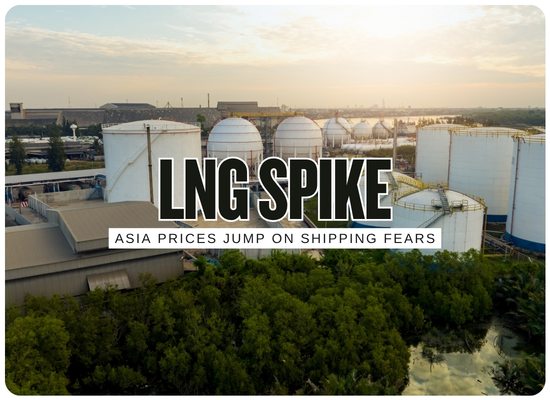
Asian spot LNG prices rose for a fifth straight week to their highest level in four months, with September delivery into northeast Asia assessed around $22 per mmBtu, up from about $20.10 per mmBtu the prior week, as traders priced in wider Middle East shipping disruption risk. The move was tied to weakening traffic through the Strait of Hormuz, fresh Red Sea concerns after Houthi attacks on Saudi-linked tankers, and the risk that LNG buyers could face tighter spot availability, longer voyage times, or higher freight cover if Gulf and Red Sea routes remain unstable.
LNG buyers are pricing shipping disruption back into cargo value
The price jump reflects more than seasonal demand. It shows how quickly chokepoint risk can move Asian LNG procurement and freight decisions.
Northeast Asia spot LNG moved near $22 per mmBtu, making replacement cargoes more expensive for exposed buyers.
Qatar and UAE LNG flows rely on the Strait of Hormuz, keeping Gulf shipping confidence central to Asian gas pricing.
Houthi-linked tanker attacks and Saudi-route warnings add concern that one chokepoint problem could spread into another corridor.
Longer routes, security delays, and tighter prompt tonnage can change carrier economics even before physical LNG shortages appear.
Asian utilities may face higher replacement cargo costs, timing risk, and stronger competition for flexible spot supply.
Asia LNG price spike signal map
The table converts the four-month-high price move into practical signals for LNG buyers, carriers, utilities, exporters, traders, and chartering desks.
| Signal | Current status | Commercial effect | Operator read | Next item to watch | Level |
|---|---|---|---|---|---|
| Spot LNG price | Northeast Asia delivery rose near $22 per mmBtu. | Replacement cargoes become materially more expensive. | Utilities and portfolio buyers face faster procurement cost pressure. | Next weekly JKM and physical cargo offers. | High |
| Hormuz flow confidence | Market attention remains fixed on Gulf LNG movement. | Qatar and UAE cargo reliability affects Asian price formation. | Even partial disruption can lift spot cargo premiums. | Vessel transits, terminal nominations, and escort status. | High |
| Red Sea spread risk | Houthi-linked attacks add another route-risk layer. | Energy markets price the chance of multiple chokepoints being stressed together. | Shipping fear can lift LNG even without LNG-specific attacks. | Saudi-linked vessel response and naval advisories. | Watch |
| Carrier availability | Prompt carrier coverage becomes more sensitive during route disruption. | Longer voyages and delays can reduce effective fleet capacity. | Charterers should expect tighter scheduling windows. | LNG carrier spot rates and fixture activity. | Medium |
| China portfolio moves | China has restarted some LNG re-export activity during stronger JKM pricing. | Flexible cargo behavior can add or remove spot liquidity in Asia-Pacific. | Re-exports may soften tightness if domestic Chinese demand remains weak. | Reload volumes and Chinese terminal activity. | Watch |
| Utility budget exposure | Higher spot prices hit buyers without enough contract cover or storage. | One cargo price change can create multimillion-dollar cost swings. | Procurement timing becomes a larger financial variable. | Weather demand, storage levels, and tender results. | High |
LNG Shipping Disruption Cost Meter
A practical tool for estimating the cost impact of a price spike, shipping delay, and route-risk setting on a single LNG cargo.
This cargo has high exposure because the spot price move creates a multimillion-dollar swing before freight delay costs are added.
We welcome your feedback, suggestions, corrections, and ideas for enhancements.
Please click here to get in touch