NYK Takes 50% of Avenir LNG as Bunkering Scale Becomes the Next Fuel Battleground
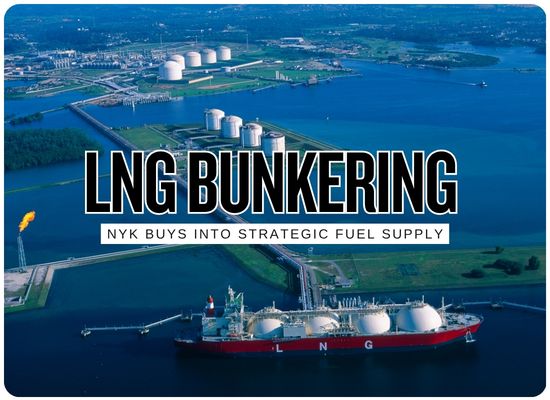
NYK’s purchase of half of Avenir LNG moves LNG bunkering deeper into the hands of large strategic shipowners at a time when dual-fuel orders, bio-LNG interest and fuel-security concerns are reshaping marine-fuel planning. The transaction gives NYK and Stolt-Nielsen joint control of one of the world’s larger LNG bunker-vessel platforms, with Avenir already operating five LNG bunker and supply vessels and two larger 20,000 cbm newbuilds scheduled to enter the fleet in late 2026 and early 2027.
LNG Bunkering Moves From Niche Service to Strategic Infrastructure
The deal gives NYK direct exposure to small-scale LNG supply, bunker-vessel capacity, bio-LNG optionality and customer fuel logistics.
Strategic Control of Fuel Supply
NYK is not just buying into a shipping asset. It is buying into the infrastructure layer that makes LNG-fueled vessels practical in real trade lanes.
Fleet Growth Already Booked
Avenir’s two 20,000 cbm newbuild bunker vessels are scheduled for delivery in late 2026 and early 2027, expanding both vessel count and supply capacity.
Bio-LNG Optionality Matters
The venture is framed around LNG and bio-LNG, which gives customers a pathway from conventional LNG toward lower-carbon methane-based fuels.
Infrastructure Must Match Orders
LNG dual-fuel vessel ordering is strong, but the commercial value depends on reliable bunkering coverage, pricing, contracts and port access.
Large Owners Are Moving Upstream
NYK’s Avenir investment follows a broader LNG push, showing that major shipping groups want exposure beyond vessel ownership alone.
The operating signal is that LNG bunkering capacity is becoming a scarce strategic layer. Owners can order dual-fuel vessels, but those ships only gain commercial flexibility when fuel supply, bunker windows and bio-LNG pathways are available where the fleet actually trades.
NYK and Avenir LNG Deal Board
The transaction links shipowner strategy, small-scale LNG logistics, bunker-vessel capacity, bio-LNG optionality and long-term customer demand.
The strongest read is that NYK is buying into the physical fuel-delivery layer behind LNG-fueled shipping. That is different from ordering dual-fuel ships. A bunker vessel, supply desk, charter book and customer network can become the practical bridge between fuel strategy and daily vessel operations.
Stake acquired by NYK in Avenir LNG from Stolt-Nielsen Gas.
Five LNG bunker and supply vessels in operation, with two newbuilds under construction.
Capacity of each newbuild LNG bunker and supply vessel ordered by Avenir.
Third-party charter revenue backlog including options reported after the Vitol charter agreement.
Commercial Signal Table
| Signal | Latest Detail | Commercial Read | Stakeholders | Status |
|---|---|---|---|---|
| Ownership reset | NYK completed its acquisition of 50% of Avenir LNG from Stolt-Nielsen Gas. | Avenir becomes a jointly controlled strategic platform rather than a wholly Stolt-controlled LNG investment. | NYK, Stolt-Nielsen, Avenir LNG, customers, lenders | Completed |
| Bunkering platform | Avenir operates one of the larger small-scale LNG bunker-vessel networks. | The value is in coverage, vessel flexibility, customer contracts and the ability to supply LNG where dual-fuel ships trade. | Dual-fuel owners, charterers, ports, fuel suppliers | Strategic |
| Fleet expansion | Two 20,000 cbm newbuild bunker and supply vessels are scheduled for Q4 2026 and Q1 2027. | Capacity expansion arrives just as more LNG dual-fuel ships enter service and need reliable bunkering windows. | Shipyards, bunker buyers, charterers, ports | Positive |
| Vitol charter support | The first 20,000 cbm newbuild is fixed to Vitol for seven years, with extension options up to 10 years. | Long-term charter backing reduces speculative fleet risk and supports financing confidence. | Vitol, Avenir, lenders, bunker customers | Positive |
| Bio-LNG pathway | The venture is explicitly framed around LNG and bio-LNG bunkering opportunities. | Bio-LNG gives the platform a compliance and decarbonization story beyond conventional fossil LNG. | Fuel buyers, regulators, ESG teams, cruise and liner operators | Developing |
| NYK LNG value chain | NYK has also moved deeper into LNG through MidOcean Energy investment plans. | The company is building LNG exposure across upstream project investment, shipping and bunkering infrastructure. | Energy customers, LNG carriers, investors, strategic partners | Strategic |
| Market demand | LNG dual-fuel vessels remain a large share of alternative-fuel ordering. | More LNG-capable vessels increase the need for bunker vessels, port compatibility and physical delivery capacity. | Shipowners, ports, bunker suppliers, equipment makers | Strong |
| Execution risk | The infrastructure layer still depends on utilization, fuel spreads, regulation, methane-slip performance and customer uptake. | The deal improves scale, but the economics still need real bunkering demand and disciplined deployment. | Owners, charterers, suppliers, banks, insurers | Watch |
| Competitive pressure | LNG bunker-vessel supply is growing globally as more operators invest. | Avenir’s early fleet and customer book help, but future returns depend on route coverage and utilization, not vessel count alone. | Avenir, Shell, TotalEnergies, Vitol, port operators | Competitive |
| Customer impact | More scaled bunkering operators can improve confidence for owners considering LNG-capable ships. | Reliable bunker access may become a deciding factor in whether LNG dual-fuel tonnage is commercially useful on a route. | Container lines, cruise operators, car carriers, tankers | Important |
LNG Bunkering JV Value Estimator
Estimate annual revenue, EBITDA potential, payback and strategic value for an LNG bunker-vessel platform or joint venture.
Estimated delivered LNG and bio-LNG capacity after utilization.
Delivered capacity multiplied by net margin per cbm.
Gross margin after estimated fleet operating costs.
Estimated annual EBITDA share at the selected ownership percentage.
The modeled platform may be more valuable as fuel infrastructure and customer access than as a short-payback asset alone.
Scale and contracts matterThis tool is for editorial and commercial sensitivity only. It does not replace audited financials, charter-party terms, bunker price curves, LNG supply contracts, vessel valuations, terminal availability, regulatory analysis, methane-slip analysis, tax advice, antitrust review or professional investment diligence.
We welcome your feedback, suggestions, corrections, and ideas for enhancements.
Please click here to get in touch