Philippines Targets Shipyard Red Tape With One-Stop Approval Push as Asian Shipbuilding Competition Intensifies
🔔 Subscribe to ShipUniverse Weekly →
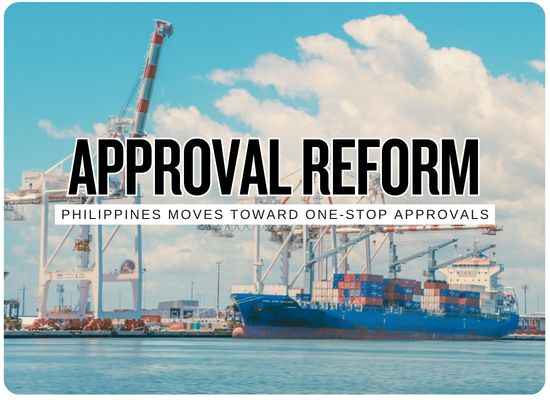
The Philippines is moving toward a one-stop regulatory system for shipbuilding and ship repair as the Maritime Industry Authority and Anti-Red Tape Authority work to consolidate and simplify permits, licensing and approvals across government agencies. At a Strategic Whole-of-Government forum announced September 16, MARINA and ARTA outlined proposals including a “submit once” policy, parallel agency processing, unified application tracking, an SBSR One-Stop Shop and interoperable digital systems. MARINA is also moving its MARINA-BEST platform to new cloud infrastructure and is targeting full functionality of its shipbuilding and ship repair digital modules by the end of 2026. The measures remain under development rather than fully implemented, with the agencies working toward a harmonized regulatory framework for Philippine yards.
Shipyard Approvals Are Being Reengineered
From Multiple Touchpoints to a Shared Approval Path
The reform effort is focused on changing the administrative route around Philippine shipyards while retaining safety, environmental and labor requirements.
| Regulatory Area | Current Structure | Reform Direction | Status | Stakeholders |
|---|---|---|---|---|
| Document Submission | Applicants can encounter overlapping documentary requirements across agencies. | Introduce a "submit once" framework for shared information. | Proposed | Shipyards, investors, regulators |
| Agency Review | Reviews can occur sequentially across separate government bodies. | Move suitable approvals into parallel processing. | Proposed | MARINA, DENR, DOLE, LGUs and related agencies |
| Application Tracking | Status information can sit across separate regulatory channels. | Develop a unified tracking system. | Proposed | Applicants and government agencies |
| SBSR One-Stop Shop | Shipyard approvals currently involve several regulatory interfaces. | Create a consolidated SBSR approval access point. | In Development | New yards, existing yards, foreign investors |
| MARINA-BEST | MARINA already operates digital regulatory infrastructure. | Move to new cloud infrastructure and expand SBSR modules. | Under Upgrade | MARINA-regulated entities |
| Licensing Process | Existing shipyard registration and licensing requirements remain in force. | MARINA has committed to reflect a streamlined eight-step process in its Citizen's Charter. | Being Reworked | Existing and prospective shipyard operators |
| Redundant Requirements | Current rules include items such as association affiliation and local permitting documentation. | Authorities are assessing whether certain requirements can be removed or consolidated. | Under Review | Shipyards and regulatory agencies |
| Joint Rules | Responsibilities are distributed across multiple agencies. | MARINA and ARTA are working toward a Joint Memorandum Circular to institutionalize harmonized processes. | In Preparation | National and local regulators |
OECD analysis using MARINA data counted 123 active yards in 2024, including 7 Class A, 19 Class B and 97 Class C facilities.
The majority of Philippine yards are smaller Class C facilities, while a limited number of large yards account for much of the country's export-oriented construction output.
Ship repair remains a major component of the domestic SBSR industry and serves both Philippine and foreign vessel operators.
Philippine Shipyard Regulatory Readiness Checker
Map documentation commonly required under the current MARINA shipyard licensing framework while the proposed one-stop system is being developed.
We welcome your feedback, suggestions, corrections, and ideas for enhancements.
Please click here to get in touch