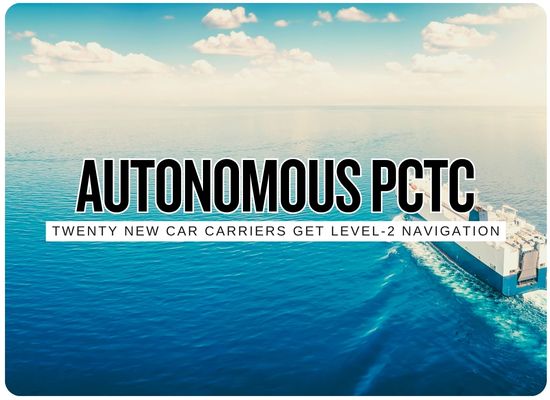
Twenty New PCTCs Will Get Level-2 Autonomous Navigation
🔔 Subscribe to ShipUniverse Weekly →
CIDO Shipping has signed an agreement with HD Hyundai subsidiary Avikus to install the HiNAS Control autonomous navigation and digital-operation system across 20 LNG dual-fuel, 7,600-CEU pure car and truck carriers now under construction at China Merchants Heavy Industry in China. The ships will use Avikus’ Smart Standard subscription package and begin entering service from 2027. HiNAS Control can automatically manage vessel heading and engine RPM, follow an optimized route and respond to collision risks, while the bridge team remains responsible for the vessel and can immediately resume manual control. The agreement also establishes a framework covering another 12 planned PCTCs, potentially expanding deployment to 32 ships.
Twenty new car carriers will be built with automated navigation control
CIDO Shipping is moving HiNAS Control into a large newbuilding series, integrating AI-based navigation, collision avoidance and engine-RPM optimization directly into the bridge operating environment.
Avikus describes HiNAS Control as Level 2 autonomous navigation, but the system remains assistive. The master retains authority and a certified officer must maintain a safe navigational watch.
The signed agreement covers the 20 vessels currently under construction and creates a framework for another 12 ships within the same newbuilding program, potentially taking deployment to 243,200 CEU of capacity.
Exactly What Level-2 HiNAS Control Can Do
| Bridge Function | Information Used | HiNAS Control Role | Vessel Response | Human Role | Automation Status |
|---|---|---|---|---|---|
| Situational Awareness | Radar, AIS, electro-optical cameras, infrared cameras and other navigational inputs. | Sensor fusion creates a combined operating picture and identifies surrounding traffic and hazards. | Targets and navigation conditions are continuously assessed. | Officer monitors the situation and system behavior. | AI Assisted |
| Route Following | Planned track, vessel position and navigation conditions. | Calculates steering actions required to remain on the planned route. | Heading can be adjusted automatically. | Bridge team supervises and may override. | Automated Control |
| Collision Avoidance | Detected vessels, relative movement, navigation route and surrounding traffic. | Assesses collision risk and calculates avoidance actions. | Route and heading can be altered while the system is engaged. | Officer maintains watch and remains responsible for safe navigation. | Automated Control |
| Engine RPM | Weather, currents, draft, route and scheduled arrival time. | RPM Optimizer calculates a more efficient propulsion setting. | Engine RPM can be adjusted to support voyage efficiency. | Crew monitors propulsion and voyage requirements. | Automated Control |
| Voyage Optimization | Route, environmental conditions and arrival requirements. | Continuously evaluates route and speed efficiency. | Navigation and propulsion commands can be coordinated. | Bridge team remains part of the operating loop. | AI + Automation |
| Low Visibility | Radar, AIS and infrared camera data supplement optical imagery. | Sensor fusion continues identifying surrounding targets. | System continues operating while its sensor limits are satisfied. | Crew remains responsible for determining whether conditions are safe. | Condition Based |
| System Limitation | Sensor quality, weather and operating conditions. | Alerts operators when operating conditions exceed system capability. | Control can be returned to bridge personnel. | Human operators take control. | Human Takeover |
| Command Authority | Full vessel operating situation. | HiNAS performs defined automated navigation functions only when engaged. | Automated actions remain subject to bridge supervision. | Master retains final authority over the vessel. | Master Retains Control |
| Crew Requirement | Normal navigational watchkeeping requirements. | Reduces workload on selected repetitive navigation functions. | Vessel remains conventionally crewed. | Certified officer maintains a safe navigational watch. | Crew Remains |
Avikus uses Level 2 to describe its automated navigation technology. IMO's historic Degree Two MASS terminology described a remotely controlled vessel with seafarers onboard. The CIDO announcement does not say these ships will be remotely operated from shore.
Korean Register recorded steel cutting for the first CIDO 7,600-CEU dual-fuel PCTC at CMHI Jiangsu on April 13, 2026.
PCTC Autonomous Navigation Savings Model
Test how a small voyage-efficiency improvement scales across 20 ships, then compare it with the potential 32-vessel program.
We welcome your feedback, suggestions, corrections, and ideas for enhancements.
Please click here to get in touch