Saudi Arabia Rebuilds Oil Exports With 60 Million-Barrel Sohar Ship-to-Ship Relay
🔔 Subscribe to ShipUniverse Weekly →
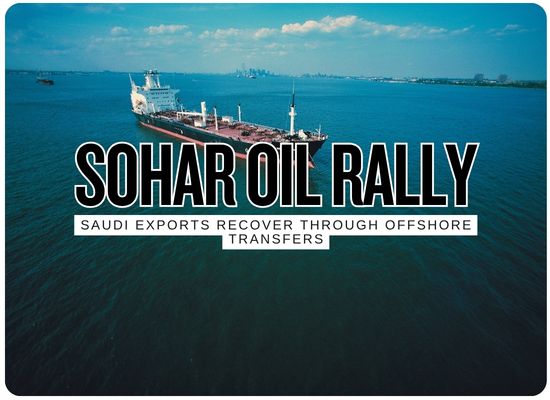
Saudi Arabia is rebuilding crude exports from its Gulf terminals through a large ship-to-ship transfer program off Sohar, Oman, after attacks on the East-West Pipeline sharply reduced flows to the Red Sea export hub at Yanbu. Multiple trade sources told Reuters that Saudi Aramco has sold about 60 million barrels for September and October loading from Ras Tanura, with the crude moved through the Strait of Hormuz by shuttle tankers and transferred to other vessels off Sohar for onward delivery. Gulf-side Saudi exports have recovered to roughly 1 million to 1.5 million barrels per day, with Chinese and South Korean refiners among the largest buyers and additional cargoes heading to India and Japan. The operation is restoring part of the lost export capacity but has shifted the constraint into shipping: Kpler says Sohar and Fujairah are operating at or close to their STS limits, while Middle East Gulf-to-Asia VLCC freight has surged and Reuters reported a record Worldscale 800 rate for an early-October 2-million-barrel Fujairah-to-Asia fixture. Aramco has not publicly commented on the reported 60-million-barrel sales program.
The Sohar Oil Relay
Saudi Arabia is using a two-vessel relay to rebuild Asian crude exports while its East-West Pipeline and Yanbu export system remain constrained.
Saudi Export Logistics Reset
The crude is available. The emerging constraint is moving it from Saudi Gulf terminals, through Hormuz and across increasingly crowded ship-to-ship infrastructure outside the strait.
| Link | Current Role | Scale / Activity | Main Constraint | Shipping Effect | Commercial Signal |
|---|---|---|---|---|---|
| Ras Tanura | GULF LOADOUT Saudi Export Origin | Reuters says approximately 60 million barrels have been sold from Ras Tanura for September and October using onward Sohar STS delivery. | The terminal lies inside Hormuz, so every shuttle cargo must still clear the strait. | Higher Gulf loading shifts tanker employment back toward Saudi east-coast terminals. | Saudi Gulf exports have recovered to approximately 1.0-1.5 million bpd on average. |
| Strait of Hormuz | HIGH-RISK LEG Shuttle Transit | Shuttle tankers carry Saudi crude out of the Gulf before transferring it to receiving vessels. | Commercial traffic remains sharply below historical levels and vessel movements remain exposed to regional military risk. | Tanker utilization rises because one cargo now requires a dedicated short-haul shuttle leg plus onward carriage. | Kpler estimates a substantial freight premium for voyages requiring direct Middle East Gulf exposure. |
| Sohar / Gulf of Oman | TRANSFER HUB STS Outside Hormuz | Crude is lightered from the Gulf shuttle tanker into a receiving tanker positioned outside the strait. | Kpler says Sohar and Fujairah are believed to be operating at or close to STS capacity. | Lightering equipment, transfer slots, weather windows and vessel coordination become physical throughput constraints. | Gulf of Oman STS volumes had already risen substantially before the latest Saudi sales program. |
| Shuttle VLCC Fleet | EXPANDING 0.11-0.13M bpd / VLCC | Kpler estimates that one additional shuttle VLCC contributes roughly 110,000-130,000 bpd of export capacity at current utilization. | Turnaround time has lengthened, with observed shuttle utilization falling to about 1.7 transits per month. | Moving 3 million bpd of redirected Yanbu crude through Ras Tanura could require roughly 25 additional shuttle VLCCs. | Kpler identifies Bahri and Sinokor as major pools of tonnage potentially available for the shuttle trade. |
| Asian Refiners | BUYING China + South Korea Lead | Reuters says China and South Korea are the largest buyers of the additional spot cargoes, with India and Japan also receiving volumes. | Record tanker freight increases delivered crude cost even when physical Saudi supply remains available. | STS allows the long-haul receiving tanker to avoid entering the Gulf itself. | Japan's refiners say crude supplies are secured through November partly because Saudi cargoes continue moving through this structure. |
| Yanbu / Petroline | DISRUPTED Red Sea Route Reduced | The East-West Pipeline outage has reduced the crude available for export from Saudi Arabia's west coast. | Damaged pumping infrastructure and low west-coast inventories limit sustained export loading. | Barrels previously moved by pipeline now require more tanker-intensive routing from the Gulf. | Reports that Saudi Arabia could restore part of Petroline capacity have helped ease oil-price fears. |
Sohar STS & Shuttle Fleet Planner
Convert an emergency crude export program into average daily throughput, VLCC-size transfer events and the shuttle fleet required to move the barrels through Hormuz.
We welcome your feedback, suggestions, corrections, and ideas for enhancements.
Please click here to get in touch