German Port Strike Hits Six North Sea Gateways as Wage Fight Disrupts Cargo Flow
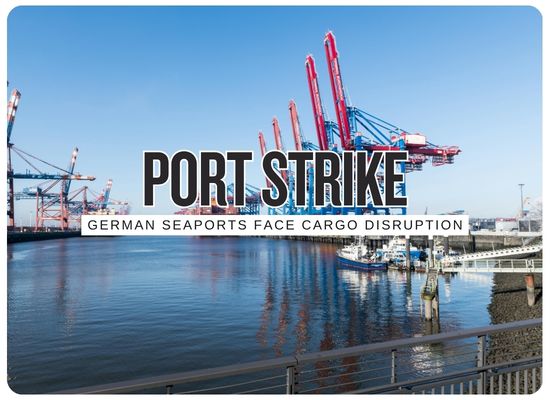
A coordinated 24-hour warning strike disrupted operations across six German seaports, adding a fresh labor shock to northern Europe’s container, automotive, breakbulk, inland rail and trucking networks. The action affected Hamburg, Bremerhaven, Bremen, Wilhelmshaven, Emden and Brake, with the stoppage beginning on Monday evening and running through the following day at key locations. Hamburg saw particularly broad disruption, including major container terminals operated by HHLA and Eurogate, while Bremerhaven and Wilhelmshaven added scale to the container impact and Emden, Brake and Bremen widened the effect across vehicles, bulk, general cargo and regional port activity. The dispute centers on pay and contract length, with Ver.di pushing for a stronger 12-month wage increase and employers offering a lower increase over a longer term.
Ship Universe Port Labor Watch
Operator Impact Snapshot
Six German seaports were pulled into the same 24-hour labor action.
Container terminal disruption
Hamburg, Bremerhaven and Wilhelmshaven give the strike direct exposure to Germany’s main container gateway system.
Short strike, longer tail
A 24-hour stoppage can still create multi-day effects if vessels, trucks, trains and export cutoffs miss their windows.
Hamburg concentration
More than a dozen Hamburg port businesses were affected, including major HHLA and Eurogate container terminals.
Wage talks unresolved
The strike ended, but the pay dispute remains open, keeping the risk of renewed labor pressure in the logistics calendar.
Inland schedule friction
Rail slots, truck appointments, import pickups and export receiving windows can be affected even after terminal gates reopen.
German Port Strike Board
Six Ports, One Labor Shock, Multiple Cargo Channels
The stoppage moved beyond one terminal and reached the wider North Sea gateway system.
Hamburg, Bremerhaven, Bremen, Wilhelmshaven, Emden and Brake.
The warning strike began with late shifts on August 17 and continued into August 18.
The sectoral dispute covers Germany’s seaport workforce represented in the negotiation.
German reporting cited Ver.di estimates of roughly 5,000 workers taking part.
| Port or Issue | Latest Detail | Commercial Signal | Delay Channel | Pressure Meter |
|---|---|---|---|---|
| HamburgGermany’s largest seaport | The action included major HHLA terminals at Altenwerder, Burchardkai and Tollerort, plus Eurogate. | Hamburg’s 8.3 million TEU 2025 scale makes even a short stoppage meaningful for ocean and inland flows. | Vessel work, rail departures, truck slots, import release and export cutoffs. | High |
| BremerhavenContainer and vehicle gateway | The strike reached the automobile terminal and the wider Bremen-Bremerhaven port group. | Bremerhaven’s large container and vehicle role raises exposure across finished cars, reefer, industrial and deepsea cargo. | Vehicle loading plans, container berths, reefer flows and rail-linked cargo. | High |
| WilhelmshavenDeep-water container terminal | Workers at the container terminal were part of the coordinated action. | The port has become more important after handling about 1.47 million TEU in 2025. | Mainline vessel windows, feeder timing, rail plans and terminal recovery sequencing. | Medium High |
| Bremen, Emden and BrakeMixed cargo exposure | The strike widened beyond container-heavy gateways into additional seaport functions. | The disruption covered a broader cargo mix, including vehicles, breakbulk, bulk, project and regional freight. | Terminal labor availability, berth handling, gate operations and shortsea connections. | Medium |
| Wage Gap8.2% demand versus 5.1% offer | Ver.di wants an 8.2% hourly wage increase or at least €2.50 per hour over 12 months. | ZDS offered 5.1% over 19 months with added holiday pay and container-operation allowances. | Further stoppage risk depends on the next negotiation round and membership response. | High |
| Backlog TailPost-strike recovery | Cargo handling was delayed at affected ports, even though the strike was temporary. | The operational tail can last longer than the labor action if cargo misses vessel, train or truck cutoffs. | Yard congestion, box dwell, missed rail slots, demurrage, storage and late delivery. | High |
Port Strike Backlog and Delay Cost Calculator
Estimate the operating tail after a short port strike by modeling lost handling time, recovery capacity, inland misses and storage exposure.
Lost Handling Capacity
18,000 TEU
Estimated handling capacity lost during the stoppage.
Backlog Clearance Time
3.3 days
Estimated time needed to clear the delayed cargo using extra recovery capacity.
Inland Miss Exposure
5,040 TEU
Estimated cargo missing rail, truck, receiving or cutoff windows.
Modeled Delay Cost
$1.7M
Estimated dwell and delay cost from extra days and exposed cargo.
Recovery Signal
The modeled disruption is manageable, but inland misses and vessel re-sequencing can keep the delay tail alive after the strike ends.
We welcome your feedback, suggestions, corrections, and ideas for enhancements.
Please click here to get in touch