Amazon Drought Turns Manaus Containers Into a Low-Water Cost Shock with container surcharges up to $1,900
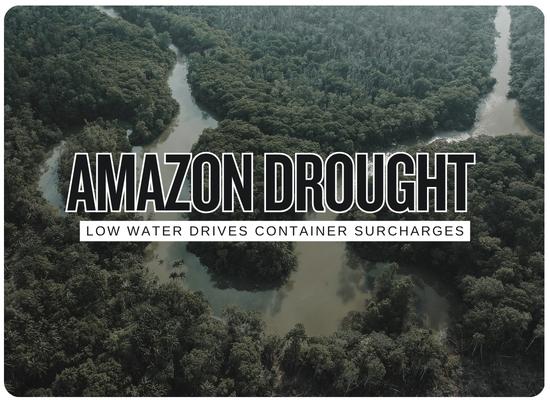
The Amazon dry season is turning into a direct freight-cost problem for cargo moving to and from Manaus. Container carriers are preparing low-water surcharges because falling river levels can reduce draft, cut vessel utilization, force lighter loads, add transshipment, require barges, increase pilotage and create temporary-port costs. The biggest reported charge so far is MSC’s $1,900 per reefer, with other major carriers also warning customers of added costs if the Rio Negro and Amazon River system fall to critical levels.
Ship Universe Low-Water Watch
Operator Impact Snapshot
Amazon River restrictions are moving from forecast risk into freight invoices.
Reefer cargo gets hit hardest
The top reported charge is $1,900 per refrigerated container, a major cost shock for food, pharma, electronics and temperature-sensitive cargo.
Manaus access is the center
The surcharge wave is tied to maintaining container service to and from Manaus as low water threatens draft and vessel utilization.
Carrier pricing is not uniform
Reported charges range from $753 per TEU to $1,900 per reefer, depending on carrier, equipment type, route and trigger language.
Regulatory trigger matters
ANTAQ’s prior decision ties surcharge treatment to a Rio Negro threshold of 17.7 meters, making river data commercially important.
Transshipment costs may rise
Floating piers, barges, lighter loads, extra handling, pilotage and storage can shift the cost from ocean freight into inland river logistics.
Inventory buffers return
Importers and manufacturers may need earlier bookings, larger safety stock and more flexible delivery windows during the critical dry-season period.
Manaus Low-Water Cost Board
Carrier Surcharges, River Triggers and Transshipment Pressure
The drought cost is spreading across dry boxes, reefers, imports, exports and inland river operations.
MSC’s reported reefer surcharge for Manaus-bound cargo.
Reported per dry container for cargo destined to Manaus.
Prior regulatory trigger tied to Rio Negro official measurements.
Folha-reported additional cost estimate for Grupo Chibatão’s Itacoatiara operation.
| Carrier or Driver | Latest Detail | Commercial Signal | Cost Channel | Pressure Meter |
|---|---|---|---|---|
| MSCHighest reported charge | $1,400 per dry container and $1,900 per reefer, reported for Manaus-bound shipments from September. | Reefer cargo faces the sharpest penalty because low-water operations can add time, handling and reliability risk. | Cold-chain landed cost, margin pressure, inventory planning and customer pass-through. | Severe |
| ONEUniform box charge | $1,458 per container, with imports from September and exports from October if Rio Negro trigger conditions are met. | The charge signals that both inbound manufacturing inputs and outbound cargo can be affected. | Booking timing, contract adders, export cutoffs and cost allocation with buyers. | High |
| Hapag-LloydAll-container surcharge | $1,350 per container to and from Manaus, applicable from September 12 tariffing date. | The broad equipment coverage makes the surcharge a general Manaus cost issue, not a niche reefer issue. | Procurement budgets, landed-cost files, freight audit and customer billing. | High |
| MaerskDry-container planning charge | $1,228 per dry container, with effective dates varying by origin region and exports beginning later. | Maersk frames the charge around actual operational impact if restrictions materialize. | Draft restriction, reduced carrying capacity, alternative ports, transshipment, temporary storage and equipment repositioning. | High |
| CMA CGMTEU-based charge | $753 per TEU, with September 6 and October 5 effective dates depending on direction. | TEU-based pricing can make 40ft exposure materially higher than the headline per-TEU figure. | Ocean freight adders, floating-pier revisions, route adjustments, pilotage and cargo handling. | Medium High |
| Itacoatiara Floating PierTransshipment fallback | Grupo Chibatão is preparing a temporary pier so cargo can be transferred from ships to lighter barges. | The fallback keeps cargo moving, but it adds a second handling layer and shifts reliability risk into the river network. | Barge availability, crane productivity, cargo dwell, reefer power, labor and inland river scheduling. | High |
| Regulatory DisputeANTAQ and user pushback | Amazon trade groups have challenged advance surcharge notices, while ANTAQ says charges require transparency and close monitoring. | The cost may be operationally real, but the timing, trigger and proof of extraordinary costs remain contested. | Disputes, freight audits, contract review, pass-through clauses and documentation requirements. | Watch |
Amazon Low-Water Surcharge Cost Calculator
Estimate the total Manaus drought surcharge exposure from dry boxes, reefers, TEU-based carrier fees, extra dwell and transshipment costs.
Total Surcharge
$75,000
Carrier low-water surcharge exposure based on the selected model.
Delay and Handling Cost
$29,500
Extra dwell, inventory, barge, floating-pier or transshipment cost estimate.
Total Gross Exposure
$104,500
Total modeled cost before customer recovery or contract pass-through.
Unrecovered Cost
$36,575
Modeled cost remaining after pass-through recovery.
Cost Signal
The modeled surcharge and delay cost are high enough to require freight audit, contract review and customer pass-through planning.
We welcome your feedback, suggestions, corrections, and ideas for enhancements.
Please click here to get in touch