China Buying, Hormuz Risk and Tight Tonnage Collide as VLCC Rates Push Higher
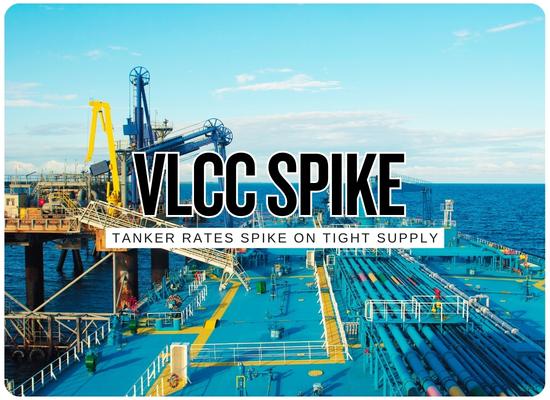
The VLCC market has moved into one of its sharpest pricing spikes of the year as crude buyers chase secure liftings while many mainstream owners avoid the highest-risk Middle East routes. Rates are surging on both sides of Suez, with Middle East-to-China earnings reported above half a million dollars per day, US Gulf-to-China fixtures moving far above published benchmark assessments, and West Africa and Brazil cargoes also tightening the Atlantic list. The immediate trigger is not just stronger Chinese buying. It is the shrinking pool of ships that owners and charterers are willing to send through Hormuz or around Red Sea exposure, combined with longer voyages, STS loading outside the Gulf, AIS-dark movements, fewer straightforward ballasters and energy producers seeking more control over shipping capacity.
VLCC Owners Regain Pricing Power Fast
The rate spike is being driven by cargo urgency, Chinese demand, longer routing and a smaller pool of owners willing to trade exposed corridors.
Spot Earnings Spike
Middle East-to-China VLCC earnings are being quoted around the half-million-dollar-per-day zone, with risk-taking owners capturing the largest premiums.
Atlantic Tightening
US Gulf, Brazil and West Africa cargoes are also paying up as China buying pulls ships onto long-haul voyages and reduces easy replacement tonnage.
Benchmark Lag
Some fresh fixtures are moving well ahead of published assessments, creating a gap between screen numbers and executable market levels.
STS Loading Shift
More crude is being handled outside the Gulf near Fujairah and Oman, changing voyage timing, ballasting logic and owner risk calculations.
Asset Value Support
Modern VLCCs are becoming strategic capacity, not just floating freight assets, as national oil companies and traders compete for reliable liftings.
The market signal is simple: cargo may still move, but the number of ships, owners and crews willing to move it through exposed routing has become the scarce commodity.
VLCC Rate Surge Board
The spike is no longer isolated to one route. The market is repricing risk, distance, cargo urgency and available tonnage at the same time.
The latest move is unusual because the Middle East Gulf and Atlantic are tightening together. Normally, high Gulf rates pull ballast tonnage back toward the region. This time, security risk, rerouting, STS cargo patterns and Chinese buying are keeping the available fleet list thinner than normal across several major loading zones.
Reported Middle East-to-China VLCC earnings earlier this week.
Approximate daily equivalent on a reported US Gulf-to-China fixture.
Reuters-reported Oman-to-China daily freight assessment tied to outside-Gulf loading.
STS transfer volume involving China and Hong Kong-owned vessels near Fujairah and Oman in June and July.
Market Driver Table
| Rate Driver | Latest Signal | Commercial Read | Stakeholders | Status |
|---|---|---|---|---|
| Middle East Gulf risk | Hormuz traffic remains thin and many owners are avoiding exposed transits. | Ships willing to accept the route risk can earn extreme premiums, but fixture certainty is fragile. | VLCC owners, Gulf producers, refiners, insurers, crews | High |
| China crude buying | Chinese demand is pulling VLCCs into long-haul cargo programs across Gulf, Atlantic and STS loading zones. | Longer voyages tie ships up for more days and reduce prompt availability in other basins. | Chinese refiners, state shippers, brokers, crude traders | High |
| Atlantic fixture jump | US Gulf-China, Brazil-China and West Africa-East indications have moved sharply higher. | The rate spike is becoming a global VLCC availability story, not only a Gulf war-risk story. | US exporters, Brazilian producers, West African sellers, Asian buyers | Positive |
| Benchmark gap | Physical fixtures are being reported well above some published assessments. | Charterers waiting for the screen to catch up may miss available tonnage or pay a higher next fixture. | Charterers, brokers, tanker pools, public tanker equities | Watch |
| Outside-Gulf loading | STS activity near Fujairah and Oman has become a key workaround for some China-linked movements. | Workaround cargoes still require ships, but timing, risk, agency work and custody-transfer checks become more complex. | STS providers, terminals, surveyors, charterers, cargo insurers | Medium |
| Owner risk appetite | Fewer mainstream operators are willing to expose ships and crews to the highest-risk lanes. | The market is separating ordinary available tonnage from executable high-risk tonnage. | Owners, crews, flag states, P&I clubs, underwriters | High |
| Asset-control push | ADNOC L&S acquired six VLCCs and five VLGCs for about $1.3 billion. | Energy producers are treating tanker capacity as strategic security for exports, not just charter-market exposure. | NOCs, lenders, shipowners, secondhand brokers, shipyards | Positive |
| Orderbook warning | Crude tanker contracting has accelerated heavily, led by VLCCs. | Today’s rate spike supports asset prices, but newbuild supply can still pressure the cycle later. | Shipyards, banks, owners, investors, charterers | Watch |
VLCC Rate Surge Profit Tool
Estimate fixture value, extra earnings, per-barrel freight impact and route-risk adjusted profit during a tanker rate spike.
Current spot rate multiplied by voyage days, including waiting.
Rate upside versus the selected base case.
Estimated voyage result after OPEX, bunker, port and war-risk costs.
Gross freight cost spread across the crude cargo.
The modeled fixture produces major upside even after higher risk and voyage costs.
Owner pricing powerThis tool is for editorial and commercial sensitivity only. It does not replace live broker quotes, fixture recaps, charter-party review, sanctions review, war-risk approval, P&I guidance, voyage routing, port agency confirmation or professional tanker-market forecasting.
We welcome your feedback, suggestions, corrections, and ideas for enhancements.
Please click here to get in touch