Is Bunker Fuel Quality Getting Worse? 7 Checks Shipowners Should Add Before Accepting a Stem in 2026
🔔 Subscribe to ShipUniverse Weekly →
Bunker Fuel Quality Is Getting Worse: 7 Checks Shipowners Should Add Before Accepting a Stem
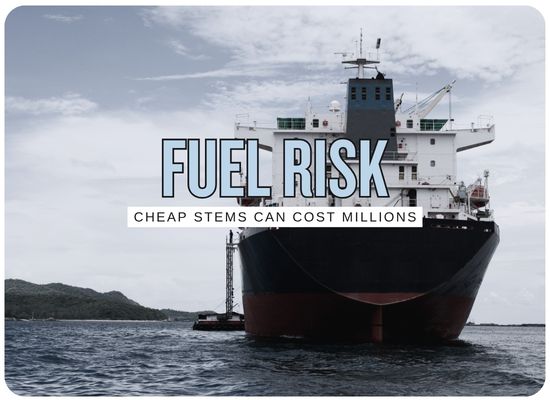
A cheap stem can become the most expensive fuel on board if the owner only checks price, sulphur and the bunker delivery note.
Accepting unknown fuel because the price is attractive
The lowest quote is dangerous when supplier quality history, port alerts, sample control and compatibility are weak.
Relying only on routine specification compliance
Routine ISO testing is a starting point, not a full assurance that the fuel will behave safely through storage, purification and combustion.
Paying for evidence before the claim exists
Better suppliers, witnessed sampling, expanded testing and clean records can be cheaper than one debunkering or engine-damage dispute.
The quality problem is now operational, not theoretical
Bunker fuel quality risk is not only about headline contamination events. The day-to-day risk is more practical: elevated cat fines, poor stability, water, sediment, sodium, sulphur margin, cold-flow problems, low flashpoint, compatibility surprises, odd blend components and fuels that pass ordinary checks but still create onboard handling problems.
That means the procurement question has changed. A shipowner should not simply ask, “Who has the cheapest stem?” The better question is, “Which supplier, port, test plan and evidence trail gives the vessel the best chance of receiving fuel it can safely store, separate, heat, transfer, burn and defend if a claim starts?”
Executive takeaway: In 2026, a higher-priced stem can be rational if it reduces the probability of off-hire, purifier overload, main-engine damage, debunkering, emergency replacement fuel, cargo delay, port-state trouble or a weak claims file.
7 checks before accepting a bunker stem in 2026
Supplier quality history, not just supplier price
A bunker supplier should be judged by performance history before price. The owner needs to know whether the supplier has recent off-spec issues, repeat late deliveries, documentation errors, weak sampling discipline, aggressive sulphur blending, unusual component use or a pattern of post-delivery disputes.
Has this supplier delivered recent off-spec, caution-result or problem fuels in this port?
The cheaper offer comes from a supplier with poor quality history, weak credit response or limited claims cooperation.
Port and product risk alert before RFQ approval
The same grade can carry different risk depending on port, blendstock pressure, storage chain and recent alerts. A port with current cat-fine, stability, sulphur, cold-flow or low-flashpoint concerns should trigger a different buying process than a routine hub stem.
Are there recent bunker alerts, P&I notices, lab warnings or owner reports for this port and grade?
A stronger supplier can provide cleaner sourcing, better delivery assurance, faster documents and a clearer escalation path.
Pre-delivery document review before the hose connects
The BDN, supplier declaration, grade specification, flashpoint statement, sulphur claim, density, viscosity, water, aluminium plus silicon, total sediment, acid number, pour point and certificate language should be reviewed before the operation becomes irreversible.
Does the nomination specify the correct ISO 8217 edition, grade, sulphur limit, flashpoint requirement and any extra test conditions?
The premium supplier provides cleaner documents, tighter sulphur margin, clearer flashpoint evidence and better sample protocol.
Witnessed sampling and sample custody plan
Sampling is where many future claims are won or weakened. The ship should control sample identity, seal numbers, witness records, drip sampler setup, labels, retained bottles, storage and notes about any abnormal delivery condition.
Will a bunker surveyor or trained crew member witness sampling from the correct point and preserve commercial evidence?
The stem is large, the port is high-risk, the fuel is unusual or the owner cannot afford a sample dispute later.
Expanded testing beyond the basic pass/fail result
Routine specification testing can miss operational risk. Owners should consider additional testing when fuel comes from a risky port, strange blend environment, low sulphur margin, high cat-fine region, stability warning, biofuel blend, unusual smell, abnormal density or prior machinery sensitivity.
Does this fuel need chemical screening, GCMS, separability, WAT, stability, cold-flow, cat-fine or compatibility testing before use?
A faster lab turnaround prevents the vessel from burning questionable fuel while waiting for results.
Compatibility and tank-segregation review
A fuel can test acceptably by itself and still create problems when mixed with remaining onboard fuel. Compatibility, storage temperature, tank allocation, previous cargo/residue risk, settling time, heating, transfer plan and purifier settings should be reviewed before the new fuel contaminates usable inventory.
Can this stem be segregated until test results and compatibility checks are complete?
The cheaper stem requires mixing with limited ROB, high-risk fuel or a tank that cannot be isolated.
Machinery protection and claims-readiness gate
The final acceptance check should connect procurement with the engine room. The ship should know purifier capacity, cat-fine removal limits, settling temperature, fuel-heating plan, filter-spare status, drain routine, engine-inlet sampling plan, alarm response and when the fuel should not be burned.
Do the chief engineer, technical manager and procurement desk agree the fuel can be burned safely under defined controls?
The premium supplier or lab package reduces engine-damage probability, off-hire risk and claims uncertainty.
Fuel acceptance risk map
| Risk signal | Owner response | Service worth buying | Acceptance posture |
|---|---|---|---|
| Recent port alert for cat fines or stability | Require supplier history, expanded test plan, purifier review and segregation. | Fuel testing lab, bunker surveyor, fuel-treatment advisor. | Conditional accept |
| Unknown supplier offers lowest price | Compare against quality history, claims cooperation, delivery reliability and documentation quality. | Procurement platform, broker intelligence, claims consultant. | Price not enough |
| BDN or supplier declaration is incomplete | Pause acceptance until grade, sulphur, flashpoint and required statements are clarified. | Bunker surveyor, legal/claims support, compliance advisor. | Stop gate |
| Fuel must be mixed with existing ROB | Run compatibility check and tank plan before transfer or use. | Fuel testing lab, technical superintendent. | Segregate first |
| Fuel is for a critical voyage with no margin for delay | Use stronger supplier, faster lab turnaround, surveyor and pre-agreed claims process. | Premium supplier, managed procurement, fast testing. | Premium rational |
| Abnormal smell, appearance, density or delivery behavior | Preserve samples, notify parties, seek advice and avoid burning until risk is assessed. | Forensic lab, P&I, fuel consultant. | Escalate |
| Clean supplier, liquid port, standard grade and clear documents | Proceed with normal controls, representative samples and routine testing. | Routine lab test, procurement workflow. | Normal accept |
Costs if the owner gets this wrong
- Engine damage or purifier overload
- Off-hire and missed berth windows
- Debunkering and disposal
- Emergency replacement fuel
- Cargo delay and charter disputes
- Weak recovery because samples or notices were poor
Controls that make the stem safer
- Supplier scorecard before award
- Port alert check during RFQ
- BDN and flashpoint review before bunkering
- Witnessed sampling and retained evidence
- Expanded testing where risk justifies it
- Segregation until compatibility and treatment plan are clear
When paying more for a supplier is rational
The premium is rational when it buys risk reduction, not just a familiar name
A higher bunker price can be the right commercial decision when the premium reduces expected loss. The owner should compare the premium against the cost of waiting, off-hire, debunkering, tank cleaning, replacement fuel, engine damage, cargo delay and claim uncertainty.
High-value service markets behind bad-bunker prevention
| Provider niche | Owner pain | High-value offer | Buyer trigger |
|---|---|---|---|
| Fuel testing laboratories | Routine testing may not identify operational risk fast enough. | Expanded ISO testing, chemical screening, GCMS, compatibility, WAT, stability and forensic reports. | High-risk port, problem fuel trend, unusual blend, large stem or critical voyage. |
| Bunker surveyors | Claims can collapse if sampling and quantity evidence are weak. | Witnessed sampling, quantity verification, seal control, delivery observation and dispute-ready reports. | Large stem, unfamiliar supplier, thin port or known local quality issues. |
| Fuel treatment and purification suppliers | Cat fines, water, sludge and stability problems move from procurement into the engine room. | Purifier optimization, filtration upgrades, separators, monitoring, spare strategy and fuel-system checks. | High cat-fine risk, recurring filter issues, purifier overload or engine-inlet concerns. |
| Procurement platforms | Supplier decisions are made from scattered emails and weak history. | Supplier scorecards, price benchmarking, approval trails, alerts, claim records and invoice matching. | Multi-vessel fleets buying repeat stems across major hubs. |
| Bunker claims consultants | Technical, legal and commercial records are often assembled too late. | Claims strategy, sample review, causation analysis, notices, loss calculation and settlement support. | Off-spec result, machinery issue, debunkering, delay or supplier dispute. |
| Managed procurement desks | Owners need both market access and quality control. | Supplier vetting, credit support, trader intervention, lab coordination and claims escalation. | Small internal team, high-value vessels or high-risk trading pattern. |
Stem acceptance workflow
Use this as a practical workflow for turning fuel quality from a reaction into a controlled buying process.
Bad-bunker acceptance calculator
This planning screen helps owners decide whether a stem should be accepted normally, accepted with premium controls, delayed for extra testing or escalated before bunkering.
Stem quality risk gate
Adjust the inputs to test whether the stem should be accepted, controlled, delayed or escalated.
Planning note: This simplified tool does not include exact charterparty terms, supplier contract terms, insurance deductibles, lab turnaround time, machinery condition, port-state enforcement, fuel chemistry, compatibility test results, final claim recovery or class/flag advice.
The owner mindset shift
The old bunker procurement model rewarded the lowest acceptable quote. The 2026 model should reward the safest recoverable stem. That does not mean owners should overpay for every delivery. It means they should know which fuels deserve normal acceptance, which deserve premium controls, and which should not be accepted until the evidence is stronger.
The most important change is cultural. Procurement, technical management, the chief engineer, the lab, the surveyor and the claims team should not meet for the first time after damage occurs. They should already be connected before the stem is accepted, because the quality decision is made before the fuel ever reaches the service tank.
We welcome your feedback, suggestions, corrections, and ideas for enhancements.
Please click here to get in touch