Global Chokepoint Watch as Panama Cuts Canal Capacity and Hormuz Stays in Single Digits
🔔 Subscribe to ShipUniverse Weekly →
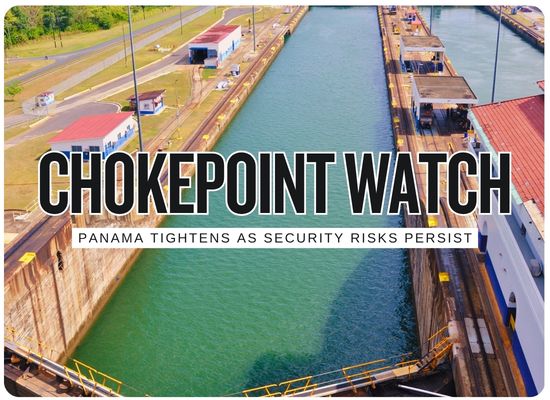
The world's major maritime chokepoints are entering late August under very different forms of pressure. The Panama Canal Authority has reversed its earlier expectation that 2026 transit restrictions could be avoided, announcing that daily slots will fall to 34 beginning September 4 and 32 beginning September 15 after May-through-August watershed rainfall came in 34% below its historical average and inflows were 44% below normal. In the Middle East, only seven commodity vessels crossed the Strait of Hormuz on August 20, with no VLCC or LNG carrier recorded, while Bab el-Mandeb fell to 23 commodity-vessel crossings after 34 on each of the previous two days. Farther north, Suez is showing the opposite trend: roughly 1,090 vessels crossed during the latest four-week period, its highest level in more than two years, although traffic remains about 41% below pre-Red Sea-crisis levels. The Turkish Straits remain open despite escalating Black Sea attacks, while Malacca and Singapore are flowing normally but remain a security watchpoint because sea robbery continues in the eastbound Singapore Strait.
Operator Impact Snapshot
Water scarcity is tightening Panama just as Middle East security continues to constrain two of the world's most important energy corridors, while Suez traffic is showing its strongest recovery since the Red Sea crisis began.
El Niño and weak watershed inflows are forcing the first major 2026 transit-capacity reduction.
No VLCC or LNG tanker was recorded in the latest daily crossing data.
Traffic remains active but volatile as Houthi threats continue around the southern Red Sea.
The strongest four-week traffic reading in more than two years, but still well below pre-crisis levels.
Security incidents have fallen sharply from 2025, but the eastbound Singapore Strait remains the main Asian hotspot.
Major Maritime Chokepoint Watchboard
Current conditions across the routes that concentrate container, energy, bulk and regional trade between the world's major oceans and inland seas.
| Chokepoint | Current Status | Latest Signal | Primary Pressure | Shipping Effect | Next Signal |
|---|---|---|---|---|---|
| Panama Canal |
CAPACITY CUT Restrictions begin in September. |
32 Daily Slots 34 slots from September 4, falling to 32 from September 15. | Watershed rainfall is 34% below the May-August historical average and inflows are 44% below normal as a potentially severe 2026-27 El Niño develops. | Fewer booking slots increase the importance of reservations and raise the risk of waiting time for ships without confirmed transit dates. | Gatun Lake levels, additional slot reductions and the 2027 dry season are now the key variables. |
| Strait of Hormuz |
CRITICAL Commercial traffic remains heavily impaired. |
7 Commodity Ships Kpler recorded four entries and three exits on August 20. | U.S.-Iran conflict, competing shipping-control claims and attacks on commercial tankers. | Major crude and LNG movements remain sharply constrained. No VLCC or LNG carrier appeared in the latest daily commodity-vessel sample. | A credible political agreement governing access would change the market faster than incremental day-to-day traffic increases. |
| Bab el-Mandeb |
HIGH RISK Traffic continues but remains volatile. |
23 Commodity Ships August 20 traffic fell from 34 on each of the two preceding days. | Houthi attacks, the declared Saudi blockade and expanding fighting near Yemen's Red Sea coastline. | Tankers and other owners continue making voyage-by-voyage decisions between the Red Sea and Cape routes. | Saudi tanker movements and any expansion of attacks toward vessels not currently targeted. |
| Suez Canal |
RECOVERING Highest traffic in more than two years. |
1,090 Transits Latest four-week total represented about 88.6 million dwt. | Container lines are gradually returning and some tanker flows are using Suez to avoid southern Red Sea exposure. | More vessels are using the canal, but traffic is still roughly 41% below pre-crisis levels. | The pace at which major liner networks permanently restore Red Sea services. |
|
Turkish Straits Bosphorus / Dardanelles |
OPEN Civilian passage continues. |
Normal Passage Turkish officials rejected reports that commercial access to the Black Sea had been broadly restricted. | Escalating attacks on Russian and Ukrainian ships and port infrastructure elsewhere in the Black Sea. | The chokepoint itself is operating, while voyage risk increases after vessels leave the Straits and enter the Black Sea. | Any Turkish security measure affecting merchant passage would immediately become a major grain and tanker-market signal. |
| Malacca & Singapore Straits |
SECURITY WATCH Traffic remains open. |
21 Incidents Armed-robbery incidents in H1 2026, down 74% from 80 one year earlier. | Boarding and theft risk remains concentrated in the eastbound Singapore Strait. | No systemic flow restriction, but the corridor remains Asia's principal shipboard robbery hotspot. | Whether the sharp 2026 improvement can be sustained through the second half. |
| English Channel / Dover |
ENFORCEMENT WATCH Normal commercial navigation continues. |
Shadow Fleet Scrutiny Britain conducted its first direct seizure of a sanctioned shadow-fleet tanker in the Channel in June. | Sanctions enforcement and increased Russian naval activity around recognised traffic lanes. | Ordinary merchant traffic is not restricted, but sanctioned or opaque vessels face greater boarding and enforcement exposure. | Russia has threatened reciprocal action if European states continue seizing Russian-linked vessels. |
| Danish Straits / Baltic Entrances |
SECURITY WATCH Access remains open. |
Baltic Access Focus Denmark's August DANEX naval exercise specifically included protection of approaches linking the Baltic with the North Sea. | Shadow-fleet traffic, naval activity, undersea-infrastructure security and navigation-system interference. | No broad commercial closure, but military monitoring and maritime-security activity around Baltic access routes are increasing. | Shadow-fleet enforcement and any further escalation involving Russian escorts or European inspections. |
| Cape of Good Hope |
RELIEF ROUTE Not a canal chokepoint, but increasingly important. |
Reroute Backbone Continues absorbing ships avoiding the Red Sea and Middle East security environment. | Persistent avoidance of Suez and Bab el-Mandeb by portions of the global fleet. | Asia-Europe diversions can add roughly 10 days, while some Middle East-Asia tanker substitutions can add several weeks. | A sustained Suez and Red Sea normalization would release a large amount of effective global vessel capacity. |
Chokepoint Disruption Cost & Schedule Analyzer
Model the vessel, fuel, insurance and cargo-carrying cost created by a chokepoint delay or reroute. Every economic assumption remains editable because the effect depends heavily on the vessel and trade lane.
We welcome your feedback, suggestions, corrections, and ideas for enhancements.
Please click here to get in touch