Portugal’s FREMM EVO Deal Opens a 30 Year Naval Market
🔔 Subscribe to ShipUniverse Weekly →
I think the most important part of Portugal’s FREMM EVO deal is not the three-frigate headline, but the 30-year support market that forms around combat systems, maintenance, training, technology transfer, and Portuguese industrial participation.
The frigate order is only the opening move
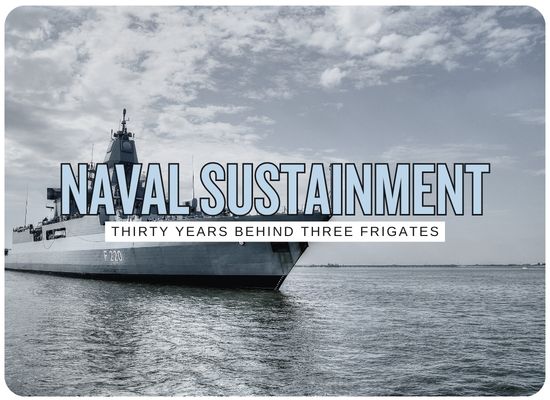
Portugal’s selection of three Fincantieri FREMM frigates is a major European naval procurement signal because the package is not limited to hull construction. It includes through-life support, technology transfer, and the operating arrangements needed to keep the ships useful across a service life measured in decades.
That turns the program into a supplier-lifecycle market. The first revenue wave is shipbuilding, combat-system integration, sensors, weapons, and delivery. The second wave is often more durable: MRO, software updates, training, depot repair, simulators, spares, dry-dock work, cyber support, mission-system refreshes, and Portuguese industrial participation.
A FREMM EVO sale is not just a shipyard win. It creates a 30-year ecosystem for MRO firms, combat-system suppliers, training providers, software teams, infrastructure contractors, technology-transfer advisors, and local industrial partners.
Deal signal board
Three new frigates reset Portugal’s surface fleet
The delivery window places the program on a fast modernization path, replacing aging front-line combatants with a larger and more capable multi-mission frigate platform.
The support package matters as much as the hulls
Through-life support, technology transfer, training, operational-use arrangements, and industrial cooperation decide whether Portugal gains sovereign depth or simply imports a premium ship.
Fincantieri gains another export reference
The Portugal decision reinforces European defense-industrial cooperation and gives the Italian FREMM EVO path a visible NATO customer outside Italy.
Complex systems create long-tail bottlenecks
Radar, sonar, missiles, electronic warfare, ship-management software, training systems, spares, and maintenance documentation all need to mature into a supportable Portuguese fleet.
The 30-year lifecycle chain
A modern frigate lifecycle is built in layers. Each layer creates supplier work beyond the shipbuilding contract.
Portugal is buying ships, but the supplier prize is the operating ecosystem. The most valuable firms will help the Navy keep the ships modern, available, and upgradeable after delivery.
9 supplier niches behind the 30-year market
These are the supplier categories most likely to benefit as Portugal moves from frigate acquisition to fleet operation and long-term sustainment.
- 01 MRO Frigate maintenance, dockings, and depot repair The first long-tail market is classic warship MRO: planned maintenance, dry-dock periods, hull inspections, corrosion control, valves, pumps, combat-system cabinets, generators, HVAC, stabilizers, steering gear, shafting, propulsors, and emergency repairs. Portugal will need enough local capability to avoid sending every major issue back through the prime contractor. The best MRO firms will combine shipyard labor with OEM-approved procedures and naval quality control.
- 02 Combat systems Software baselines, consoles, integration, and cyber resilience FREMM EVO’s value depends heavily on combat-system integration. Radar, sonar, weapons, electronic warfare, communications, unmanned systems, and tactical data links must behave as one shipboard fighting system. That creates a market for combat management software support, interface control, cyber-resilient updates, operator displays, lab testing, configuration management, and future weapon integration.
- 03 Sensors Radar, sonar, optronics, and electronic surveillance support Sensors are not one-time purchases. Fixed-face radars, sonar suites, electronic support measures, electro-optical directors, navigation sensors, and data-processing cabinets all require calibration, spares, test equipment, software updates, obsolescence management, and trained technicians. Portugal’s long-term opportunity is to build enough local sensor-support competence to keep availability high without waiting on overseas specialists for every fault.
- 04 Weapons Missiles, guns, torpedoes, launchers, and magazine safety A frigate’s combat credibility depends on the weapon chain. Supplier work includes launcher maintenance, missile integration, gun support, ammunition handling, torpedo systems, magazine safety, fire-control links, training rounds, test equipment, and reload procedures. The lifecycle value grows when Portugal later adds new interceptors, anti-drone effects, anti-submarine weapons, or strike options.
- 05 Training Simulators, schoolhouses, and watch-team readiness New frigates create a training market before the first ship arrives. Crews need bridge, engineering, combat-information-center, damage-control, anti-submarine, air-defense, electronic warfare, and maintenance training. Simulators matter because three ships do not create much spare training capacity at sea. Training providers can win work in full-mission simulators, part-task trainers, digital courseware, instructor support, and periodic refresher packages.
- 06 Tech transfer Documentation, know-how, and Portuguese industrial participation Technology transfer is where the deal becomes more than an import. Advisors, integrators, legal specialists, export-control teams, software-interface experts, and industrial-participation consultants can help define which Portuguese firms receive meaningful roles. The critical question is not whether there is local content. The question is whether Portugal receives useful maintenance data, test procedures, software support rights, training material, and repair authority.
- 07 Communications Secure networks, tactical links, and NATO interoperability Portugal needs these frigates to operate in national waters and NATO task groups. That creates demand for secure communications, satellite links, tactical data links, crypto handling, antenna maintenance, bandwidth management, cyber monitoring, mission planning networks, and coalition interoperability testing. Communications suppliers will benefit if they can support both shipboard reliability and multinational operations.
- 08 Infrastructure Floating docks, test benches, base upgrades, and support facilities A 30-year frigate market needs shore infrastructure. Portugal may need floating-dock capability, pier services, power, secure workshops, simulator buildings, spares warehouses, weapons handling areas, sensor test benches, software labs, and ship-maintenance tooling. Infrastructure firms become part of the naval lifecycle because without the shore enterprise, the frigates become expensive assets with limited domestic support depth.
- 09 Lifecycle analytics Digital maintenance, readiness data, and obsolescence control The most modern support market is data-driven lifecycle management. FREMM EVO support can include digital twins, condition-based maintenance, failure prediction, spares forecasting, maintenance dashboards, configuration tracking, cyber patch records, and obsolescence alerts. The goal is simple: catch problems before they reduce ship availability and plan upgrades before systems become impossible to support.
Supplier opportunity map
This map separates the obvious shipbuilding work from the recurring support lanes that can last across the fleet’s service life.
| Supplier niche | Initial work | 30-year revenue driver | Buyer risk |
|---|---|---|---|
| MRO firms | Delivery support, maintenance planning, dock preparation, tools, spares | Dockings, overhauls, repairs, corrosion, machinery service, depot work | Too much dependency on foreign OEM teams for routine availability |
| Combat-system suppliers | Integration, acceptance testing, operator consoles, software baseline | Software updates, cyber patches, new weapons, interface changes | Portugal receives the ship but not enough configuration-control depth |
| Sensor providers | Radar, sonar, optronics, EW support, calibration gear | Repairs, refreshes, spares, test benches, algorithm upgrades | High-value sensors suffer low availability due to limited local technicians |
| Weapon-system firms | Launchers, guns, missiles, torpedoes, safety procedures, magazines | Reloads, upgrades, training rounds, test equipment, new weapon integration | Weapons support lags the ship’s combat-system growth |
| Training providers | Initial crew training, simulators, technical courses, instructor pipelines | Refresher training, new tactics, software releases, new crew conversion | Three-ship fleet has too little at-sea training capacity without shore simulation |
| Technology-transfer advisors | Industrial workshare, data rights, manuals, support rights, export controls | Local repair authority, future upgrades, Portuguese supplier participation | Transfer is broad in language but thin in usable technical access |
| Communications integrators | Secure comms, SATCOM, tactical links, NATO interoperability testing | Crypto refresh, link updates, cyber monitoring, coalition exercises | Interoperability weakens when systems age or software diverges |
| Infrastructure contractors | Docks, piers, workshops, simulators, test equipment, secure spaces | Recurring maintenance, depot expansion, facility modernization | Ships arrive before the support base is ready |
| Lifecycle analytics firms | Maintenance data model, digital twin, readiness dashboard, spares baseline | Predictive maintenance, obsolescence alerts, configuration tracking | Data stays fragmented across OEMs, Navy users, and local yards |
Lifecycle market heat gauge
The hottest markets are the ones that connect Portuguese industrial participation with real operational independence.
Three supplier lanes to watch
The Portuguese support lane
This lane covers domestic MRO, dock infrastructure, simulators, integrated communications, operational software, repair authority, and shipyard readiness.
- Best fit for Portuguese yards, systems firms, software teams, training companies, and infrastructure contractors.
- Strongest value comes from reducing dependence on overseas support for routine maintenance and upgrades.
- Main trap is local participation that looks large financially but does not create real sustainment independence.
The Italian export-support lane
This lane covers Fincantieri, Leonardo, OSN, MBDA, Elettronica, and other Italian firms supporting ship delivery, combat systems, weapons, EW, and lifecycle service.
- Best fit for established suppliers already inside the FREMM ecosystem.
- Strongest value comes from proven configuration knowledge and fleet support experience.
- Main trap is creating a support model that Portugal cannot afford or control over decades.
The NATO interoperability lane
This lane covers secure communications, tactical data links, joint exercises, cyber support, mission planning, and coalition training.
- Best fit for C4ISR firms, secure network integrators, training providers, and cyber teams.
- Strongest value comes from keeping the frigates relevant in NATO task groups as threats evolve.
- Main trap is assuming interoperability is finished at delivery rather than maintained through recurring updates.
Red flags inside the lifecycle package
The deal’s value will depend on how deeply sustainment and technology transfer are implemented, not only on how impressive the frigates look at delivery.
| Red flag | Problem underneath | Buyer check |
|---|---|---|
| Technology transfer described too broadly | The phrase may not include usable software, manuals, test equipment, repair authority, or interface data | List exactly which data, tools, rights, and procedures Portugal receives |
| Sustainment priced separately from modernization | Support may keep the ship running but not keep it tactically current | Separate routine maintenance, capability upgrades, and obsolescence refreshes |
| Local content not tied to operational readiness | Industrial return may not reduce downtime or improve sovereign support | Measure Portuguese workshare by availability impact, not only contract value |
| Training starts after delivery | Crews and maintainers may lag the ship’s technical complexity | Fund simulators, instructors, and maintenance courses before first arrival |
| Combat-system updates controlled offshore | Portugal may struggle to integrate new weapons, sensors, links, or cyber patches quickly | Clarify software support rights and configuration-management responsibility |
| Infrastructure runs behind ship delivery | New frigates can arrive before the base is fully ready to maintain them | Link dock, pier, workshop, simulator, and spares milestones to delivery dates |
| Lifecycle data remains fragmented | MRO, OEM, Navy, and training data may not create a single readiness picture | Require a digital lifecycle data model from the start |
FREMM EVO Lifecycle Market Fit Meter
Use this quick tool to estimate whether a supplier niche is a strong fit for Portugal’s 30-year FREMM EVO lifecycle market.
This tool is a practical screening aid, not procurement advice. Real supplier decisions should include classified requirements, contract terms, data rights, export controls, Portuguese industrial participation rules, OEM agreements, delivery schedules, training plans, and lifecycle cost.
Bottom line for suppliers
Portugal’s FREMM EVO deal creates more than a three-ship acquisition. It opens a lifecycle market around maintenance, combat-system support, sensors, weapons, training, communications, technology transfer, infrastructure, and digital readiness management.
The strongest suppliers will be the ones that help Portugal turn imported frigates into a sustainable national capability. That means local repair depth, trained crews, usable documentation, software support, modern test equipment, strong simulators, secure communications, and lifecycle analytics that keep the ships relevant long after delivery.
We welcome your feedback, suggestions, corrections, and ideas for enhancements.
Please click here to get in touch