India Opens Dedicated Green-Methanol Bunkering Infrastructure at V.O. Chidambaranar Port
🔔 Subscribe to ShipUniverse Weekly →
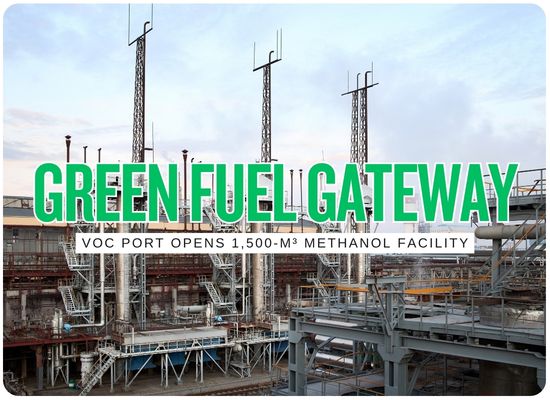
V.O. Chidambaranar Port in Thoothukudi has inaugurated a dedicated Green Methanol Bunkering and Refuelling Facility built around two 750-cubic-metre storage tanks and approximately 2.8 kilometres of pipeline connecting the installation directly to the port's oil jetty. The 1,500-m³ facility cost ₹38.12 crore and was inaugurated on October 11 as part of eight port projects totaling ₹753.68 crore, or about $78 million. At the same event, the port moved ahead with a separate ₹81.33-crore, 3-MW green-hydrogen manufacturing and refuelling station. The methanol installation marks a shift from pilot planning toward permanent alternative-fuel infrastructure at a port positioned directly on the Asia-Europe East-West shipping corridor.
India Has Put 1,500 m³ of Dedicated Methanol Storage Beside an Oil Jetty
The significance is physical rather than conceptual: tanks, transfer pipeline and berth connection are now in place for marine methanol bunkering at one of India's major East Coast ports.
Two dedicated tanks provide 1,500 cubic metres of total installed storage capacity.
Dedicated pipeline connects the storage installation with the port's oil-jetty area.
The infrastructure creates a fixed pathway for delivering methanol from shoreside storage to vessels.
The Methanol Project Grew From Pilot to Dedicated Infrastructure
India's shipping ministry announced a 750-m³ pilot green-methanol bunkering and refuelling project at VOC Port.
A parliamentary update officially described the project as two 750-m³ storage units, doubling the originally announced capacity.
The two-tank installation and 2.8-km jetty pipeline entered the port's completed infrastructure portfolio.
The Wider Green-Fuel Stack at VOC Port
Dedicated bunkering inventory connected to marine infrastructure.
New production and refuelling station now moving into development.
Port land has been allocated for green hydrogen and green ammonia projects.
Renewable generation was included in the latest infrastructure package.
VOC Port Is Building More Than a Bunker Tank
The individual projects now connect storage, renewable electricity, hydrogen production, industrial land and international corridor positioning.
| Infrastructure | Scale | Status | Investment | Marine / Port Role | Key Constraint Still Remaining |
|---|---|---|---|---|---|
| Methanol Bunkering | 2 × 750 m³ tanks + ~2.8 km pipeline | Inaugurated | ₹38.12 crore | Dedicated shoreside storage and transfer infrastructure for methanol bunkering at the oil jetty. | Reliable supply of certified low-GHG methanol at competitive marine-fuel prices. |
| Green Hydrogen Station | 3 MW | Foundation Laid | ₹81.33 crore | Production and refuelling infrastructure, initially oriented toward port mobility and operating equipment. | Marine hydrogen bunkering would require separate vessel, storage and safety infrastructure. |
| Green H₂ / Ammonia Industrial Land | 205.72 acres | Allocated | Developer-led | Creates space for future production, storage and export projects adjacent to the port. | Final investment decisions, offtake contracts and export infrastructure. |
| Solar Plant | 2 MW | Inaugurated | ₹9.80 crore | Adds renewable electricity to the port's energy system and wider decarbonisation program. | Scale remains small compared with energy demand from future large hydrogen-production projects. |
| Berth No. 7 Container Terminal | 420,000 TEU/year | Foundation Laid | ₹517.19 crore | Expands container traffic and creates additional potential demand from alternative-fuel containerships. | Terminal construction and securing services from relevant shipping lines. |
| Green Shipping Corridor Positioning | India–Europe / Indian coastal routes | Development | Multi-party | Links fuel infrastructure with actual shipping services rather than treating the fuel project as an isolated port investment. | Anchor operators, fuel offtake agreements, certification and corridor economics. |
Green hydrogen, e-methanol and other low-GHG fuel projects create potential domestic supply.
Bunkering, storage and handling infrastructure positioned on a major East-West shipping lane.
Ships serving EU trades face increasingly stringent lifecycle fuel-GHG requirements under FuelEU Maritime.
DNV reported more than 450 methanol-capable vessels in operation or on order by late 2025, creating a growing global fleet that requires reliable bunkering locations.
It is liquid at ambient temperature and pressure, which allows conventional tank-and-pipeline infrastructure to be adapted more readily than LNG or liquid hydrogen systems.
What Can 1,500 m³ of Methanol Storage Actually Support?
Model the number of vessel bunkering events possible from one storage turnover and compare the stored energy with an equivalent volume of marine gasoil.
Energy Content Comparison
We welcome your feedback, suggestions, corrections, and ideas for enhancements.
Please click here to get in touch