South Africa Pushes LNG Port Buildout Forward With Ngqura Deal as Richards Bay and Durban Plans Stay in Play
🔔 Subscribe to ShipUniverse Weekly →
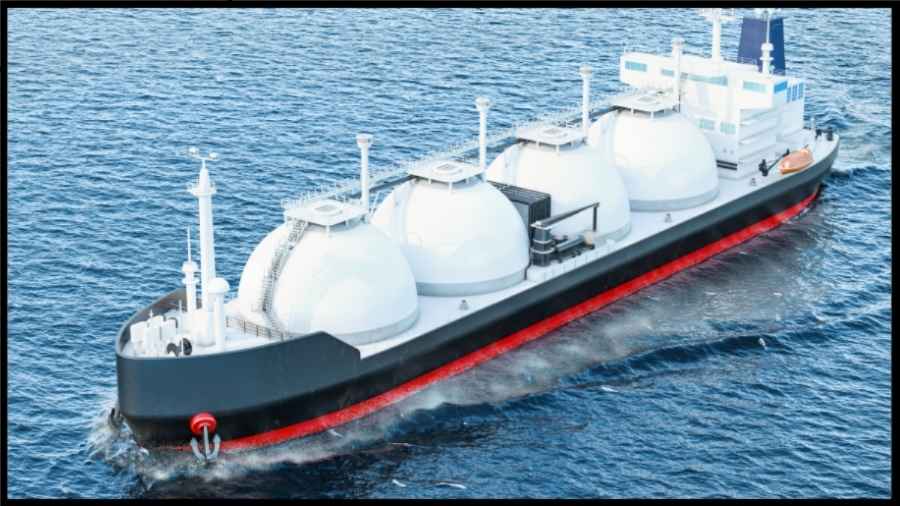
South Africa’s port-led LNG strategy has moved into a new phase after Transnet National Ports Authority signed a 25-year terminal operator agreement for an onshore LNG regasification facility at the Port of Ngqura in the Eastern Cape. The agreement was signed with Ukwanda LNG, a joint venture between Tamasa Energy Group and the Strategic Fuel Fund, and government has framed it as a decisive infrastructure step tied to energy security, gas-to-power development, and wider logistics expansion. The move matters because it comes while South Africa is still trying to build out its gas-import chain across more than one coastline: Richards Bay already has its own 25-year terminal operator agreement in place but its final investment decision has slipped, while Durban also has a separate LNG import and gas-to-power concept advancing with private-sector backing. The latest Ngqura milestone therefore does not stand alone. It shows the port authority is still actively trying to anchor multiple LNG entry points even as timing, customer commitments, and power-sector demand remain uneven across the wider South African gas buildout.
Operator Impact Snapshot
Quick read for owners, brokers, charterers, insurers, operators, and suppliers.
Ngqura is now the clearest live step in South Africa’s LNG port buildout
The latest agreement does not finish the project, but it changes the status from planning ambition to a more formal implementation track anchored inside port infrastructure and government policy.
| Development lane | Current position | Importance | Commercial effect | Next signal to watch |
|---|---|---|---|---|
| Ngqura operator agreement | TNPA has signed a 25-year terminal operator agreement for an onshore regasification facility at the Port of Ngqura. The operator is Ukwanda LNG, a joint venture between Tamasa Energy Group and the Strategic Fuel Fund. Latest live milestone | This is the newest concrete port-authority step in South Africa’s LNG import programme. | It gives the market a clearer institutional anchor for LNG import infrastructure on the Eastern Cape side. | Whether the project now moves into visible engineering, permitting, and customer contracting milestones. |
| Government backing | The project has explicit national-policy support. Transport Ministry notes say the project followed a Section 79 directive and is positioned as part of energy security and just-transition planning. Policy support now explicit | Formal state backing matters because LNG terminals are hard to finance and build without strong public-sector alignment. | Developers gain more credibility with potential customers, investors, and infrastructure counterparties. | Whether that political support translates into faster approvals and execution. |
| Gas-to-power linkage | Ngqura is being framed as part of a wider gas-to-power infrastructure chain. Recent reporting says South Africa is bidding 2,000 MW in its inaugural gas-to-power round and still targets much larger gas additions over time. Demand case still policy-linked | The terminal only becomes fully bankable if downstream gas demand becomes durable enough. | Power procurement and industrial offtake remain central to terminal economics. | Whether the gas-to-power programme produces bankable offtake and turbine deployment on time. |
| Richards Bay comparison | Richards Bay remains further along structurally, but slower in investment timing. That project already has a 25-year operator agreement, but its final investment decision has slipped to 2028. Older project, slower timing | Ngqura’s new momentum lands against a backdrop where another South African LNG terminal is still waiting for demand clarity. | The market now has a more competitive and less linear South African LNG map. | Whether Ngqura gains speed while Richards Bay stays delayed, or whether both move forward in parallel. |
| Durban optionality | Durban is also in play through a separate LNG import and gas-to-power proposal. A private consortium is advancing an LNG-linked power project at Durban port with industrial distribution and bunkering possibilities under discussion. Third corridor still alive | This shows South Africa is not betting on a single LNG gateway. | Long-term demand and port competition could spread across three coastal zones rather than one dominant site. | Whether Durban moves beyond reserved land and proposal status into a firmer implementation timeline. |
| Ngqura broader logistics buildout | The port is also tied to larger infrastructure plans beyond LNG. Government speaking notes linked Ngqura’s LNG project with wider rail and port development in the Eastern Cape. Port ecosystem angle | LNG terminal economics improve when surrounding logistics and industrial infrastructure also deepen. | The project could benefit from being part of a wider regional industrial platform rather than a stand-alone gas asset. | Whether adjacent port and rail upgrades keep pace with LNG terminal development. |
The newest South African LNG signal is that Ngqura has moved onto a firmer implementation path. But the wider commercial test still depends on offtake, gas-to-power demand, and whether South Africa can turn multiple coastal LNG concepts into functioning import infrastructure rather than parallel plans.
The real commercial question is whether South Africa can turn LNG port progress into dependable gas demand
Port agreements matter, but terminal economics still depend on downstream power, industrial use, pipeline connectivity, and customer commitments arriving in the right sequence.
The deeper pattern here is that South Africa’s LNG strategy is expanding geographically before it is fully consolidated commercially. Ngqura now has a fresh operator agreement and high-level government backing. Richards Bay has a more mature structural framework, including a phased FSU-to-onshore design and pipeline integration concept, but its investment clock moved back when the Eskom-linked demand case weakened. Durban remains another route into the market, tied to gas-to-power, distribution, and potential bunkering. That means the country is creating optionality at the port level while still working through uncertainty at the customer and power-procurement level. In practical terms, port progress is real, but downstream demand formation is still the decisive variable.
That commercial sequencing matters because LNG terminals are not simple marine assets. They sit at the intersection of ports, energy policy, transmission constraints, industrial gas demand, turbine availability, and financing. Engineering News reported that South Africa is simultaneously trying to procure 2,000 MW in its first gas-to-power round while facing increasingly long lead times for turbines. That means even with a signed terminal operator agreement, timing risk can still move downstream and delay the point at which imported LNG volumes turn into stable throughput. For shipowners, traders, and terminal investors, the most important future signal is therefore not only whether the port site progresses, but whether South Africa converts its gas policy ambition into bankable, long-lived demand.
Ngqura now has the freshest momentum
The new agreement gives Ngqura the clearest recent push and strengthens the Eastern Cape’s position inside South Africa’s gas-import map.
Richards Bay still matters despite the slower clock
The Richards Bay design is more mature on paper, but customer timing and power-sector dependency have made it slower than once expected.
Durban keeps a third option open
The Durban concept matters because it broadens the national LNG entry debate beyond a single coast and links LNG to power, trucking, and potential bunkering demand.
The gas-to-power chain remains the commercial hinge
Terminal success ultimately depends on whether the power market, industrial users, and distribution links materialize on schedules investors can finance.
This model is designed to show when port progress begins to look commercially durable. It weighs operator agreements and policy support against the harder variables of customer commitments, downstream connectivity, and execution delay risk.
We welcome your feedback, suggestions, corrections, and ideas for enhancements. Please click here to get in touch.