Oil Sells Off as Hormuz Shipping Still Faces a Slow and Iffy Reset
🔔 Subscribe to ShipUniverse Weekly →
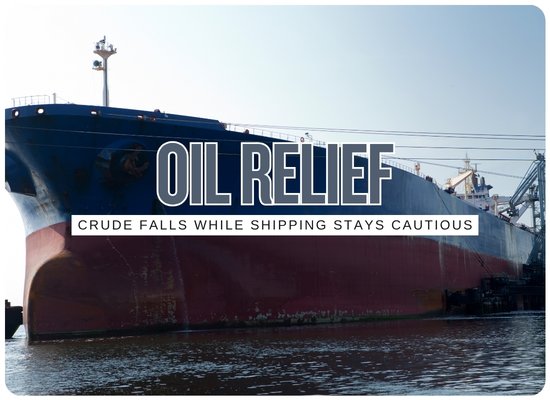
Oil prices fell sharply after the U.S. paused further strikes on Iran and both sides moved back toward diplomacy, with Brent and WTI dropping hard as traders removed part of the war-risk premium that had built around the Strait of Hormuz. Reporting on the move said crude hit a one-week low, with prices down about 7% after the weekend pause raised hopes that a wider deal could keep Gulf energy exports moving. The shipping picture is still not back to normal. Commercial traffic through Hormuz had recently fallen to a three-week low, and separate vessel-tracking data showed traffic dropped to only 11 ships on July 12, the lowest since mid-June, after renewed strikes and attacks raised safety concerns.
Oil prices are easing faster than vessel risk
The market is discounting a diplomatic pause, but physical shipping recovery through Hormuz still depends on safety confidence and traffic normalization.
Crude sold off sharply as traders reduced near-term supply-disruption pricing after the U.S.-Iran pause.
Shipping recovery remains slower than price recovery because owners still need safe-passage confidence and clear operating guidance.
Delayed sailings, convoy-style timing, port queues, and cautious chartering can keep freight markets uneven even as oil falls.
War-risk premiums, exclusions, transit warranties, and security clauses may lag behind the headline crude-price move.
Houthi-linked disruption around Bab el-Mandeb can still keep regional shipping risk elevated even if Hormuz improves.
Oil and shipping recovery signal map
The table separates the financial-market reaction from the physical recovery signals that matter to tanker owners, charterers, insurers, refiners, and Gulf exporters.
| Signal | Current status | Commercial effect | Operator read | Next item to watch | Level |
|---|---|---|---|---|---|
| Oil price move | Crude fell hard after the U.S.-Iran pause reduced immediate escalation fears. | War-risk premium came out of the paper market quickly. | Lower oil does not automatically mean lower shipping risk. | Brent and WTI reaction to diplomatic statements. | Relief |
| Hormuz vessel flow | Traffic had recently fallen sharply from normal levels. | Physical exports can remain constrained after prices move lower. | Actual transit count is the clearest recovery test. | Daily tanker, LNG, LPG, and product-carrier crossings. | High |
| Insurance pricing | War-risk cover may lag market optimism. | Higher premiums, exclusions, or warranties can keep voyage costs elevated. | Insurance desks may wait for stable traffic before repricing. | Listed-area guidance and underwriter circulars. | Watch |
| Charter-party friction | Owners and charterers still need clarity on transit orders and delays. | Cost allocation can remain disputed if risk language is unclear. | Fixtures need stronger handling of war risk, deviation, and refusal rights. | Safe-port language, war-risk clauses, and demurrage claims. | Medium |
| Red Sea linkage | Houthi threats and Bab el-Mandeb disruptions remain relevant. | Regional risk may not fall evenly across all chokepoints. | Operators need a combined Gulf and Red Sea routing file. | Saudi-linked vessel warnings and Red Sea traffic volume. | Watch |
| Export reliability | Gulf exporters still depend on safe, predictable vessel movement. | Refinery and utility buyers may keep backup cargo options open. | Supply confidence comes from repeated successful lifts. | Terminal nominations, anchorage congestion, and delayed cargoes. | High |
Oil Price Relief and Shipping Recovery Meter
A practical tool for estimating whether lower crude prices are matched by real vessel-flow recovery through an exposed chokepoint.
Oil has started to price in relief, but the shipping recovery still looks incomplete under the selected assumptions.
We welcome your feedback, suggestions, corrections, and ideas for enhancements.
Please click here to get in touch