QatarEnergy Turns to U.S. LNG as Hormuz Disruption Hits Asian Buyers
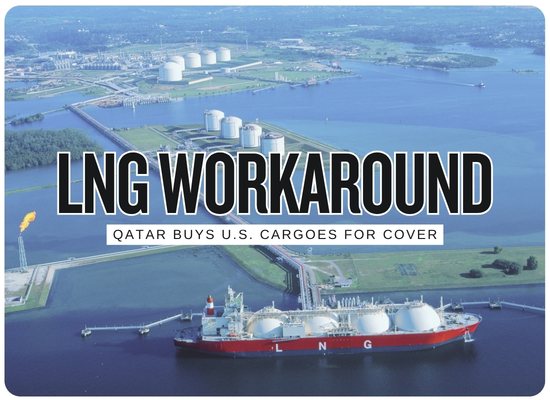
QatarEnergy has reportedly bought 33 spot LNG cargoes from the United States this year to help offset delivery disruption tied to the Strait of Hormuz crisis, with the replacement cargoes bound for buyers in South Korea, Taiwan, Bangladesh, India, and Japan. The purchases show how quickly the world’s largest LNG exporters and portfolio players can shift into emergency supply management when Gulf shipping lanes are interrupted. Qatar’s LNG system is heavily exposed to Hormuz because cargoes from Ras Laffan normally leave through the Strait, and U.S. energy data has previously estimated that about one-fifth of global LNG trade transited Hormuz in 2024, primarily from Qatar. The disruption has already produced force majeure notices for some buyers, spot market stress, and unusual replacement flows, while a QatarEnergy-controlled LNG carrier exited Hormuz this week for the first time in nearly three weeks, suggesting the recovery is starting but still fragile.
U.S. cargoes become a pressure valve for Qatar’s LNG network
The reported 33-cargo buying program turns Atlantic supply into a practical hedge against Gulf export disruption.
Thirty-three U.S. spot cargoes point to a major portfolio response, not a small scheduling adjustment.
Qatar’s main LNG export route depends on Hormuz, making vessel flow a core part of supply reliability.
South Korea, Taiwan, Bangladesh, India, and Japan are among the destination markets named in the reported cargo program.
Replacing Gulf cargoes with U.S. cargoes changes voyage length, vessel timing, Panama or Cape exposure, and schedule flexibility.
More emergency buying can tighten flexible cargo availability and keep Asian spot prices sensitive to shipping news.
QatarEnergy U.S. LNG cargo signal map
The table converts the reported 33-cargo purchase program into practical signals for LNG buyers, carriers, charterers, terminals, traders, and exporters.
| Signal | Current status | Commercial effect | Operator read | Next item to watch | Level |
|---|---|---|---|---|---|
| U.S. cargo purchases | QatarEnergy reportedly bought 33 U.S. spot LNG cargoes this year. | Atlantic cargoes are being used to cover disrupted Gulf-linked supply. | This is a large portfolio hedge, not a minor trade adjustment. | Additional U.S. purchase tenders and delivery windows. | High |
| Asian destinations | Cargoes are reportedly heading to South Korea, Taiwan, Bangladesh, India, and Japan. | Replacement supply is focused on core Asian demand markets. | Utilities and importers remain exposed to timing and price swings. | Terminal arrivals and buyer contract treatment. | Watch |
| Hormuz disruption | Qatari exports remain heavily tied to vessel movement through the Strait. | Even one-way recovery signals can leave supply confidence fragile. | Repeated LNG carrier exits are needed before the market reads recovery. | Daily LNG carrier crossings and Ras Laffan loadings. | High |
| Force majeure exposure | Some buyers have received force majeure notices tied to disrupted Qatar deliveries. | Replacement cargoes may reduce delivery pain, but not remove contract friction. | Contract terms and substitute-cargo treatment remain important. | Force majeure extensions, waivers, and settlement language. | Watch |
| Carrier market | U.S.-to-Asia cargoes can pull ships into longer-haul routes. | Fleet availability, charter duration, Panama routing, and ballast legs become more sensitive. | Prompt LNG tonnage can tighten even if physical supply is available. | LNG carrier spot rates and vessel positioning. | Medium |
| Spot price pressure | Replacement buying can support higher JKM and delivered LNG pricing. | Flexible cargoes gain value during route stress. | Portfolio optionality is now a premium product. | Asian spot assessments and tender results. | Watch |
U.S. LNG Replacement Cargo Meter
A practical tool for estimating the commercial scale of replacement LNG buying when Gulf cargoes are disrupted and U.S. cargoes are used as substitute supply.
This replacement program is large enough to affect cargo availability, shipping demand, and Asian spot pricing assumptions.