Explosion Report Near Oman Puts Gulf Tanker Risk Back Under a Harsh Spotlight
🔔 Subscribe to ShipUniverse Weekly →
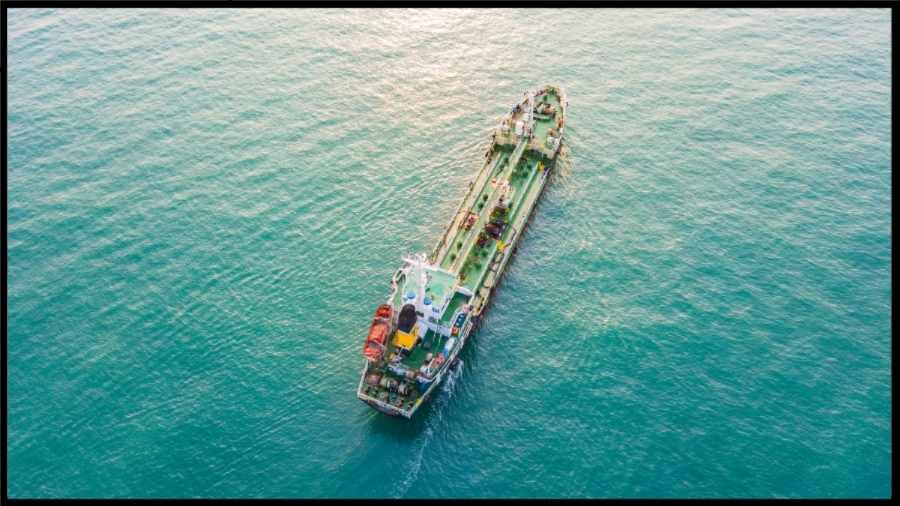
A very large crude carrier reported an external explosion off Oman on May 26 in one of the world’s most closely watched tanker corridors. UKMTO said the blast struck the vessel’s port side near the waterline about 60 nautical miles off Muscat, and the tanker was later identified as the Olympic Life. The crew was reported safe, the vessel remained operational, and the immediate discharge involved bunker fuel rather than cargo. Springfield Shipping, the tanker’s technical manager, said the ship was struck by an unidentified object at about 0920 GMT, that one bunker tank was damaged, and that the spill had since been contained. The ship was Greek-owned, was sailing out of the Gulf of Oman, and was not carrying cargo at the time. Authorities have not identified the cause.
Operator Impact Snapshot
Fast-read commercial view for owners, brokers, charterers, insurers, traders, and suppliers.
| Fast reader take | Latest confirmed signal | Operational meaning | Commercial consequence | Shows up first | Closest stakeholders |
|---|---|---|---|---|---|
| A commercial VLCC was hit near the waterline |
A tanker reported an external explosion on the port side aft, close to the waterline, about 60 nautical miles off Muscat.
external explosion
near waterline
60nm off Muscat
|
This was not a vague regional threat. It was a direct incident involving a large commercial hull in transit. | Owners and charterers now have to price real hull-contact risk into Oman and Hormuz-adjacent voyage decisions. | Higher caution notices and faster security review on Gulf sailings. | VLCC owners, crude traders, brokers, underwriters. |
| The ship stayed operational, which limits immediate supply shock |
The vessel remained stable and operational, and the crew were reported safe.
crew safe
ship operational
no cargo loss
|
The event is serious, but it did not immediately remove a loaded cargo from the market or cause a casualty disaster. | The first response is likely to be insurance and behavior repricing before any dramatic freight squeeze from vessel loss. | War-risk sentiment hardens before spot supply changes materially. | Insurers, charterers, operators, terminals. |
| The ship was not carrying cargo, but bunker damage still matters |
The technical manager said one bunker tank was damaged and a sheen was seen in the water before the spill was contained.
bunker tank damage
spill contained
environmental sensitivity
|
Even without cargo onboard, the incident created environmental and structural risk that required immediate response. | That raises concern over how much more severe the consequences could be if a future strike hits a laden tanker instead. | More caution on ballast transits and port-entry inspections. | Ship managers, coastal authorities, P&I interests, salvors. |
| The cause is still unknown |
Authorities and the vessel’s manager said the ship was struck by an unidentified object, with no official attribution yet.
unknown object
cause unconfirmed
investigation ongoing
|
The market must react to a confirmed event without knowing whether it was drift munition, drone, missile fragment, or another external hazard. | Uncertainty itself becomes a premium driver because underwriters and operators cannot model a single known threat type yet. | Wider caution zones and more conservative routing assumptions. | War-risk insurers, naval analysts, security consultants. |
| The location keeps Hormuz-adjacent risk in focus |
The incident took place in the Gulf of Oman near the approaches to the Strait of Hormuz, one of the most commercially sensitive tanker gateways in the world.
Gulf of Oman
Hormuz approach
high-sensitivity zone
|
Even when an attack occurs outside the narrowest Hormuz channel, the commercial read-through affects the whole Gulf access system. | Voyage risk pricing can widen across a much larger area than the exact impact point. | Insurance quotes and charterparty wording move first. | Gulf exporters, tanker operators, charterers, oil buyers. |
| The area already had a live tanker threat pattern |
In April, a tanker northeast of Oman reported being approached and fired upon by two IRGC gun boats in a separate UKMTO warning.
April tanker attack warning
IRGC gun boats
pattern risk
|
This explosion lands inside a broader sequence of security incidents rather than appearing in a vacuum. | Repeated events make it harder for the market to dismiss each case as isolated. | Stronger security language and tighter voyage approvals. | Owners, operators, flag states, security teams. |
The most important near-term shift is likely to be in confidence, not tonnage. The tanker stayed afloat and did not lose cargo, but a confirmed external explosion on a VLCC off Oman is enough to push owners, brokers, and underwriters toward a stricter view of Gulf-adjacent exposure.
Gulf Transit Risk Tool
This built-in tool estimates how much a single Oman blast report should change commercial behavior. It combines attack severity, attribution uncertainty, route concentration, and insurance sensitivity into one live risk score.
Live route inputs
Adjust the sliders to test whether this incident should be treated as a contained hull event or as a stronger commercial risk signal for Oman and Hormuz-linked tanker movements.
Live readout
This section turns the latest Oman incident into one operating score showing whether the market is looking at isolated damage or a wider Gulf-transit repricing signal.
The latest Oman incident points to hard risk repricing because it combines direct hull damage, uncertain attribution, and a route zone that remains too commercially important to ignore.
The incident remains mostly vessel-specific and does not materially change Gulf operating assumptions.
The event raises vigilance and screening, but the market still treats it as manageable without major repricing.
Owners, brokers, and underwriters start treating Oman and Hormuz-adjacent passages as commercially more expensive and harder to underwrite.
The incident becomes strong enough to materially reshape Gulf routing, approvals, and tanker employment behavior.
The immediate commercial question is not whether one ship survived. It is whether the market now sees enough proof of hull-contact danger near Oman to charge materially more for moving through the Gulf access system.
We welcome your feedback, suggestions, corrections, and ideas for enhancements. Please click here to get in touch.