Posidonia 2026 Opens With Security, Decarbonization, AI and Nuclear Shipping Moving to the Front of the Industry Agenda
🔔 Subscribe to ShipUniverse Weekly →
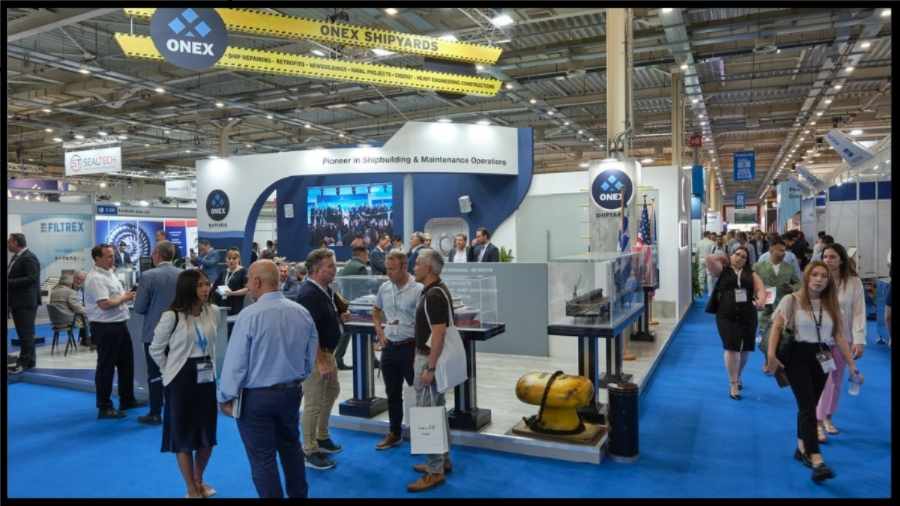
Posidonia 2026 opens in Athens this evening with the event arriving at its largest scale yet and with a sharper strategic tone than in past editions. Organizers say this year’s exhibition will host 2,227 exhibitors from 83 countries and territories, span 45,000 sqm at the Metropolitan Expo, feature a record 24 national pavilions, and draw more than 40,000 shipping professionals over the week. As it opens, the current focus is clearly centered on four pressure points shaping maritime investment and operations right now: geopolitical risk and maritime security, the energy-transition pathway to net zero, digitalisation and cybersecurity, and the emerging discussion around nuclear energy as a potential marine fuel. Event materials also say more than 30 exhibitors will showcase AI applications for maritime use and more than 100 exhibitors will present green technologies tied to shipping decarbonization.
The event itself does not reset freight markets, but the current agenda is closely tied to security, energy and fleet-efficiency decisions that shape freight direction later in the year.
Risk management and maritime security are central themes this year, keeping insurance and war-risk strategy high on the operator discussion list.
Energy transition, green technology and alternative-fuel pathways are among the dominant opening themes, making fuel strategy one of the event’s strongest commercial threads.
Geopolitical and freedom-of-navigation concerns are part of the show’s opening focus, so route resilience and network planning remain active boardroom issues.
Digitalisation, cybersecurity, AI and decarbonization are now influencing newbuild priorities and retrofit logic, which can feed into future chartering and asset-value decisions.
| Opening lane | Current marker | Immediate operating read | Why it matters now | Commercial consequence | Next checkpoint |
|---|---|---|---|---|---|
| Scale of the event | Posidonia 2026 opens 1-5 June at the Athens Metropolitan Expo, with more than 40,000 professionals expected. Record attendance signal | The exhibition is entering the week as the biggest edition the organizers have staged. | That matters because scale tends to amplify where owner attention, supplier budgets and solution launches are being concentrated. | Suppliers and service providers gain a stronger platform for lead generation, while owners gain denser access to financing, technology and compliance discussions in one place. | Watch whether opening-day traffic and conference attendance confirm the pre-event record expectations. |
| Security and geopolitics | Official opening materials place geopolitical developments, maritime security and risk management at the top of the agenda. Risk remains central | The industry is not treating security as a side topic. It is one of the main opening pillars. | This matters because owners are still making commercial decisions in a market shaped by sanctions, corridor risk and freedom-of-navigation pressure. | Security-linked services, risk advisory, insurance and compliance vendors are likely to see strong engagement throughout the week. | Watch which security themes dominate the first day panels and bilateral meetings. |
| Energy transition focus | Energy transition and shipping’s pathway to net-zero emissions are listed among the event’s primary themes. Fuel strategy stays dominant | Decarbonization remains one of the most commercially active discussion lanes at the show’s opening. | That matters because fleet renewal, retrofit choices, emissions compliance and future charter attractiveness are now tightly linked to fuel and technology decisions. | Green-tech exhibitors, retrofit suppliers and owners evaluating transition pathways are likely to sit at the center of commercial traffic. | Watch which fuels, efficiency systems and compliance tools attract the most practical attention rather than only the most publicity. |
| AI and digitalisation | More than 30 exhibitors are set to showcase AI applications for maritime use, while digitalisation and cybersecurity are formal headline themes. AI has moved into the main hall | AI is no longer a side-conference novelty. It is being presented as a real operating layer inside mainstream shipping technology. | This matters because owners are increasingly evaluating digital tools not only for efficiency, but for compliance, resilience and safety support. | Tech vendors with measurable operational use cases are likely to outperform general concept-led messaging. | Watch whether owner conversations center on bridge tech, maintenance, commercial optimization or back-office efficiency first. |
| Nuclear shipping discussion | Nuclear energy as a potential marine fuel is explicitly listed among the event’s key themes. Advanced propulsion enters the core agenda | Nuclear propulsion has moved from fringe debate into the formal top-level programme. | This matters because the industry is starting to test which long-duration power pathways deserve serious commercial evaluation beyond the usual fuel menu. | Class societies, regulators, insurers and advanced-technology providers may use the week to sharpen practical positioning around a still-early topic. | Watch whether nuclear remains a strategic curiosity or becomes a serious technical conversation in side meetings and specialist sessions. |
| Institutional and political weight | The opening ceremony is set to feature Greece’s prime minister, the IMO secretary-general and the EU commissioner for sustainable transport and tourism. Policy weight is unusually high | Posidonia is opening not only as a trade fair, but as a high-level policy and influence platform. | That matters because regulatory timing, European policy and multilateral shipping priorities are now more tightly connected to commercial planning. | The event’s influence this year is likely to extend beyond sales and networking into real policy signaling. | Watch the opening speeches for direction on security, decarbonization, competitiveness and regulatory pace. |
We welcome your feedback, suggestions, corrections, and ideas for enhancements. Please click here to get in touch.