War Risk Insurance Outlook for H2 2026 8 Pressure Points Owners Should Budget Before the Next Transit
🔔 Subscribe to ShipUniverse Weekly →
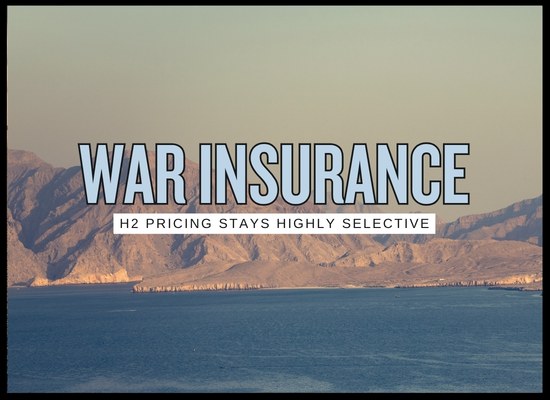
War risk insurance is heading into the second half of 2026 with three realities in place at the same time. First, the market is still functioning: the London war market is actively quoting and cover remains available for high-risk areas rather than disappearing altogether. Second, the risk map is wider and more volatile than many owners would like. The Joint War Committee expanded Listed Areas in March 2026 by adding Bahrain, Djibouti, Kuwait, Oman, and Qatar and by amending the wider Persian Gulf, Gulf of Oman, Indian Ocean, Gulf of Aden, and Southern Red Sea zone. Third, the official threat picture remains active into H2, with MARAD advisories still live for the Persian Gulf, Strait of Hormuz, Gulf of Oman, the Red Sea and Bab el Mandeb chain, the Black Sea and Sea of Azov, piracy zones, and a worldwide advisory on foreign adversarial technological, physical, and cyber influence. That means the H2 conversation is no longer just about whether owners can still buy war cover. It is about how much they will pay, how much notice and disclosure underwriters will demand, and how tightly chartering, routeing, sanctions controls, and evidence discipline need to fit together before the voyage begins.
| # | Pressure point | What H2 buyers should expect | Main cost or coverage consequence | Best pre transit move | Biggest mistake if ignored | Priority |
|---|---|---|---|---|---|---|
| 1️⃣ |
The listed area map is now wider and more politically sensitive
The Gulf and Red Sea picture is not just about one chokepoint anymore
|
Buyers should assume that H2 placements will still be judged against an expanded listed-area map and not against older, narrower mental models. | More voyages can trigger notice obligations, additional premium, or closer underwriting scrutiny even if the ship is not heading into the single most discussed hotspot. | Rebuild the voyage map from the current listed-area position before the fixture is finalized. | Budgeting for only one obvious hotspot while missing adjacent listed exposure that still affects rating and wording. | High |
| 2️⃣ |
Premiums will probably remain volatile rather than uniformly high
The market can soften briefly and still reprice sharply on fresh events
|
H2 buyers should expect quotes to move on short notice, especially after attacks, boarding incidents, widened advisory language, or escalation involving the Gulf and Hormuz complex. | War-cost budgeting becomes harder, and owners may find that optional voyages suddenly become marginal once premium and delay are priced together. | Use scenario budgets and pre-approve several pricing bands internally instead of one static transit assumption. | Fixing freight or voyage economics too tightly around a premium that was only briefly available. | High |
| 3️⃣ |
Availability is still there, but underwriters want cleaner files
The market is open, but not careless
|
Cover is still being quoted, but buyers with vague routing plans, weak sanctions controls, or unclear operational discipline should expect tougher conversations. | Even when cover is available, weaker presentations can lead to worse terms, narrower comfort, and more internal stress around last-minute approval. | Present the transit file with route logic, operating controls, reporting plans, and sanctions checks already organized. | Thinking that availability alone means the buyer can remain sloppy on preparation. | High |
| 4️⃣ |
Charter wording is now part of the war insurance problem
Premium allocation and dangerous-area rights are now more commercially visible
|
Owners and charterers should expect more focus on who pays additional premiums, who decides whether an area is too dangerous, and how rerouting economics are documented. | Weak clauses can turn a covered voyage into a dispute over premium recovery, deviation rights, delays, or crew-related cost allocation. | Review charter wording before the risky voyage, not after the underwriter has quoted. | Assuming a live insurance quote automatically solves the underlying charter-party conflict. | Core |
| 5️⃣ |
Sanctions and war risk will stay tightly linked
A ship can be physically insurable and still commercially exposed
|
H2 buyers should assume that Gulf and nearby-area war placements will still be judged through a sanctions lens, especially if payments, counterparties, cargo origin, or security arrangements look unusual. | A voyage can still proceed in theory but become commercially unattractive if sanctions checks and insurance comfort are not aligned. | Run sanctions review and war placement together as one workflow. | Separating legal review from broker placement until the last moment. | High |
| 6️⃣ |
Cyber and navigation interference will keep influencing underwriting comfort
Electronic disruption is now part of the war-risk conversation
|
More buyers will need to explain how the ship will respond to spoofing, interference, communications issues, or abnormal vessel behavior inside higher-threat waters. | These events can complicate both transit risk and claims defensibility because they blur what happened, what was seen, and what the crew did next. | Document bridge procedures, reporting chains, and evidence preservation rules before the transit begins. | Assuming war cover is only about missiles, drones, mines, or boarding risks. | Core |
| 7️⃣ |
Black Sea risk will stay relevant even when headlines focus elsewhere
H2 attention may swing, but the advisory map remains broad
|
Owners should expect the Black Sea file to remain active in underwriting and routing discussions even if Middle East tension dominates market attention at times. | Buyers who focus only on one war zone can under-budget additional premium and operational friction in another. | Treat H2 war planning as a multi-zone issue rather than a single-theatre issue. | Borrowing comfort from reduced activity in one corridor and applying it to another corridor with very different threat mechanics. | Watch |
| 8️⃣ |
The biggest commercial edge will likely come from better preparation not only better market timing
The best buyers usually make underwriters comfortable faster
|
H2 is likely to reward buyers who can place well-structured files with disciplined routeing, current clauses, clear notices, and stronger internal approval processes. | Preparation can improve pricing outcomes, speed, and claims posture even when the underlying security environment remains difficult. | Build a repeatable pre-transit checklist with broker, legal, chartering, security, and operations all aligned. | Waiting for the market to become easier instead of making the account more placeable now. | High |
| Pressure area | Score | Immediate read |
|---|---|---|
| Route and listed-area pressure | 0 | Lower |
| Underwriting and contract pressure | 0 | Lower |
| Crew and operational stress | 0 | Lower |
| Sanctions and navigation disruption | 0 | Lower |
This is a directional planning tool, not an insurance quote. It does not replace broker advice, underwriter indications, voyage intelligence, charter review, or sanctions counsel. It helps show which weak point is most likely to make H2 war-risk insurance harder, more expensive, or less flexible.
We welcome your feedback, suggestions, corrections, and ideas for enhancements. Please click here to get in touch.