Carnival Locks In Wärtsilä Support as LNG Cruise Fleet Maintenance Gets More Strategic
🔔 Subscribe to ShipUniverse Weekly →
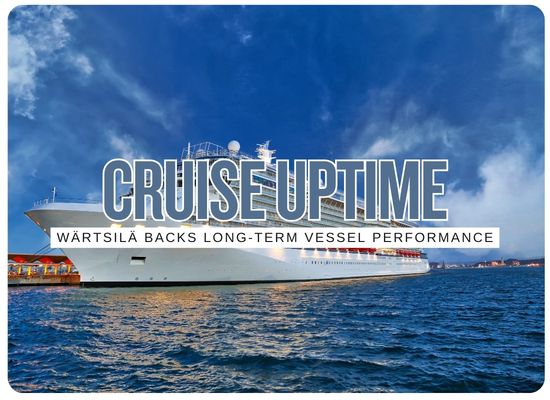
Wärtsilä and Carnival Corporation have signed a new eight-year lifecycle agreement covering four LNG-fuelled cruise ships across the Princess Cruises and Carnival Cruise Line fleets, including two vessels still under construction. The agreement moves beyond basic engine service and places Carnival’s LNG cruise assets under a long-term support structure built around Wärtsilä dual-fuel engines, related equipment, spare parts logistics, overhauls, remote monitoring, condition-based maintenance, technical audits, crew training, and agreed performance targets. For cruise operators and marine suppliers, the update points to a practical shift in how large passenger vessels are being managed: complex LNG power systems are being tied to longer service partnerships, digital monitoring, availability planning, and cost control instead of relying only on periodic maintenance events after problems appear. Carnival operates a global fleet of more than 90 ships visiting more than 800 ports, so even a four-ship LNG agreement carries a wider signal for cruise fleet reliability, newbuild commissioning, engine uptime, supplier planning, and lifecycle service demand.
LNG Cruise Support Moves Into Long-Term Performance Mode
The agreement ties engine reliability, spares, monitoring, overhauls, and KPI performance into one lifecycle support structure.
Covered Vessel Availability
Cruise ships depend on tight itineraries, guest schedules, port slots, and hotel-load reliability, making unplanned technical stops especially expensive.
Dual-Fuel Engine Support
The scope covers Wärtsilä dual-fuel engines and related equipment, placing LNG powertrain reliability at the center of the agreement.
Remote Monitoring
Condition-based maintenance can help identify issues earlier, plan interventions around itineraries, and reduce surprise repair events.
Newbuild Ramp-Up
Two covered vessels are still under construction, putting lifecycle planning into the commissioning and early operating period.
Supplier and Spares Planning
Long-term agreements can reshape demand for spare parts, logistics, crew training, engine overhauls, audits, and OEM service capacity.
Operator Readout
This is a cruise fleet reliability story as much as an LNG engine story. The agreement reflects a wider shift toward long-term OEM service models where availability, monitoring, spares, training, and maintenance timing are managed as part of vessel performance.
Carnival LNG Fleet Performance Watch
The deal gives Carnival a structured support model for LNG cruise assets across maintenance, monitoring, spares, overhauls, and KPIs.
The new agreement is notable because it connects cruise fleet performance to a long-term service framework. For LNG-powered ships, engine performance is tied to fuel flexibility, guest comfort, electrical load, itinerary reliability, emissions performance, and port call confidence. The service model also gives suppliers a clearer view of lifecycle demand rather than one-off repair events.
Length of the Wärtsilä and Carnival Corporation lifecycle agreement.
Covered LNG-fuelled cruise vessels across Princess Cruises and Carnival Cruise Line.
Covered vessels currently under construction, bringing lifecycle support into the delivery pipeline.
Lifecycle Agreement Planning Table
| Agreement Area | Latest Readout | Cruise Fleet Meaning | Stakeholders Affected | Watch Level |
|---|---|---|---|---|
| Agreement term | Eight-year lifecycle agreement | Creates a longer planning window for maintenance, overhauls, spares, and performance management. | Cruise operators, OEMs, procurement teams | High |
| Covered fleet | Four LNG-fuelled cruise vessels across Princess and Carnival Cruise Line | Places LNG cruise assets under a performance-based support model. | Fleet managers, technical teams, class partners | High |
| Newbuild inclusion | Two covered ships are still under construction | Supports smoother commissioning, early service stability, and spares readiness. | Shipyards, commissioning teams, suppliers | Watch |
| Maintenance scope | Planned and unplanned support, spares logistics, and major engine overhauls | Reduces dependence on reactive repair planning during operating seasons. | Owners, technical managers, spares providers | Positive |
| Digital support | Remote monitoring, condition-based maintenance, audits, and reviews | Improves visibility into engine condition and maintenance timing. | Digital service teams, chief engineers, OEM support centers | Medium |
| Performance structure | Agreed KPIs and performance-based framework | Aligns the operator and OEM around measurable outcomes, including fewer unplanned stops. | Cruise executives, suppliers, insurers, guests | High |
Planning note: For cruise fleets, lifecycle agreements are becoming a reliability tool, a procurement tool, and a guest-experience protection tool because engine availability directly affects itineraries, onboard power, hotel systems, and operating cost.
Cruise Lifecycle Uptime Estimator
Estimate the operating value of fewer unplanned stops, better maintenance timing, and stronger engine availability.
Estimated value from fewer unplanned technical stops over the selected term.
Estimated value from maintenance planning and service efficiency gains.
Estimated value from additional available operating days.
Combined modeled operating value across the agreement period.
The modeled lifecycle value is led by avoided disruption and added availability.
Reliability-led valueThis tool is for editorial and commercial sensitivity only. It does not replace OEM service pricing, cruise revenue models, technical availability reports, warranty terms, class requirements, engine-condition data, drydock planning, or professional fleet management analysis.
We welcome your feedback, suggestions, corrections, and ideas for enhancements.
Please click here to get in touch