Piracy Returns to the Gulf of Aden as Tanker Seizure Raises Route Risk
🔔 Subscribe to ShipUniverse Weekly →
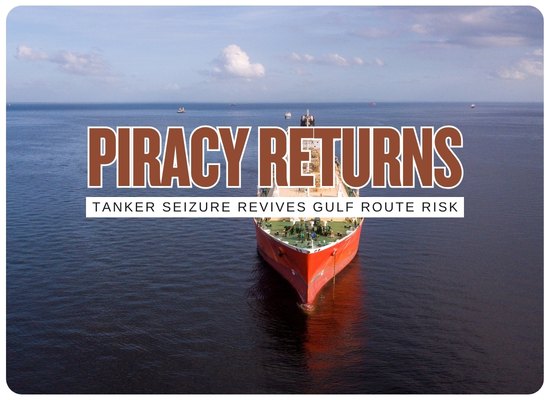
A Tanzania-flagged oil and chemical tanker, identified in reporting as Asana, was boarded by armed assailants off Yemen while transiting the Gulf of Aden, then moved toward Somalia’s Puntland coast in what maritime security sources and regional officials are treating as a suspected Somali piracy hijacking. The UKMTO reported the boarding by unauthorized personnel south of Yemen’s al-Mukalla area, while security reporting said the vessel had no armed security team onboard and was later being held off Caluula in Puntland’s Bari region. The incident follows a renewed piracy pattern in 2026, including the hijacking of MT Honour 25 off Somalia in April and the IMO’s recent call for the release of 44 seafarers held aboard three detained vessels, Honour 25, Eureka, and Sward.
Gulf of Aden security risk has moved beyond missiles and drones
The suspected hijacking shows piracy risk returning to the same corridor already strained by Yemen-linked security threats.
A tanker was boarded off Yemen and reportedly moved toward Puntland, showing that physical vessel seizure risk is active again.
Small tankers, product carriers, chemical tankers, and lower-freeboard vessels face higher boarding exposure in this operating pattern.
Security team decisions, citadel readiness, razor wire, watchkeeping, and routing discipline are back in the voyage-planning discussion.
War-risk, kidnap and ransom, hire protection, delay, deviation, and route warranties may face sharper review.
Naval attention is split across Red Sea, Gulf of Aden, and western Indian Ocean missions, making early reporting and onboard defenses more important.
Gulf of Aden piracy signal map
The table converts the suspected Asana hijacking into practical signals for owners, charterers, insurers, masters, ports, and security teams.
| Signal | Current status | Commercial effect | Operator read | Next item to watch | Level |
|---|---|---|---|---|---|
| Asana tanker seizure | Armed assailants reportedly boarded the tanker off Yemen. | Confirms active physical boarding and vessel-control risk. | Gulf of Aden voyages need piracy controls, not only missile-threat planning. | Crew status, vessel position, negotiator activity, and official updates. | High |
| Puntland movement | Reports place the vessel near or toward Puntland’s coast. | Raises hostage, detention, ransom, and recovery complexity. | Movement toward shore is a major escalation marker. | Anchorage location and Puntland authority response. | High |
| Security team status | Reporting says the tanker had no armed security team onboard. | May affect insurer review and owner risk controls. | Armed guard policy is back on the table for exposed transits. | Security advisories and charter-party approvals. | Watch |
| Resurgent piracy file | Earlier 2026 hijackings already placed Somali piracy back in focus. | Raises regional risk perception even if global piracy totals remain low. | Operators should treat this as a pattern, not a one-off anomaly. | Further approaches, suspicious craft reports, and IMB alerts. | High |
| Insurance exposure | Kidnap, ransom, war-risk, delay, and hire protection may be reviewed. | Premiums and coverage conditions can affect route economics. | Insurance terms should be confirmed before sailing. | Listed-area changes and underwriter circulars. | Watch |
| Naval and reporting chain | Regional naval missions remain active, but coverage is stretched. | Early distress reporting may decide response options. | Masters need clear reporting, citadel, and bridge-defense procedures. | UKMTO, IMB, MSCHOA, and naval advisories. | Medium |
Gulf of Aden Piracy Exposure Meter
A practical tool for estimating boarding and seizure exposure for a vessel transiting near Yemen, Somalia, and Puntland.
This voyage has high piracy exposure under the selected assumptions. Security posture, speed, route distance, and reporting discipline should be reviewed before transit.
We welcome your feedback, suggestions, corrections, and ideas for enhancements.
Please click here to get in touch