Samsung Heavy Pushes Floating Nuclear Power Into the Shipyard Conversation
🔔 Subscribe to ShipUniverse Weekly →
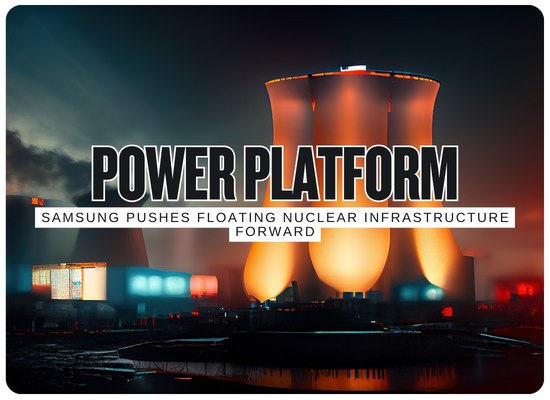
Samsung Heavy Industries has signed a memorandum of understanding with U.S. nuclear engineering firm Sargent & Lundy to jointly develop a floating small modular reactor platform, a next-generation offshore power concept that places an SMR on a floating structure rather than a land-based site. The agreement was signed in Washington and is aimed at developing a universal FSMR standard platform, with Samsung Heavy bringing floating-structure, offshore plant, and shipbuilding expertise while Sargent & Lundy contributes nuclear plant design and engineering capability. Samsung Heavy has already been developing an FSMR platform designed to accommodate different SMR technologies, and its earlier floating nuclear platform concept received ABS Approval in Principle for a design using two SMART100 reactors developed by Korea’s atomic energy sector.
Floating nuclear power is moving from concept toward platform planning
The Samsung Heavy and Sargent & Lundy agreement gives the maritime sector a fresh signal that floating SMR infrastructure is being developed as a standardized offshore product.
Floating SMR platforms could create a new offshore construction category for yards with FLNG, FPSO, and complex power-module experience.
Licensing, nuclear safety, class approval, port-state acceptance, security, and emergency planning remain major hurdles.
Remote industrial sites, ports, islands, defense bases, and data centers could become target buyers if safety and economics align.
Potential demand touches mooring, hull design, grid systems, cybersecurity, cooling, containment, safety, patrol, and maintenance services.
The MOU is an early development step, not a commercial deployment order, so buyers will watch validation, approvals, and first-project commitments.
Floating SMR signal map
The table converts the Samsung Heavy and Sargent & Lundy partnership into practical signals for shipyards, ports, offshore operators, power buyers, suppliers, insurers, and regulators.
| Signal | Current status | Commercial effect | Operator read | Next item to watch | Level |
|---|---|---|---|---|---|
| Samsung and S&L MOU | Partners will develop a universal FSMR standard platform. | Moves floating nuclear from concept work into structured platform development. | Shipyard and nuclear engineering capabilities are being combined earlier. | Design scope, reactor interfaces, and first buyer interest. | Strong |
| Platform flexibility | Samsung’s FSMR concept is designed to accommodate various SMR types. | Could reduce dependence on one reactor vendor if interfaces are standardized. | Standardization may be the key to repeatable project economics. | Reactor-vendor partnerships and interface rules. | Watch |
| Class pathway | Earlier Samsung concept received ABS Approval in Principle for a SMART100-based platform. | Gives the program a credibility marker, but not full commercial approval. | AIP is useful, but licensing and host acceptance remain larger gates. | Additional class reviews and safety-case milestones. | Medium |
| Target power users | Potential users include islands, ports, industrial sites, defense bases, and floating data centers. | Creates possible demand where steady baseload power is difficult to supply on land. | The buyer case depends on cost, acceptance, siting, grid access, and security. | First commercial offtake or host-country agreement. | Watch |
| Regulatory barrier | Nuclear licensing, maritime rules, liability, emergency response, and security must align. | Approval complexity may be the main commercialization bottleneck. | Regulators will decide the speed more than shipyards alone. | National licensing model and port-state treatment. | High |
| Supplier ecosystem | Floating nuclear needs hull, mooring, electrical, controls, cooling, safety, and security systems. | Could open high-value supplier niches if the concept reaches deployment. | Early suppliers should track standards before overcommitting resources. | Package tenders, class rules, and design freezes. | Medium |
Floating SMR Deployment Fit Meter
A practical tool for estimating whether a floating SMR platform has a stronger or weaker commercial fit for a port, island, offshore site, data center, or industrial energy user.
This site has a conditional floating SMR fit. Demand and alternative-power pressure are meaningful, but licensing, acceptance, and security planning still need definition.
We welcome your feedback, suggestions, corrections, and ideas for enhancements.
Please click here to get in touch