GPS Jamming Losses Move From Bridge Alarm to Insurance Claim
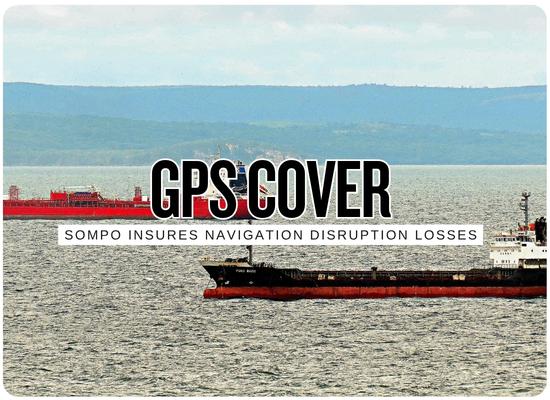
Sompo Japan has announced a new marine cyber insurance product that brings GPS jamming, spoofing, AIS manipulation, and shipboard system interference into the center of the marine insurance conversation. The cover, scheduled to launch in November 2025, is designed for losses tied to cyberattacks or malicious activity affecting vessel systems and networks, including physical damage, loss of use, and incident-response costs. The timing is notable because GNSS disruption has become a more visible problem for commercial shipping, with vessels increasingly reporting false positions, unreliable navigation signals, and electronic-chart concerns in higher-risk regions. For the marine insurance market, Sompo’s launch marks a shift from treating GPS interference as a bridge-level navigation problem to treating it as a potential insured loss.
Ship Universe Marine Cyber Watch
Operator Impact Snapshot
GNSS interference is becoming a claims, coverage, and vessel-resilience issue.
Sompo’s move puts a commercial frame around a problem that bridge teams already recognize: a vessel can lose money, time, and safety margin when position data becomes unreliable.
Coverage gap pressure
Standard marine policies may not respond cleanly when a cyber or signal event causes physical damage, loss of use, investigation cost, or system recovery expense.
Bridge-to-balance-sheet risk
GPS jamming, spoofing, and AIS manipulation can move from a bridge alarm to a delay claim, grounding loss, salvage bill, repair cost, or charter dispute.
Jamming wording test
Owners should check whether their wording treats jamming as cyber interference, electronic warfare, war risk, equipment failure, excluded conduct, or a covered malicious act.
Loss-of-use focus
The real claim may not be a wreck. It may be a vessel held at anchor, missed laycan, off-hire dispute, delayed cargo, or lost trading day.
Vessel cyber-resilience market
ECDIS hardening, GNSS monitoring, alternate PNT, bridge procedures, crew training, and incident logging become easier to justify when insurance pricing recognizes the risk.
Commercial Reading
The product launch is a signal that insurers are starting to separate ordinary navigation error from losses caused by malicious or hostile manipulation of shipboard digital systems.
- Shipowners: review hull, war, cyber, P&I, loss-of-hire, and blocking language together rather than policy by policy.
- Charterers: clarify off-hire, unsafe-port, deviation, speed reduction, and voyage-suspension treatment during GNSS disruption.
- Managers: document alarms, bridge decisions, manual fixes, radar cross-checks, VDR data, and communications during every interference event.
- Brokers: ask whether cover responds to jamming, spoofing, false AIS inputs, electronic chart corruption, and investigation costs.
- Vendors: position GNSS resilience as a claims-control and underwriting-support tool, not just a navigation upgrade.
GNSS Insurance Board
Coverage Triggers, Loss Types, and Evidence Gaps
Navigation interference is becoming a wording, documentation, and resilience test.
Latest Coverage Signal
Sompo Japan said sales of Marine Cyber Insurance would begin in November 2025.
Physical damage, loss of use, other losses, plus available incident-response expenses.
Cyberattacks, unauthorized access, and malicious activities targeting vessel systems and networks.
False vessel-location information is now part of the marine cyber-risk conversation.
IACS cyber-resilience rules are pushing cyber controls deeper into ship and equipment design.
Operator Table
| Issue Area | Latest Detail | Commercial Effect | Stakeholder Move | Pressure Meter |
|---|---|---|---|---|
| Marine Cyber Cover Sompo product signal | The new cover targets shipboard systems and networks, including physical damage, loss of use, and response expenses. | Owners gain a possible affirmative route for losses that may sit awkwardly between hull, war, cyber, and operational delay. | Ask for clear wording on GNSS interference, AIS manipulation, ECDIS error, malicious activity, and response-cost triggers. |
High
|
| Jamming Signal denial | Jamming blocks or overwhelms legitimate satellite signals, which can leave the vessel without reliable position fixes. | Losses can appear as delay, route suspension, pilotage refusal, unsafe departure, manual navigation burden, or casualty risk. | Confirm whether jamming is expressly covered, excluded, or subject to war, cyber, electronic warfare, or malicious-act analysis. |
High
|
| Spoofing False position | Spoofing can present a believable but wrong position, course, speed, or AIS-derived picture to bridge systems. | The highest casualty risk may come when the bridge believes the data is valid and continues toward danger. | Build cross-check rules using radar, visual bearings, parallel indexing, echo sounder, paper fallback, and manual ECDIS fixes. |
High
|
| Loss of Use Time and trading loss | A vessel may remain physically intact but lose trading time if the master suspends departure or slows through a high-risk area. | Charter disputes can turn on whether the master’s decision was reasonable under the interference conditions. | Preserve voyage orders, master risk assessments, local warnings, VTS records, bridge logs, and owner-charterer messages. |
Medium High
|
| Coverage Evidence Causation file | Claims may fail or slow down if owners cannot prove whether the issue was jamming, spoofing, equipment fault, crew error, or bad voyage planning. | Evidence discipline becomes part of the insurance value chain, especially for disputed off-hire and casualty claims. | Save GNSS alarms, ECDIS screenshots, VDR extracts, radar overlays, LRIT records, noon reports, manufacturer logs, and cyber-forensic notes. |
High
|
| Supplier Opportunity Resilience equipment | Insurance attention can increase demand for alternate PNT, multi-frequency GNSS, receiver filtering, IMUs, CRPAs, monitoring software, and crew drills. | Buyers may treat these systems as deductible control, underwriter comfort, and claims-defense infrastructure. | Package hardware, procedures, logs, training, and insurer-ready reporting rather than selling a standalone black box. |
High
|
GNSS Insurance Exposure Calculator
Estimate the commercial exposure from a GPS jamming or spoofing event and test whether coverage review should move higher.
This tool helps shipowners, brokers, fleet managers, charterers, and cyber vendors convert GNSS interference into a practical loss, documentation, and coverage-review estimate.
Delay Loss
$180,000
Estimated lost earning or hire value from the interference event.
Casualty Exposure
$2.1M
Estimated vessel damage exposure using the selected casualty factor.
Total Modeled Exposure
$2.4M
Delay, casualty, and incident-response exposure before coverage recovery.
Asset Value at Stake
$145.0M
Combined vessel and cargo value exposed during the affected voyage.
Coverage Review Signal
The modeled exposure and wording uncertainty justify a focused review of cyber, hull, war, P&I, loss-of-hire, and charter-party treatment.
We welcome your feedback, suggestions, corrections, and ideas for enhancements.
Please click here to get in touch