BHP Port Hedland Strike Escalates as 150 Workers Walk Out, but Iron Ore Keeps Moving
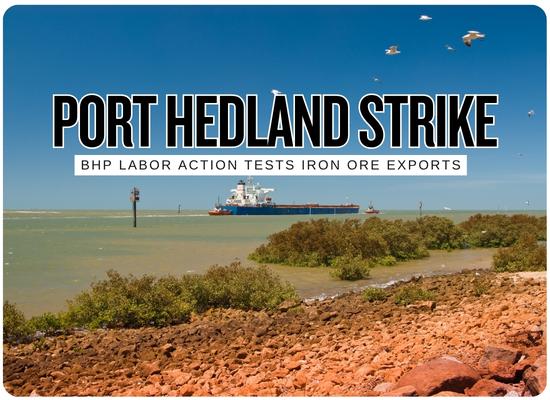
BHP’s Port Hedland iron ore operations have emerged from their largest industrial action in roughly a quarter-century after union workers staged a two-day strike across August 8 and 9. The action began with a 24-hour ship-loading ban on Saturday and expanded into a broader 24-hour stoppage from 5:30 a.m. Sunday, when around 100 additional employees downed tools, bringing total participation across the action to about 150 workers. The Combined BHP Ports Unions had warned that as many as 16 iron ore shipments could be delayed, but the actual maritime impact appears to have been more limited: BHP said vessels continued loading during the stoppage and that departures remained subject to normal port planning and tidal windows. The dispute is not resolved. Unions representing roughly 450 operators and maintenance workers are seeking a new four-year enterprise agreement with stronger, enforceable protections around pay and conditions, while BHP has argued that progress is being made through Fair Work Commission-assisted bargaining. The next negotiations are scheduled for August 18, the same day BHP is due to report its annual results.
Operator Impact Snapshot
The weekend action was designed to strike directly at BHP's ship-loading chain, but it did not become a complete shutdown of Port Hedland. The immediate shipping story is now the gap between the disruption unions attempted to create and the contingency capacity BHP was able to deploy to keep ore moving.
Saturday brought a 24-hour ship-loading ban followed by a broader 24-hour stoppage beginning early Sunday.
Around 100 workers joined Sunday's walkout, bringing total strike participation to approximately 150.
BHP said vessels continued loading despite the strike, limiting the immediate impact on export flows.
The scale of BHP's normal daily export flow explains why even short disruptions attract global attention.
The unions and BHP return to negotiations on the same date the company publishes its annual results.
Strike Timeline and Shipping Exposure
Repeated industrial action is now testing the resilience of BHP's mine-to-rail-to-port system. So far, contingency staffing has prevented a large visible interruption to exports, but the bargaining dispute remains open and the duration of any future stoppage will determine whether the issue remains operationally manageable or begins creating a meaningful vessel backlog.
| Date | Action / Event | Union Position | BHP Response | Maritime Effect | Status |
|---|---|---|---|---|---|
| June 2026 | Strike mandate Workers approve protected industrial action. | Union ballots authorized repeated work bans and stoppages during enterprise bargaining. | BHP said it had contingency plans intended to maintain safe and reliable operations. | Established the possibility of recurring interruption across maintenance and ship-loading functions. | ESCALATION BEGINS |
| July 16 | 8-hour strike First major stoppage. | Workers sought greater pay transparency and enforceable employment conditions. | BHP used contingency staffing and continued its loading program. | Seven vessels were still expected to load during the day and shipping continued. | LIMITED EXPORT EFFECT |
| Late July | Negotiations continue Fair Work Commission involved. | Unions maintained that key pay and conditions issues remained unresolved. | BHP said progress was being made and industrial action was unnecessary. | No immediate shipping interruption, but another strike notice remained active. | BARGAINING |
| August 8 | 24-hour loading ban First stage of weekend strike. | Members directly involved in loading ships withdrew that work. | BHP said vessels were still being loaded and departures remained subject to normal planning and tides. | Original union estimates suggested up to 16 shipments across the weekend could be delayed. | DIRECT SHIP EXPOSURE |
| August 9 | 24-hour walkout Roughly 100 more workers down tools. | All three union groups participated in the broader stoppage. | BHP again said vessels continued loading. | Maintenance and operating capacity tightened, but no full port shutdown was reported. | HIGH LABOR IMPACT |
| August 10 | Workers return Strike period expires. | Bargaining campaign remains active. | Normal staffing begins returning after 5:30 a.m. | Attention shifts to any vessel or maintenance backlog created over the weekend. | RECOVERY |
| August 18 | Next talks New bargaining session scheduled. | Unions continue seeking a four-year agreement with enforceable protections. | BHP has said an updated proposal will be presented. | The outcome could determine whether additional industrial action threatens future vessel schedules. | KEY DATE |
Port Hedland Strike Shipping Exposure Calculator
Model the potential effect of a future Port Hedland work stoppage on bulk-carrier cargo, vessel waiting costs and post-strike recovery requirements. The calculator is scenario-based and does not represent the actual financial loss from the August strike.
We welcome your feedback, suggestions, corrections, and ideas for enhancements.
Please click here to get in touch