North Carolina Ports Cyberattack Shows Port Delays Now Start at the Login Screen
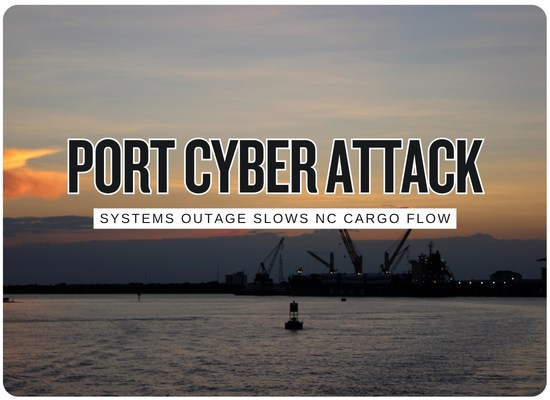
A reported cyberattack slowed North Carolina Ports operations across Wilmington, Morehead City, and the Charlotte Inland Port, turning a systems outage into a practical cargo problem for truckers, shippers, carriers, terminal users, and inland logistics partners. The official port alerts did not publish deep technical details, but they did confirm the key operating facts: gates were delayed across all three locations, the outage was system-wide, and even after gates returned to a normal schedule, delays were still expected while IT teams assessed affected systems and restored services.
Ship Universe Port Cyber Watch
Operator Impact Snapshot
A cyber incident can slow a port without closing the channel, stopping cranes, or damaging a single berth.
I look at port cyber incidents first through the gate, because that is where a software problem becomes a truck queue, a missed appointment, a delayed container, or a failed customer promise.
Gate delay risk
NC Ports confirmed delayed gate openings during the systems-wide outage, which is the clearest sign that digital disruption reached daily cargo flow.
Multi-location exposure
The impact reached Wilmington, Morehead City, and Charlotte Inland Port, showing that port cyber risk can spread across a network instead of staying inside one terminal.
Recovery still uneven
Even after normal gate schedules resumed, the port warned that delays could continue while affected systems were assessed and restored.
Cold-chain sensitivity
Wilmington has built a strong perishable and refrigerated cargo story, so delays can carry higher commercial consequences for time-sensitive cargo.
Digital-platform dependency
Customer portals, gate tools, RFID workflows, appointment systems, TOS functions, EDI feeds, and billing processes can all become operational choke points.
Commercial Reading
The incident is a useful warning for ports that are investing heavily in reliability, cold chain, inland rail, and customer digital platforms.
- Truckers: confirm gate status, appointment windows, RFID access, queue conditions, and fallback paperwork before dispatch.
- Importers: check container availability, free-time exposure, demurrage, detention, customs holds, and warehouse receiving windows.
- Exporters: verify cutoffs, rail release, booking status, VGM data, reefer pre-trip timing, and vessel-roll risk.
- Carriers: separate port schedule recovery from digital recovery, especially if EDI, release, billing, or visibility tools lag.
- Insurers: review cyber, cargo delay, business interruption, contingent business interruption, and physical damage triggers separately.
Port Cyber Disruption Board
Gate Delays, Inland Port Exposure, and Recovery Signals
The operating issue is not only whether the port is open. It is whether the systems behind cargo movement are trusted again.
Latest Operating Setup
Port of Wilmington, Port of Morehead City, and Charlotte Inland Port were included in gate and systems updates.
Official alert said gates at all locations would open at 8 a.m. due to a systems-wide outage.
Official alert said gates would follow normal schedules, while delays could still be expected.
NC Ports says port activity supports more than 88,200 jobs across North Carolina.
NC Ports says the inland facility can accommodate 2,000 grounded or wheeled containers.
Operator Table
| Issue Area | Latest Detail | Commercial Effect | Stakeholder Move | Pressure Meter |
|---|---|---|---|---|
| Systems-Wide Outage All listed NC Ports locations | Official alert cited a systems-wide outage and delayed gates at Wilmington, Morehead City, and Charlotte Inland Port. | Even a short outage can delay truck turns, cargo release, rail coordination, and customer visibility. | Preserve screenshots, timestamps, gate notices, dispatch logs, appointment records, and exception approvals. |
High
|
| Normal Gate Schedule Recovery phase | Gates were scheduled to follow normal operating hours the next day, but delays were still expected. | Recovery can look normal on a calendar while backlog, manual processing, and missed appointments remain active. | Compare announced gate hours with actual queue time, truck turn time, release speed, and rail cutoffs. |
Watch
|
| Wilmington Container Flow Port-side digital dependency | Wilmington container moves rely on access control, gate data, container status, customs coordination, and carrier communication. | A gate or portal issue can shift cost into detention, demurrage, missed drayage, and warehouse labor gaps. | Recheck pickup numbers, import availability, export cutoffs, reefer status, and return appointments before sending trucks. |
High
|
| Morehead City Cargo General cargo and bulk exposure | Morehead City exposure may be less container-gate focused, but still depends on access, scheduling, documentation, and billing systems. | Breakbulk, bulk, project cargo, and tenant operations can still feel delays when paperwork and release systems slow. | Confirm cargo orders, equipment assignments, stevedore schedules, terminal access, and customer documentation. |
Medium High
|
| Charlotte Inland Port Rail and truck network node | The inland port connects customers to distribution corridors and supports container staging away from the seaport. | Inland impact can push disruption toward distribution centers, regional truckers, manufacturers, and empty-container planning. | Check train departure timing, CSX milestone updates, empty returns, maintenance holds, and inland pickup status. |
High
|
| Cyber Governance Regulatory pressure | Federal maritime cyber rules increasingly treat cyber vulnerabilities as safety and security issues for port facilities. | Ports, terminals, carriers, and vendors will face more scrutiny on recovery plans, reporting, segmentation, and resilience. | Review incident playbooks, manual gate procedures, vendor access, backup communications, and board-level cyber reporting. |
High
|
Port Cyber Delay Cost Calculator
Estimate truck delay, container exposure, cold-chain risk, and recovery pressure during a port systems outage.
This tool helps shippers, truckers, carriers, terminal users, brokers, insurers, and port managers convert a systems outage into a practical cargo-risk estimate.
Truck Delay Cost
$100,625
Estimated cost from truck time, equipment time, queue delay, and rescheduling.
Cargo Value Delayed
$58.5M
Estimated value of cargo units affected by the systems outage.
Time-Sensitive Cargo
162 units
Estimated perishable or time-sensitive units requiring closer monitoring.
Manual Backlog
405 units
Estimated cargo units that may remain difficult to process under manual recovery assumptions.
Port Recovery Signal
The model shows elevated disruption pressure. Gates may be moving, but backlog, manual workarounds, and system validation still need close attention.
We welcome your feedback, suggestions, corrections, and ideas for enhancements.
Please click here to get in touch