
🔔 Subscribe to ShipUniverse Weekly →
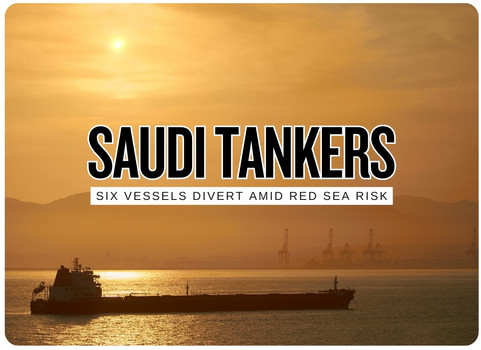
Six Saudi-flagged tankers changing course in the Gulf of Aden is not just a routing story. It is a signal that shipowners, charterers, insurers, and cargo buyers are treating the southern Red Sea risk zone as a live commercial threat again. The move comes while traffic through Bab el-Mandeb is still moving, but not with normal confidence, and while Hormuz remains thin enough that every tanker decision is being read as a market signal. Houthi threats against Saudi shipping have turned flag, ownership, cargo origin, port history, AIS behavior, and routing into practical risk factors.
Ship Universe Red Sea Tanker Watch
Operator Impact Snapshot
Saudi-flagged tanker course changes turn the Gulf of Aden into a live rerouting and insurance test.
The tankers changing course do not mean Bab el-Mandeb is closed, but they show that high-value Saudi-linked crude movements are being judged cargo by cargo.
Saudi-linked tanker exposure
Flag, cargo origin, port history, ownership links, manager history, and AIS behavior can all affect perceived target risk near Yemen.
Cape diversion economics
Southern Africa routing can add days, fuel, working capital, crew exposure, and vessel supply tightness, but it may still beat attack risk.
Bab el-Mandeb confidence gap
Traffic is still passing, but the market is watching whether Saudi-linked vessels continue through or choose the long route around Africa.
War-risk premium shock
Premiums can move from a manageable add-on to a fixture-changing expense when underwriters quote Saudi-linked calls at elevated levels.
AIS and tracking discipline
Route predictability, repeated waypoints, visible commercial data, and transponder choices are becoming operational risk variables.
Commercial Reading
The routing decision is now a balance between physical danger, insurance cost, cargo timing, refinery demand, and vessel availability.
- Tanker owners: review war-risk cover, naval reporting, route variation, crew safe spaces, security watch, and charter-party reimbursement.
- Charterers: price Cape diversion, demurrage, replacement cargo risk, delayed discharge, and force majeure language before fixing.
- Refiners: monitor delayed Saudi crude arrivals, substitute grades, delivered-cost changes, and inventory drawdown.
- Insurers: separate Saudi flag, Saudi cargo, Saudi port call, manager profile, route plan, and AIS behavior before quoting.
- Bunker suppliers: watch rising Cape demand, longer ballast legs, extra fuel stems, and credit risk on longer voyages.
Gulf of Aden Tanker Board
Course Changes, Chokepoint Traffic, and Insurance Signals
Saudi-linked crude routing is becoming a real-time indicator for Red Sea risk appetite.
Latest Operating Setup
Tankers changing course in the Gulf of Aden raise concern that owners are avoiding the Bab el-Mandeb approach.
Recent Kpler count included 12 tankers and eight bulk carriers, showing the route is active but cautious.
Thin traffic at Hormuz keeps the region in a dual-chokepoint risk environment.
Recent indicative quotes moved sharply higher, with some Saudi-linked voyages priced at extreme levels.
Operator Table
| Issue Area | Latest Detail | Market Effect | Stakeholder Move | Pressure Meter |
|---|---|---|---|---|
| Saudi-Flagged Course Changes Gulf of Aden decision point | Multiple Saudi-flagged tankers changed course before committing to the Bab el-Mandeb approach. | Signals that vessel operators may prefer Cape routing when Saudi-linked exposure is too visible. | Track whether these vessels continue toward southern Africa, slow down, go dark, or reattempt passage. |
High
|
| Houthi Targeting Risk Saudi-linked campaign | Threats against Saudi shipping make the tanker’s flag, cargo, manager, port call, and commercial history more important. | Higher perceived targeting risk can remove vessels from the route even when the waterway remains open. | Review ownership links, recent Saudi calls, cargo documents, charterer profile, and electronic-signature exposure. |
High
|
| Cape of Good Hope Diversion Long-route economics | Southern Africa routing avoids the Yemen exposure zone but adds voyage time, bunker cost, and vessel-cycle delay. | Longer voyages reduce effective tanker supply and can support freight rates even if cargo demand softens. | Model extra hire, fuel, boil-off or cargo timing, port rotation, canal avoidance, and discharge-window risk. |
Medium High
|
| War-Risk Premiums Saudi-linked quote shock | Recent quotes showed southern Red Sea cover rising above 1% of vessel value, with some Saudi-linked cases higher. | Insurance can become the deciding factor between Red Sea transit and Cape diversion. | Separate hull value, cargo value, breach premium, deductible, cancellation rights, and reimbursement language. |
High
|
| AIS and Commercial Signals Targeting-data discipline | Advisories warn that AIS, route repetition, commercial feeds, and other shipboard signals can assist hostile tracking. | Voyage-planning discipline now affects insurance confidence, crew safety, and real-time routing decisions. | Vary waypoints, avoid repeated timing patterns, control data emissions, and keep naval reporting aligned. |
Watch
|
| Refinery Supply Timing Cargo arrival uncertainty | Delayed or rerouted Saudi crude can affect refinery intake plans, crude blending, inventory draws, and replacement buying. | Asian and European buyers may pay more for substitutes or accept longer delivery chains. | Check arrival windows, substitute grades, storage days, prompt premiums, and demurrage allocation. |
Medium High
|
Saudi Tanker Reroute Cost Calculator
Estimate cargo value, Cape diversion cost, war-risk exposure, and reroute pressure for Saudi-linked tanker movements.
This tool helps tanker owners, charterers, refiners, brokers, and insurers compare a risky Bab el-Mandeb transit against a longer Cape of Good Hope routing decision.
Crude Value Exposed
$1.1B
Estimated crude value across the selected tanker group.
Cape Diversion Cost
$12.0M
Estimated extra voyage and fuel cost from using the longer southern Africa route.
Red Sea War-Risk Cost
$6.9M
Estimated added insurance cost for the exposed Red Sea route.
Cost Gap
$5.1M
Positive means Cape diversion costs more than the modeled Red Sea premium, before attack and delay risk.
Routing Signal
The model favors caution. Attack risk and low transit confidence can justify the longer route even when Cape costs are large.
We welcome your feedback, suggestions, corrections, and ideas for enhancements.
Please click here to get in touch