PetroChina’s Basrah Booking Tests a Thinner Hormuz Trade Lane
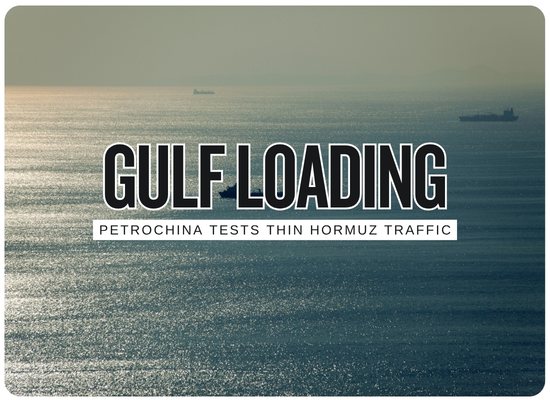
PetroChina has lined up a fresh Gulf crude-loading program even as Strait of Hormuz traffic remains thin, adding a useful signal to a market watching every tanker movement through the region. The company has provisionally chartered the VLCC Jamaica Prosperity for a Gulf-to-China voyage expected to load around August 3 at Iraq’s Basrah port, while two other loaded VLCCs, Spain B and Noble, exited Hormuz on Friday with roughly 2 million barrels each. The movements show that Gulf crude flows have not stopped entirely, but the operating pattern is still far from normal: only a handful of commodity vessels were recorded transiting the strait, some tankers were reportedly stopped or turned around, and oil prices moved higher as traders focused less on broad war headlines and more on actual vessel-flow data.
Ship Universe Hormuz Crude Watch
Operator Impact Snapshot
A fresh PetroChina fixture gives the market a live test of Gulf loading confidence.
The fixture is commercially important because it sits between two market signals: Gulf crude is still moving, but Hormuz transit volume remains unusually thin.
Fresh Basrah cargo test
PetroChina’s provisional Jamaica Prosperity booking gives traders a new data point for whether Gulf-to-China crude movements can continue.
Thin Hormuz traffic
Only a small number of commodity vessels were recorded transiting the strait, making each VLCC movement more visible to the market.
China supply sensitivity
Eastbound Gulf crude flows remain important for Chinese refiners, especially when buyers are watching cargo timing and replacement options.
Fixture confidence gap
A provisional charter still needs the full operating chain to hold: vessel acceptance, loading, war-risk cover, transit clearance, and arrival timing.
Oil price link
Crude prices are reacting to live shipping-flow signals because vessel movement is now a direct supply indicator.
Commercial Reading
The market is no longer looking only at formal policy statements. It is reading individual VLCC departures, fresh fixture lists, ballast behavior, and port-loading plans.
- Tanker owners: check breach-area cover, crew briefings, loading orders, Gulf routing, and charterer reimbursement language.
- Charterers: model fixture failure, delay, alternate loading, and replacement cargo exposure before relying on a single Gulf program.
- Refiners: watch Basrah liftings, eastbound VLCC departures, cargo arrival windows, and blending alternatives.
- Insurers: review vessel identity, flag, cargo ownership, port call, route, AIS behavior, and threat timing.
- Brokers: separate confirmed loadings from provisional fixtures when comparing market confidence.
Hormuz Cargo Flow Board
Fresh Fixture, VLCC Exits, and Gulf Loading Signals
PetroChina’s Basrah plan comes as the market watches every vessel that clears the strait.
Latest Flow Setup
Provisional loading window for Jamaica Prosperity at Iraq’s Basrah port.
Spain B and Noble cleared Hormuz with Gulf-loaded crude.
Approximate cargo volume carried by each of the two exiting VLCCs.
Only four commodity vessels had transited Hormuz so far Friday, all exiting.
Operator Table
| Issue Area | Latest Detail | Market Effect | Stakeholder Move | Pressure Meter |
|---|---|---|---|---|
| PetroChina Booking Jamaica Prosperity | Provisional Gulf-to-China VLCC fixture with loading around August 3 at Basrah. | Signals that large Asian buyers are still trying to lift Gulf crude despite thin Hormuz traffic. | Track fixture confirmation, loading status, cargo owner, laycan changes, and eastbound route behavior. |
High
|
| Noble Exit Basrah crude to China | Noble loaded Iraqi Basrah crude on July 25 and was heading to China after clearing Hormuz. | Gives the market a working example of Basrah-to-China crude moving through the chokepoint. | Compare Noble’s timing against new Basrah fixtures to estimate practical transit risk. |
High
|
| Spain B Exit Ras Tanura crude | Spain B carried crude loaded from Saudi Arabia’s Ras Tanura and was anchored off Fujairah. | Shows some Gulf-loaded cargo has cleared the strait, but onward scheduling remains visible and sensitive. | Watch anchorage time, onward destination, war-risk status, and any deviation after clearing Hormuz. |
Medium High
|
| Thin Transit Count Four Friday crossings | Only four commodity vessels were counted through Hormuz so far Friday, compared with three on Thursday. | Low traffic keeps price sensitivity high because supply confidence depends on small numbers of vessels. | Use multi-day vessel data rather than one day of exits before assuming a route recovery. |
Watch
|
| AIS Visibility Gap Transponder caveat | Some ships may sail with transponders off, which means visible counts may not capture every movement. | Tracking uncertainty complicates freight decisions, crude scheduling, insurance review, and market interpretation. | Cross-check AIS, fixtures, port-lineups, satellite data, agency notes, and refinery nominations. |
Medium
|
| Oil Price Reaction Shipping-flow driven | Oil rose as traders reassessed tanker flow through the strait and reports of vessels being stopped or redirected. | Freight, crude flat price, war-risk premiums, and refinery buying decisions are tied to live vessel behavior. | Pair fixture lists with price moves, underwriter quotes, and physical cargo timing before setting exposure. |
High
|
Gulf Loading Confidence Calculator
Estimate cargo value, delay exposure, war-risk cost, and fixture confidence for a Gulf-to-China VLCC program.
This tool helps crude buyers, tanker owners, charterers, brokers, and insurers screen whether a fresh Gulf loading still works under thin Hormuz traffic conditions.
Cargo Value
$180.0M
Estimated crude value moving through the Gulf-to-China program.
War-Risk Cost
$690,000
Estimated additional premium using vessel value and selected war-risk rate.
Delay Cost
$255,000
Estimated added cost from loading, transit, or clearance delay.
Unrecovered Exposure
$283,500
Estimated portion not recovered under the selected contract terms.
Loading Signal
The cargo program is workable under these assumptions, but thin traffic, war-risk cost, and delay exposure still need active monitoring before loading and transit.
We welcome your feedback, suggestions, corrections, and ideas for enhancements.
Please click here to get in touch