Panama Canal Draft Cut for July Rekindles Drought Fears as Traffic Runs Near Full Use
🔔 Subscribe to ShipUniverse Weekly →
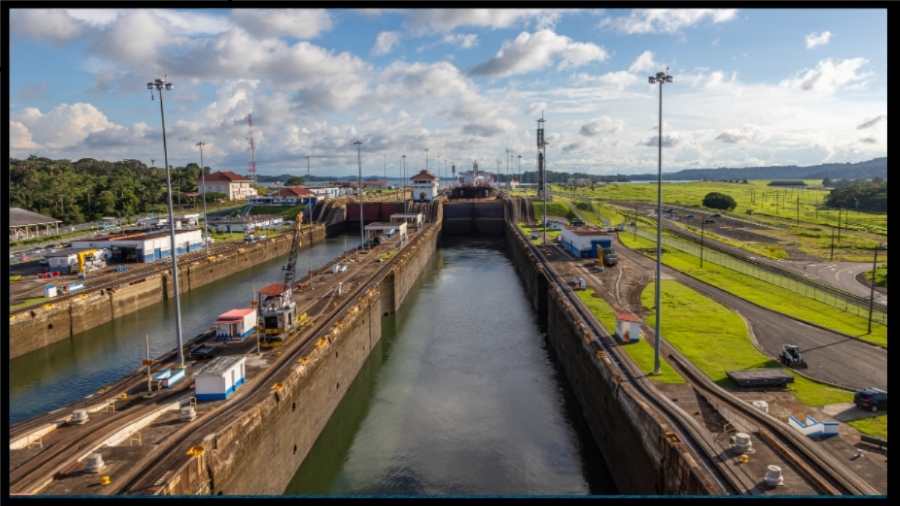
The Panama Canal has moved back into drought-watch mode after announcing that the maximum authorized draft for Neopanamax vessels will be reduced from 50.0 feet to 49.5 feet tropical fresh water starting July 3, a step the Canal says is tied to concern over a possible El Niño later this year. The announcement stands out because it comes only weeks after Canal officials said they did not expect to impose passage restrictions for the rest of 2026 and emphasized that Gatun Lake had been kept at historically high levels. As of June 8, the Canal’s official Gatun water indicator still showed a lake level of 85.2 feet and an official Neopanamax maximum draft of 50.0 feet, but the new July reduction signals that planners are acting early rather than waiting for reservoir levels to deteriorate. The market sensitivity is easy to understand. During the 2023 to 2024 drought cycle, the canal’s restrictions led to major transit disruptions and long queues, and the waterway is now handling stronger demand again, with the Panama Canal Authority saying first-half fiscal 2026 transits and tonnage were up year over year while daily traffic recently climbed into the high 30s and even above 40 on peak days.
A half-foot draft cut is not a full drought crisis, but it can still alter cargo intake, planning margins and route economics for larger canal users.
This is mainly a water-management and efficiency story, not a marine-war-risk or casualty-driven insurance event.
Any renewed shift toward longer alternative routings would raise bunker burn, but the current restriction is still an early warning rather than a major rerouting order.
The strongest effect is on voyage planning, booking behavior, transit economics and the risk that small restrictions compound quickly if water conditions worsen.
Draft cuts can change preferred ship deployment and canal-linked asset economics, especially for operators already running close to draft limits.
| Pressure lane | Current marker | Immediate operating read | Importance | Commercial consequence | Next checkpoint |
|---|---|---|---|---|---|
| July draft reduction | The Canal will cut the Neopanamax maximum authorized draft from 50.0 feet to 49.5 feet effective July 3. First 2026 restriction signal | This is the first operational restriction announced this year, even if it is still mild compared with the 2023 to 2024 drought measures. | That matters because the Canal is choosing to tighten early rather than wait for a sharper fall in water availability. | Operators may begin adjusting stowage, cargo intake and booking strategies before the restriction even takes effect. | Watch whether the Canal leaves the cut at half a foot or signals additional steps before or after July 3. |
| Change in official tone | In mid-May, Canal officials said they were not planning vessel passage restrictions for the rest of 2026 and emphasized historically high reservoir levels. Messaging has shifted fast | The latest move is notable because it follows a recent period of official reassurance. | That matters because markets often react more strongly when the operational outlook changes quickly after a confident public stance. | Confidence in a fully unrestricted 2026 operating year has weakened, even though no transit-quota cut has been announced yet. | Watch whether ACP maintains that only draft, not daily throughput, is under review. |
| Traffic strength | ACP said first-half fiscal 2026 transits rose to 6,288, up 224 year over year, with 254 million PC/UMS tons moving through the canal and recent days surpassing 40 transits. Restriction lands during strong demand | The Canal is not cutting draft in a weak market. It is doing so while usage is strong and reservation demand is high. | That matters because even small water restrictions can bite harder when the system is already operating near practical capacity. | Auction behavior, reservation premiums and ship deployment choices may become more sensitive if demand stays elevated. | Watch auction prices, booking competition and any drift lower in transit flexibility. |
| Water and El Niño risk | The June 8 water indicator showed Gatun Lake at 85.2 feet, but ACP said the draft cut is linked to concern about a possible El Niño later this year. Current water is fine, future water is the concern | The current restriction is a forward-looking risk-management step, not a sign that the lake is already in a crisis state. | This matters because it suggests the Canal is managing against forecast deterioration rather than reacting only after stress appears. | The market may start treating rainfall forecasts as a direct shipping variable again, just as it did in the last drought cycle. | Watch updated lake projections, NOAA outlook changes and future ACP advisories. |
| Memory of the last drought | During the 2023 to 2024 drought, Panama imposed draft and transit restrictions that disrupted trade and led to vessel waits of up to 21 days. History is shaping the market reaction | Owners remember that canal stress can build from small adjustments into much bigger operational friction. | That matters because the current market is reacting not only to the new restriction, but to the memory of the last escalation path. | Sentiment may worsen faster than the physical restriction itself if market participants begin pricing in another drought spiral. | Watch whether carriers and brokers start speaking more openly about contingency routing and cargo-lightening options. |
| Current capacity cushion | ACP has said the canal is operating efficiently and without congestion, but BIMCO described current traffic as close to the waterway’s practical maximum of roughly 36 to 40 daily transits. Little room for compounding problems | The canal is functioning, but it is not sitting on a huge spare-capacity cushion. | That matters because water restrictions become more commercially significant when traffic demand is already strong. | A modest draft cut can matter more when there is limited slack to absorb demand, scheduling changes and heavier booking pressure. | Watch whether daily transits remain near current levels or start being adjusted if water conditions soften later in the year. |
We welcome your feedback, suggestions, corrections, and ideas for enhancements. Please click here to get in touch.