COSCO Expands LNG Shipping With a $953 Million Jiangnan Order Backed by Shell Charters
🔔 Subscribe to ShipUniverse Weekly →
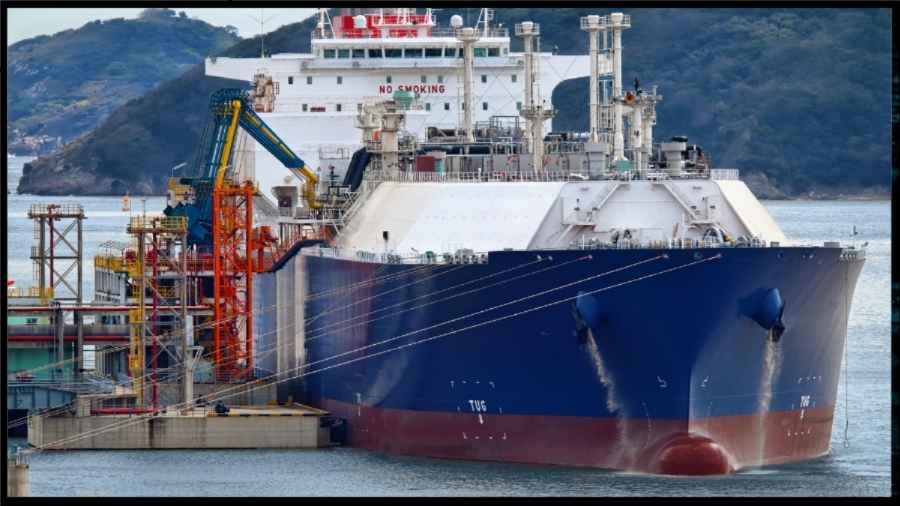
COSCO Shipping Energy Transportation has moved ahead with a new LNG carrier investment worth about RMB 6.445 billion, or roughly $953 million, ordering four 175,000 cubic meter LNG carriers at Jiangnan Shipyard through its indirectly owned subsidiary. The ships are scheduled for delivery in 2029 and 2030, and the latest transaction is tied to seven-year time charters to Shell Tankers Singapore, with extension options. Company-linked reporting and market coverage show the deal is structured to strengthen COSCO’s ability to market and operate LNG tonnage more independently while deepening its long-term gas-shipping footprint. The order also lands as Chinese yards continue taking a larger share of the current LNG carrier build cycle, with Jiangnan already building momentum in this segment this year.
This is a long-horizon freight story rather than an instant spot-market shock, but it adds more future LNG tonnage into a market still being built around charter-backed growth.
The order itself does not create new insurance stress, though the long-term LNG trade remains shaped by charter quality, yard execution and operating performance.
These ships are part of the long-duration gas-transport buildout, so the fuel angle is more about future LNG logistics and propulsion economics than immediate bunker-market change.
There is no immediate route disruption attached to the order, but the charter-backed employment points to continued confidence in large-scale LNG trade flows.
The strongest signal is chartering confidence. Long-term Shell-linked employment and a near-billion-dollar order support the value of modern LNG tonnage and favored yard slots.
| Decision lane | Current marker | Immediate operating read | Importance | Commercial consequence | Next checkpoint |
|---|---|---|---|---|---|
| Project structure | The order is being executed through COSCO Shipping Energy’s LNG investment chain rather than as a simple one-step fleet addition. Structured fleet buildout | This is a deliberate platform expansion using a dedicated ownership and investment structure. | That matters because it shows COSCO is treating LNG as a long-duration capital business with separate operating and financing logic. | The company can scale LNG assets in a more modular way while ring-fencing project economics and vessel ownership. | Watch whether COSCO repeats the same structure for future LNG orders or begins broadening to other gas-shipping asset types. |
| Shell-backed employment | The four ships are tied to seven-year time charters to Shell Tankers Singapore, with extension options. Employment is pre-arranged | COSCO is not ordering without visibility on employment. The commercial cover is already attached. | This matters because charter-backed LNG newbuilds are far easier to finance and less exposed to pure spot-market timing risk. | The deal strengthens cash-flow visibility and supports the value logic of the new tonnage years before delivery. | Watch whether Shell expands this relationship further or whether other majors replicate the same charter-backed ordering pattern with Chinese owners. |
| Shipyard choice | Jiangnan Shipyard won the order for the four 175,000 cbm vessels. Chinese yard momentum continues | Jiangnan is becoming a more visible winner in the current LNG carrier ordering cycle. | That matters because Chinese yards are steadily gaining credibility in a segment once dominated much more heavily by South Korean builders. | More LNG contracting may continue shifting toward China if quality, schedule and pricing remain competitive. | Watch whether Jiangnan secures additional Shell-linked or charter-backed LNG orders later this year. |
| Delivery timing | The ships are scheduled for delivery in 2029 and 2030. Forward-cycle commitment | This is not a near-term spot-market play. It is a long-horizon build decision aimed at future LNG trade demand. | This matters because later delivery dates shift the commercial question from current rates to future fleet balance and project-backed demand durability. | COSCO is effectively betting that charter-backed LNG shipping demand remains strong enough well into the next decade. | Watch whether more 2029-2030 LNG carrier slots are snapped up by owners with major-charter support rather than speculative players. |
| Performance discipline | Reported contract terms include price reductions for delivery delays or underperformance in indicators such as speed and fuel consumption, plus rejection rights for major deviations. Execution safeguards are built in | COSCO is protecting the economics of the ships before they even hit the water. | That matters because LNG carrier economics depend heavily on schedule integrity and technical performance under long-term charter terms. | The owner has more protection against yard slippage or performance shortfall than in a looser contract framework. | Watch whether similar performance-linked clauses become more visible in future LNG shipbuilding announcements. |
| COSCO’s LNG scale | COSCO’s LNG business was already sizable before this order, with company-linked sources indicating a large existing and pipeline fleet. Expansion builds on scale | The new order adds to an established LNG platform rather than launching a new line of business. | This matters because scale changes how owners compete in LNG shipping, especially in chartering, fleet deployment and relationship-building with majors. | COSCO strengthens its position as a more serious long-term gas-shipping player rather than a tanker owner with selective LNG exposure. | Watch whether the company’s LNG mix continues moving toward more direct control and independent commercial capability. |
We welcome your feedback, suggestions, corrections, and ideas for enhancements. Please click here to get in touch.