Sweden’s Offshore Wind Gate Narrows as Defense Review Reshapes Project Pipeline
🔔 Subscribe to ShipUniverse Weekly →
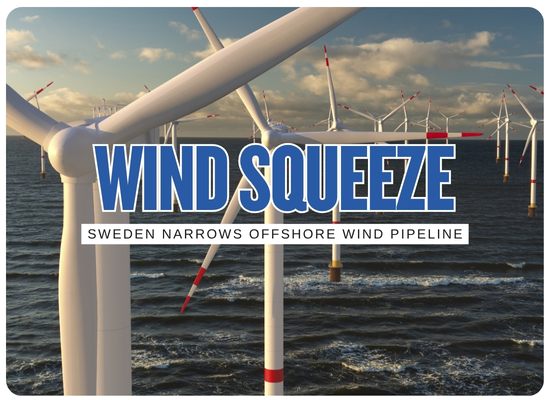
Sweden has approved two offshore wind farms while rejecting 11 other proposed developments after concluding that several projects would create unacceptable conflicts with national defense capabilities. The approved offshore projects are Fyrskeppet Offshore in the southern Bothnian Sea and Vidar in the northern Skagerrak, with reporting indicating that the two projects could produce up to about 19 TWh of electricity per year if built out. The decision follows Sweden’s earlier 2024 rejection of 13 Baltic Sea offshore wind projects on defense grounds, when military officials warned that large wind farms could affect radar, sensors, submarine detection, and missile-warning response time.
Sweden’s offshore wind pipeline just became more selective
Two projects advance, eleven are blocked, and defense compatibility is now the main filter for marine project planning.
Only two offshore wind farms were cleared while eleven other proposals were rejected due to defense concerns.
Military radar, sensor, air-defense, and maritime-surveillance concerns are now central to offshore wind approvals.
Approved projects give installation vessels, survey firms, cable layers, ports, and logistics providers a narrower target list.
The approvals help two projects, but the rejections show that sea-area risk remains a serious investment variable.
Rejected areas may still matter later if Sweden’s future auction system reopens better-screened zones.
Sweden offshore wind signal map
The table converts Sweden’s latest permit decisions into practical signals for marine contractors, ports, developers, insurers, and equipment suppliers.
| Signal | Current status | Commercial effect | Operator read | Next item to watch | Level |
|---|---|---|---|---|---|
| Fyrskeppet Offshore | Approved in the southern Bothnian Sea. | Creates a visible project target for survey, port, cable, and installation planning. | Marine suppliers should track schedule, grid, procurement, and financial close. | Project milestones and contractor awards. | Approved |
| Vidar | Approved in the northern Skagerrak. | Adds another active Swedish offshore wind zone for contractor attention. | Skagerrak positioning may support western logistics and North Sea supplier links. | Permitting conditions, turbine plan, and construction timing. | Approved |
| Rejected projects | Eleven applications denied due to defense concerns. | Removes a large block of potential near-term marine work from the pipeline. | Project-screening risk remains high for Swedish offshore wind exposure. | Auction reform and possible future sea-area reassessment. | High |
| Defense filter | Military compatibility is a decisive permitting factor. | Radar, surveillance, sensors, and naval readiness now affect project bankability. | Developers need defense screening earlier in site selection. | Defense consultations and mapped exclusion zones. | High |
| Supplier pipeline | Opportunity concentrates around fewer approved zones. | Ports, vessels, cable contractors, survey firms, and O&M providers face a narrower Swedish target list. | Approved projects may attract more supplier competition. | Framework agreements and early marine package tenders. | Watch |
| Auction transition | Rejected sea areas may become relevant under a future offshore wind auction system. | Longer-term optionality remains, but timing is uncertain. | Investors should separate current approvals from future auction potential. | Auction rules, defense-cleared zones, and grid-cost allocation. | Medium |
Offshore Wind Defense Fit Meter
A practical tool for estimating whether an offshore wind project has a stronger or weaker approval profile when defense compatibility becomes a gating factor.
This project profile needs active defense review before marine suppliers can treat it as a reliable pipeline opportunity.
We welcome your feedback, suggestions, corrections, and ideas for enhancements.
Please click here to get in touch