DP World Eyes Fujairah Port Route as Hormuz Risk Reshapes Gulf Logistics
🔔 Subscribe to ShipUniverse Weekly →
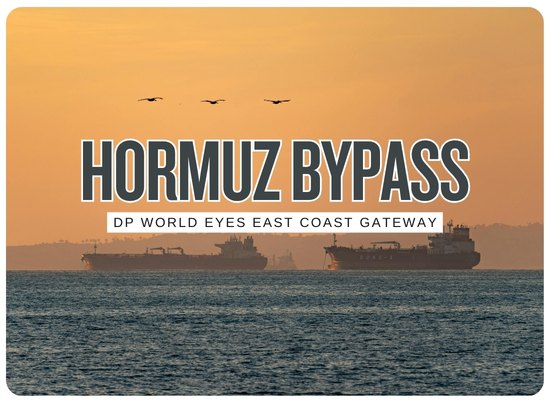
DP World is reportedly planning a new multipurpose port and container terminal on the UAE’s east coast in the Fujairah area, a move aimed at giving cargo owners, carriers, logistics providers, and Gulf supply chains a stronger route outside the Strait of Hormuz. The plan would place new port capacity on the Gulf of Oman side of the UAE, allowing cargo to move by sea without entering the Persian Gulf and then connect inland by road or logistics corridors toward Dubai, Abu Dhabi, and the wider UAE market. Jebel Ali remains one of the region’s most important container and logistics hubs, but renewed Hormuz tension has increased attention on backup routes, eastern UAE ports, cargo continuity, insurance exposure, and inland transfer costs.
East Coast Gateway Plan Adds a Hormuz Bypass Option
A Fujairah-area port project would give Gulf logistics another route outside the Strait of Hormuz, with inland transfer costs and execution timing still to watch.
Hormuz Bypass Value
An east coast UAE gateway would let vessels call outside the strait, then move cargo inland by road or logistics corridors.
Container Resilience
A new terminal could give shippers and carriers another option if Gulf routing becomes slower, more expensive, or harder to insure.
Inland Cost Tradeoff
Any bypass benefit has to be compared against trucking, customs handling, terminal charges, and inland delivery timing.
Project Execution
The commercial value depends on final scope, construction timing, berth depth, terminal capacity, road links, and carrier adoption.
Supplier Opportunity
Port equipment, dredging, civil works, terminal systems, storage, cranes, security, and logistics technology suppliers may see future demand.
Operator Readout
The immediate signal is a resilience buildout, not a simple port replacement story. Jebel Ali remains central to UAE logistics, while Fujairah-area capacity could become a strategic overflow, emergency routing, and bypass option when Hormuz risk raises vessel, cargo, and insurance uncertainty.
Fujairah Gateway Watch
A reported east coast UAE port plan turns Hormuz bypass logistics into a direct port, inland transport, and insurance planning story.
The reported project centers on the Fujairah area, located on the Gulf of Oman side of the UAE. That geography matters because vessels serving an east coast terminal would not need to enter the Persian Gulf through Hormuz. The tradeoff is inland transfer. Cargo would still need efficient road, warehousing, customs, and distribution links into Dubai, Abu Dhabi, and regional consumption zones.
Approximate 2024 oil flow through the Strait of Hormuz, making the corridor a major energy and shipping chokepoint.
Approximate share of global LNG trade that moved through Hormuz in 2024.
Weekly services listed for Jebel Ali, showing the scale of the UAE hub the east coast option would complement.
Port Bypass Planning Table
| Planning Signal | Latest Readout | Maritime Meaning | Stakeholders Affected | Watch Level |
|---|---|---|---|---|
| East coast port plan | Reported multipurpose port and container terminal around Fujairah | Adds a potential UAE gateway outside the Strait of Hormuz. | Carriers, shippers, forwarders, port suppliers | High |
| Jebel Ali reliance | Flagship Dubai hub remains central to UAE trade | East coast capacity would likely complement the main hub rather than replace it. | DP World customers, cargo owners, logistics parks | Medium |
| Hormuz exposure | Renewed conflict keeps Gulf transit risk elevated | Bypass options gain value when vessels, insurers, and cargo owners reassess Gulf calls. | Insurers, tanker desks, container lines, cargo interests | High |
| Inland transfer | Cargo would need road and logistics movement from the east coast | Trucking cost, border procedures, customs handling, and delivery timing decide route economics. | Truckers, 3PLs, importers, customs brokers | Watch |
| Multipurpose cargo scope | Container and general cargo potential are both in focus | Project cargo, breakbulk, emergency supplies, and regional distribution could benefit. | Project cargo operators, EPC firms, suppliers | Medium |
| Supplier pipeline | Final scope, build timing, and equipment needs still need detail | Dredging, cranes, terminal software, gates, yards, security, and storage may become bid areas. | Marine contractors, equipment makers, systems vendors | Watch |
Planning note: The east coast strategy is commercially useful only if inland transfer costs, terminal reliability, customs processes, and carrier service patterns can offset the risk and delay exposure of Hormuz-dependent routing.
Hormuz Bypass Route Calculator
Compare a Fujairah-style east coast bypass against Hormuz-related delay, security, and surcharge exposure.
Estimated cargo units shifted through the east coast route.
Estimated inland movement cost from the bypass gateway.
Estimated Hormuz-related surcharge, security, or insurance exposure avoided.
Estimated bypass value after inland and handling costs.
The bypass route is close to break-even under the selected assumptions.
Compare live ratesThis tool is for editorial and commercial sensitivity only. It does not replace live terminal tariffs, trucking rates, carrier schedules, customs treatment, insurance quotes, war-risk premiums, cargo contracts, inventory models, or professional logistics planning.
We welcome your feedback, suggestions, corrections, and ideas for enhancements.
Please click here to get in touch