Hormuz Shipping Risk Jumps as U.S. and Iran Trade Fire
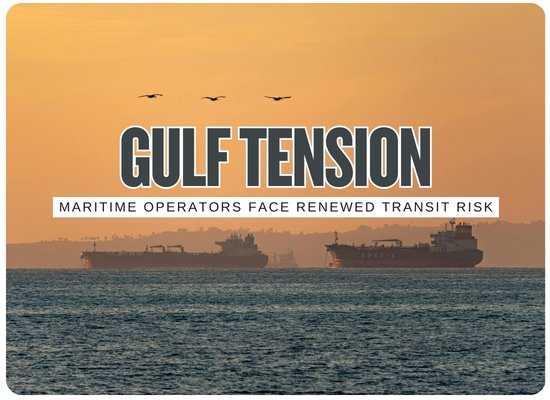
The U.S.-Iran ceasefire framework has come under fresh strain after U.S. Central Command said Iran attacked three commercial vessels transiting the Strait of Hormuz, identifying the vessels as the Marshall Islands-flagged M/T Al Rekayyat, Saudi Arabia-flagged M/T Wedyan, and Liberian-flagged M/T Cyprus Prosperity. CENTCOM said U.S. forces completed retaliatory strikes against Iran, while separate reporting says the escalation has raised the shipping-risk profile around Hormuz, revived oil-market anxiety, and complicated the recent diplomatic effort to keep the waterway open. The maritime impact is immediate because Hormuz remains one of the world’s most important energy chokepoints: EIA says around 20 million barrels per day of oil flowed through the strait in 2024, while IEA says more than 110 bcm of LNG moved through Hormuz in 2025, including the overwhelming majority of Qatari and UAE LNG exports.
Hormuz shipping has moved back into a severe watch zone
Commercial vessels, tankers, LNG carriers, insurers, charterers, and ports are now operating around a more volatile U.S.-Iran risk cycle.
Reported attacks on commercial vessels and U.S. retaliatory strikes have raised the immediate risk profile for vessels using the strait.
Crude, product, LPG, and LNG flows remain the core commercial concern because Hormuz is central to Gulf energy exports.
Underwriters are likely to focus on vessel type, flag, ownership links, cargo, voyage timing, AIS behavior, and naval guidance.
Owners and charterers may face sharper discussions around delay, deviation, security costs, cancellation rights, and premium allocation.
Any further disruption can quickly feed into crude, LNG, bunker prices, freight volatility, and downstream inflation concerns.
Strait security returns to the center of maritime pricing
The latest U.S.-Iran exchange puts vessel safety, naval posture, energy cargo flows, and insurance pricing back at the front of commercial shipping decisions.
Current reporting indicates the U.S. and Iran are again in an active strike-and-response cycle tied directly to commercial shipping in and around the Strait of Hormuz. The latest escalation follows reported attacks on three commercial vessels, followed by U.S. strikes against Iranian targets. For shipping markets, the issue is not only the military exchange. It is the uncertainty around whether routine transit confidence can be restored for tankers, LNG carriers, dry cargo vessels, and support traffic moving through the Gulf.
Energy cargo remains the main exposure
Hormuz carries a large share of global crude, condensate, petroleum liquids, LNG, and LPG movement. That makes the shipping effect larger than a local security event. A damaged tanker, delayed LNG cargo, or temporary transit slowdown can quickly affect freight sentiment, commodity prices, downstream fuel costs, and refinery scheduling.
Insurance desks move into review mode
War-risk pricing can move faster than normal freight pricing during a chokepoint crisis. Underwriters may differentiate between vessel type, ownership, flag, cargo, destination, AIS history, naval escort availability, and recent incident patterns. Even vessels not directly targeted can face higher premiums if the listed area risk changes.
Charter-party language gets tested
Owners and charterers will be focused on who pays for delay, deviation, premium calls, additional security measures, port waiting, or cancellation. Clauses tied to war risk, safe port, force majeure, deviation, laytime, demurrage, and sanctions can become commercially important very quickly when the situation changes during a voyage.
Hormuz maritime risk signal map
The table converts the U.S.-Iran escalation into practical signals for commercial shipping, energy cargo, insurance, and port operations.
| Signal | Current status | Commercial effect | Operator read | Next item to watch | Level |
|---|---|---|---|---|---|
| Commercial vessel attacks | U.S. officials identify three vessels hit during Hormuz transit. | Raises direct transit risk for tankers and other Gulf traffic. | Voyage timing and security reviews become more important. | Additional incident reports and verified vessel damage details. | High |
| U.S. retaliatory strikes | U.S. forces conducted strikes against Iranian targets. | Raises escalation risk while also signaling naval response capability. | Markets will watch whether deterrence returns or retaliation expands. | Iranian counteraction and U.S. force posture. | High |
| Strait access | Hormuz remains the key operating chokepoint. | Even partial disruption can affect energy cargo timing. | Open transit in practice matters more than official statements. | Transit counts, vessel turnbacks, convoy activity, and AIS patterns. | High |
| War-risk premiums | Insurance desks likely moving into active review. | Premium changes can quickly alter voyage economics. | Premium allocation may become a charter-party negotiation point. | Listed-area changes and underwriter circulars. | Watch |
| LNG exposure | Large Gulf LNG volumes depend on Hormuz passage. | Delays can affect Asian buyers and global spot LNG sentiment. | Schedule reliability matters because replacement cargo is limited. | Qatari and UAE LNG loading patterns. | High |
| Bunker and oil prices | Energy markets are sensitive to each escalation headline. | Higher fuel costs can spread beyond tankers into container and dry bulk markets. | Bunker-adjusted voyage economics need closer tracking. | Brent, VLSFO, MGO, and regional bunker spreads. | Watch |
| Port operations | Gulf ports may face changes in anchorage, security, and clearance patterns. | Waiting time and berth planning can become less predictable. | Port agents and operators need faster updates from masters and insurers. | Queue changes, port circulars, and local naval guidance. | Medium |
| Contract exposure | War-risk, safe-port, delay, and deviation clauses may be tested. | Cost responsibility can become contested during active escalation. | Fixture quality depends on who carries the disruption cost. | Premium clauses, cancellation windows, demurrage handling. | Watch |
Hormuz Voyage Exposure Meter
A practical tool for estimating risk intensity and potential cost exposure for a vessel moving through the current U.S.-Iran maritime crisis zone.
This voyage has heavy exposure because vessel profile, transit necessity, and current security conditions all point toward elevated operational and insurance risk.
We welcome your feedback, suggestions, corrections, and ideas for enhancements. Please click here to get in touch.