Vietnam’s Northern Container Gateway Gets a PSA Deepsea Boost
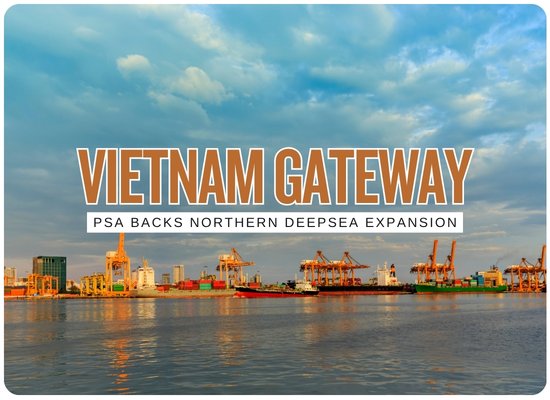
PSA Vietnam’s move into the Lach Huyen deepsea container project gives northern Vietnam a major new port-development signal at a time when manufacturers, shipping lines, logistics providers, and industrial-zone developers are watching the Hai Phong gateway more closely. The agreement with Lach Huyen International Logistics & Industrial Park centers on PSA’s investment in Lach Huyen Port Investment Joint Stock Company to jointly develop and operate four deepsea container berths at Lach Huyen Port, with a planned annual capacity of 4.5 million TEU. The first two berths are scheduled to begin development at the end of 2026 and complete in 2028, while the remaining two berths are planned for a later phase with full completion targeted by 2035. The project is being positioned as more than a terminal expansion: it connects deepsea berth capacity with PSA’s inland container depot activity in Bac Ninh, LHF’s free trade zone and industrial park platform, and Hai Phong’s role as a northern Vietnam manufacturing and logistics gateway tied to global container routes.
Ship Universe Port Development Watch
Operator Impact Snapshot
PSA’s Lach Huyen move expands the northern Vietnam gateway story from port capacity to integrated logistics control.
The project gives shipping lines and cargo owners a clearer view of future deepsea capacity in northern Vietnam. It also ties port investment to inland logistics, industrial-zone growth, free trade zone planning, and direct cargo flows from factory clusters around Hanoi, Hai Phong, Bac Ninh, and northern export corridors.
Deepsea capacity signal
Four planned berths with 4.5 million TEU of annual capacity give northern Vietnam a larger platform for mainline container services, transshipment, and direct calls.
Carrier network interest
A PSA-backed terminal can help shipping lines evaluate northern Vietnam as a stronger direct-call and regional routing option instead of relying only on southern gateway capacity.
Phase timing risk
The first two berths target 2028 completion, while full four-berth buildout stretches to 2035, making execution timing central to capacity planning.
Inland cargo pull
The port project is linked to PSA’s Bac Ninh inland container depot activity, creating a stronger factory-to-berth logistics corridor.
Supplier and equipment demand
New berths create demand for cranes, yard systems, terminal automation, dredging, power systems, civil works, gate technology, reefer capacity, and digital port tools.
Commercial Reading
This is a port investment with a supply-chain angle. PSA is not only adding berth capacity. It is connecting deepsea terminal operations with inland logistics, manufacturing zones, and global carrier networks.
- Shipping lines: evaluate future service patterns, berth windows, vessel size, transshipment potential, and northern Vietnam direct-call economics.
- Cargo owners: track factory-to-port transit times, inland depot options, documentation flow, and export reliability from northern Vietnam clusters.
- Port operators: expect more competition around Hai Phong gateway cargo, service quality, berth productivity, and carrier relationships.
- Forwarders: prepare for new routing options that combine free trade zone activity, inland depots, and deepsea capacity.
- Suppliers: watch procurement windows for terminal equipment, automation systems, civil works, digital platforms, and port-energy infrastructure.
North Vietnam Gateway Board
Capacity, Construction Phases, and Cargo Flow Signals
The Lach Huyen project gives northern Vietnam a larger deepsea terminal platform tied to inland cargo centers and industrial growth.
Current Project Setup
PSA Vietnam and LHF are moving forward with a four-berth container terminal at Lach Huyen Port in Hai Phong. The project is designed around 4.5 million TEU of annual capacity and is part of a larger industrial, free trade zone, and logistics platform intended to connect northern Vietnam’s manufacturing base with deepsea shipping networks.
The first operating signal will come from the initial two berths, scheduled to start development at the end of 2026 and complete in 2028. The full long-range signal comes from the second phase, which is intended to bring the four-berth development to completion by 2035.
Designed handling capacity for the four-berth Lach Huyen container terminal package.
Deepsea container berths planned at Lach Huyen Port in Hai Phong.
Reported combined berth length for the project platform.
Designed to accommodate very large container ships serving long-haul routes.
Development and Market Table
| Project Area | Current Detail | Market Signal | Operator Response | Impact Meter |
|---|---|---|---|---|
| PSA Investment Terminal operating stake | PSA Vietnam is investing in Lach Huyen Port Investment Joint Stock Company to jointly develop and operate the deepsea berths with LHF. | Adds global terminal expertise and network credibility to a northern Vietnam port expansion that already has industrial-zone logic. | Shipping lines should model future service rotations, feeder balance, port productivity, and direct-call opportunities. |
High
|
| Phase One First two berths | Development of the first two berths is scheduled to start at the end of 2026 and reach completion in 2028. | Gives carriers and cargo owners a nearer-term capacity milestone rather than a purely long-range port concept. | Forwarders and shippers should begin comparing future Hai Phong routings against southern Vietnam and regional transshipment options. |
High
|
| Full Buildout Four-berth platform | The second phase is planned to complete the four-berth development by 2035, creating a larger long-term gateway platform. | Long development timing means capacity arrives in stages, so carrier commitments and industrial growth will need to scale together. | Investors and suppliers should track phase timing, cargo growth, crane procurement, yard design, dredging, and hinterland readiness. |
Watch
|
| Hinterland Connectivity Bac Ninh and industrial cargo | PSA says the development complements its inland container depot facilities in Bac Ninh, linking inland cargo hubs with global shipping networks. | Strengthens the factory-to-port pathway for northern manufacturers and can reduce reliance on fragmented inland logistics. | Cargo owners should map drayage, customs, depot use, rail potential, and port cut-off times before future service launches. |
Medium High
|
| Free Trade Zone Link Industrial and seaport complex | LHF is developing the Lach Huyen Free Trade Zone, seaport, and industrial park complex, creating an integrated manufacturing and logistics platform. | The port becomes more valuable if factories, warehouses, bonded logistics, and customs processes grow around the berth system. | Logistics companies should prepare bonded warehousing, value-added logistics, cross-border cargo products, and export consolidation plans. |
High
|
| Digital Terminal Layer Schedules and operating data | Recent local reporting points to digital technologies that support real-time sharing of vessel schedules and operational data. | Better visibility can improve berth planning, cargo readiness, truck appointments, yard productivity, and customer service. | Carriers and forwarders should prepare system integrations, data standards, cut-off discipline, and exception-management procedures. |
Medium
|
| Regional Competition Vietnam and Southeast Asia gateways | More deepsea capacity in northern Vietnam will add pressure to existing routing assumptions across Hai Phong, southern Vietnam, and regional transshipment hubs. | Carriers may gain more flexibility in Vietnam network design, while terminal operators face more competition around service quality and volume commitments. | Compare total logistics cost, not only port handling. Include inland transport, feedering, dwell time, customs, reliability, and schedule integrity. |
Watch
|
Project Development Sequence
The Lach Huyen expansion should be tracked as a staged logistics buildout rather than a single port announcement.
Deepsea Hub Capacity Planner
Estimate annual lifts, berth intensity, inland cargo pull, and service potential for a northern Vietnam gateway.
This tool helps carriers, cargo owners, port planners, forwarders, and suppliers test the operating impact of the Lach Huyen four-berth development. Adjust capacity, utilization, call size, and inland cargo share to see how the project could translate into vessel calls and logistics demand.
Likely Annual Throughput
3.24M TEU
Estimated annual volume at the selected utilization level.
Estimated Vessel Calls
771 calls
Approximate annual calls based on average TEU handled per call.
Inland Cargo Window
1.88M TEU
Estimated annual inland-linked cargo flowing through factories, depots, and industrial zones.
TEU Per Berth
810,000
Estimated annual throughput intensity per operating berth.
Gateway Strength Signal
The hub has strong gateway potential under these assumptions. The next commercial test is carrier commitment, inland coordination, and berth productivity during the first operating phase.
We welcome your feedback, suggestions, corrections, and ideas for enhancements. Please click here to get in touch.