Ship Finance Meets the New Decarbonization Risk Test
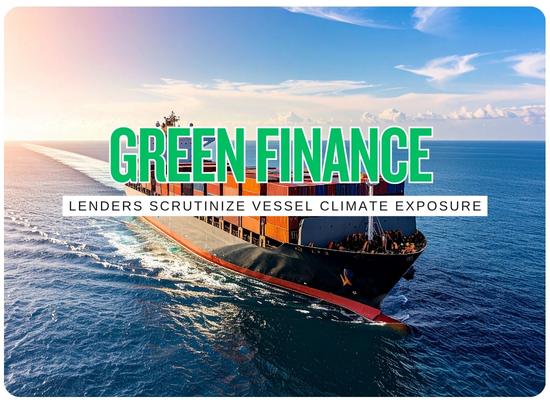
Shipping decarbonization has moved into a new phase where the pressure is no longer limited to cleaner fuels, efficient hulls, or emissions reporting. The latest UCL-backed ship-level transition risk framework for financiers puts the vessel itself at the center of the credit conversation, asking whether an individual ship can remain economically useful as fuel rules tighten, carbon costs expand, cargo demand shifts, and lenders reassess refinancing risk. That lands at the same time as FuelEU Maritime is already reshaping Europe-linked voyages, the IMO Net-Zero Framework remains the biggest global policy question for 2026, shipowners continue placing dual-fuel and alternative-fuel-ready orders, and financiers are becoming more focused on asset resilience rather than broad portfolio promises.
Ship Universe Decarbonization Watch
Operator Impact Snapshot
Decarbonization is now affecting vessel finance, chartering, newbuild design, fuel strategy, and residual-value assumptions.
The newest signal is the shift from broad fleet alignment to ship-by-ship transition risk. A lender, insurer, charterer, or buyer increasingly needs to know whether one specific vessel can survive the next layer of regulation, carbon cost, fuel availability, and cargo-market change.
Ship-level finance scrutiny
UCL’s framework points lenders toward vessel-specific transition exposure, including emissions compliance, residual value, refinancing risk, and demand-side cargo risk.
EU compliance pressure
FuelEU Maritime is already active for Europe-linked voyages, making fuel intensity, pooling, banking, verification, and monitoring quality more commercially important.
IMO policy timing
The IMO Net-Zero Framework remains the largest global rule track, but delayed adoption keeps owners planning under uncertainty while regional systems move ahead.
Dual-fuel order logic
Newbuilding decisions are leaning toward optionality, with owners trying to preserve future fuel choices without locking into a supply chain that may not scale fast enough.
Supplier opportunity shift
Demand is moving toward emissions data systems, shaft power meters, wind assist, shore power, hull performance, fuel-ready equipment, and verified reporting support.
Commercial Reading
The decarbonization conversation has moved from ambition to credit quality. The vessel that can prove efficiency, document fuel performance, manage carbon exposure, and remain attractive to charterers may receive better financing and longer commercial relevance.
- Owners: prepare asset-level emissions files before refinancing, sale, retrofit, or long-term charter discussions.
- Charterers: expect more negotiation around carbon cost allocation, FuelEU pooling, data accuracy, and green-premium cargo.
- Financiers: move beyond portfolio averages and test each ship against regulation, fuel availability, cargo demand, and residual value.
- Shipyards: embed metering, fuel flexibility, electrical capacity, shore-power readiness, and retrofit access into newbuild design.
- Suppliers: sell measurable compliance value, not only equipment features. Owners need numbers that survive lender and verifier review.
Transition Risk Dashboard
Finance, Fuel, Rules, and Vessel Value
The newest decarbonization pressure is moving through balance sheets as much as engine rooms.
Current Market Setup
The ship decarbonization market is being pulled in two directions. On one side, global policy remains unsettled because the IMO Net-Zero Framework has not completed adoption. On the other side, Europe-linked compliance is already active, banks are getting sharper on asset-level risk, and cargo buyers are using green transport commitments to push fuel adoption forward.
The UCL and Strider Carbon work adds a useful financial lens because it treats transition risk as a ship-level credit question. A vessel can appear financeable today, but still become harder to refinance later if its emissions profile, cargo exposure, retrofit economics, or future fuel pathway weaken.
Ships above this size calling at EU ports are inside the core FuelEU Maritime framework.
Initial GHG-intensity reduction requirement compared with the regulation’s baseline.
Ships above 5,000 GT account for the large majority of international shipping emissions.
Typical ship loan terms are much shorter than vessel operating lives, creating refinancing exposure.
Decarbonization Update Table
| Update Area | Current Signal | Commercial Effect | Operator Move | Pressure Meter |
|---|---|---|---|---|
| UCL Finance Framework Ship-level transition risk | Financiers are being pushed to evaluate individual vessels against emissions rules, asset value, cargo demand, and refinancing exposure. | Ships with weak decarbonization paths may face tougher credit terms, lower residual-value confidence, or refinancing friction. | Build a vessel transition file with emissions history, retrofit options, CII trend, FuelEU exposure, cargo profile, and capex plan. |
High
|
| IMO Net-Zero Framework Global rule track | The framework combines a GHG fuel-intensity standard with a pricing mechanism, but final adoption remains delayed. | Owners face planning uncertainty, but the direction still points toward verified fuel intensity and carbon-cost exposure. | Prepare systems for GFI-style reporting, fuel certification, emissions-cost modeling, and charter-party carbon allocation. |
Watch
|
| FuelEU Maritime Europe-linked voyages | The regulation is active for qualifying ships calling at EU ports and gradually tightens fuel GHG-intensity limits. | Fuel choice, voyage design, pooling strategy, banking, penalties, and verified data now affect Europe-linked economics. | Recheck monitoring plans, verifier workflow, pooling options, OPS exposure, methane slip data, and commercial cost pass-through. |
High
|
| Poseidon Principles Bank portfolio alignment | Finance portfolios are moving closer to IMO climate-alignment pathways, putting more attention on borrower data quality. | Stronger emissions data and credible retrofit planning can support lender confidence and future transaction readiness. | Treat emissions reporting as a financing asset. Keep clean data, assumptions, verification records, and improvement plans ready. |
Medium High
|
| Dual-Fuel Investment Newbuild optionality | Owners continue investing in dual-fuel and fuel-ready ships even while global carbon pricing remains unsettled. | Optionality can protect asset value, but only if green fuel supply, engine performance, safety rules, and charter premiums develop. | Model the vessel under conventional fuel, biofuel blend, methanol, ammonia-ready, LNG, and efficiency-retrofit cases. |
Watch
|
| Green Cargo Demand Buyer-led fuel adoption | Cargo owners and green freight alliances are helping create early demand for e-fuels and low-emission transport. | Owners with credible fuel access and verified emissions reductions may capture premium cargo or longer customer commitments. | Link fuel procurement, proof of sustainability, emissions accounting, and customer reporting into one commercial package. |
Medium
|
| Efficiency First Near-term reductions | Hull cleaning, propeller upgrades, wind assist, weather routing, shaft power monitoring, and speed management remain immediate levers. | Efficiency projects can improve CII, FuelEU exposure, bunker cost, lender confidence, and charterer appeal before new fuels scale. | Rank each vessel by quick-payback efficiency options before committing to larger fuel-system investments. |
Firm
|
Fleet Action Sequence
A useful decarbonization program now works from the vessel outward: data first, finance second, fuel pathway third, and commercial proof throughout.
Ship Transition Risk Calculator
Estimate finance and compliance exposure using emissions intensity, loan timing, EU exposure, retrofit readiness, and fuel flexibility.
This tool is designed as a practical ship-level screen for owners, financiers, brokers, insurers, and charterers. It does not replace a formal assessment, but it helps identify vessels that may need deeper review before refinancing, sale, retrofit, or long-term chartering.
Transition Risk Score
58 / 100
Higher means greater exposure to finance, compliance, and asset-value pressure.
Finance Pressure Window
Near Term
Signal based on loan maturity timing and vessel age.
Retrofit Gap
45%
Estimated weakness in the vessel’s ability to adapt through upgrades or fuel pathway changes.
Data Readiness
60%
Estimated strength of the file needed for lenders, charterers, verifiers, and insurers.
Commercial Signal
The vessel has meaningful transition exposure. The next step is to improve data quality, model FuelEU and carbon-cost impact, and build a credible retrofit or fuel pathway before refinancing.
We welcome your feedback, suggestions, corrections, and ideas for enhancements. Please click here to get in touch.