Offshore Wind Pipeline Splits as Korea Awards Projects and Developers Recheck Risk
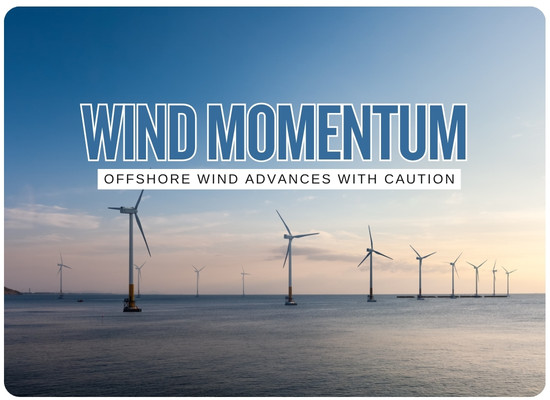
The offshore wind market is showing two very different signals at the same time. South Korea has awarded nearly 1.8GW of offshore wind capacity in its first-half 2026 fixed-price contract auction, selecting five projects from a larger pool of bids and keeping one of Asia’s most important offshore wind programs moving forward. At the same time, developers and suppliers are still dealing with a tougher global cost environment, project delays, vessel constraints, financing scrutiny, and regional policy uncertainty. Equinor’s decision to exit offshore wind development in Japan adds a cautionary note to the Asia-Pacific outlook, while Victoria is preparing its first 2GW auction, the UK supply chain is showing heavy investment interest, and European projects continue to move through construction milestones.
Offshore Wind Is Advancing, But Execution Risk Is Still High
South Korea’s new awards add real project momentum, while developer exits, vessel pressure, grid timing, and supply-chain cost discipline keep the sector selective.
South Korea Project Momentum
Five offshore wind projects totaling 1,786MW were selected in South Korea’s latest fixed-price auction, giving the regional pipeline a major near-term boost.
Cost and Developer Discipline
Equinor’s Japan exit shows that global developers are still pruning markets that do not offer enough visibility on returns, route to market, and supply-chain certainty.
Vessel and Port Bottlenecks
WTIVs, cable layers, foundation vessels, heavy-lift assets, marshalling ports, and O&M vessels remain key constraints as turbines and foundations get larger.
New Auction Pipeline
Victoria’s planned first 2GW offshore wind auction and fresh supply-chain funding interest in the UK show that governments are still trying to convert targets into bankable projects.
Marine Supplier Opportunity
Projects that move forward create demand for installation vessels, CTVs, SOVs, subsea cables, ports, foundations, survey work, grid systems, and long-term O&M support.
Operator Readout
The current offshore wind market is moving, but it is not moving evenly. South Korea’s 1.8GW award is a strong signal for project developers, vessel owners, yards, and marine suppliers with Asia-Pacific exposure. At the same time, developer exits and cost pressure show that awards alone are not enough. Operators should track which projects have offtake certainty, grid access, port capacity, vessel availability, foundation contracts, and financing depth before treating any pipeline as firm work.
Offshore Wind Market Update
South Korea’s auction result adds project momentum while cost, vessel, and developer discipline keep the global outlook selective.
Korea Adds Nearly 1.8GW to the Active Pipeline
South Korea has selected five offshore wind projects totaling 1,786MW in its first-half 2026 fixed-price contract auction. The auction attracted bids for 3,656MW across nine projects, with four fixed-bottom schemes and one floating project ultimately selected. That level of bidding interest gives Korea one of the more active near-term offshore wind pipelines in Asia, especially at a time when several other markets are trying to rebuild developer confidence after delays, cost pressure, and auction uncertainty.
Total offshore wind capacity selected in South Korea’s latest fixed-price contract auction.
Total bid volume submitted across nine projects, showing competitive interest above the awarded capacity.
Victoria’s planned first offshore wind auction scale, adding another Asia-Pacific project pipeline signal.
Developer Exits Keep the Risk Picture Honest
The positive auction signal from South Korea sits beside a more cautious developer story. Equinor is ending offshore wind activities in Japan and closing its Tokyo office, after failing to secure leases and after scaling back offshore wind development in several other markets. The move reflects a broader reassessment among large developers that are now prioritizing returns, grid certainty, political support, and project execution quality over simply collecting acreage.
Marine market signal: South Korea’s award is positive for offshore wind demand, but the bankable work will flow toward projects with firm contracts, realistic construction windows, confirmed ports, and access to installation assets. The market is rewarding execution quality more than headline capacity.
Ports and Vessel Owners Remain Central to Project Timing
Offshore wind has become a maritime infrastructure story as much as a power-generation story. Larger turbines require stronger installation vessels, bigger marshalling yards, deeper quays, heavier lifting capacity, stronger cable logistics, and more specialized O&M support. Recent vessel-capacity analysis suggests the global installation vessel fleet can support a much larger offshore wind buildout by 2030 only if additional vessels are ordered and deployed, with newbuild needs particularly important outside China.
Europe Is Still Building While Supply Chain Pressure Persists
Europe remains the most mature offshore wind region, but the current update is mixed there as well. Project milestones continue to appear, including cable installation progress, turbine installation starts, and large power purchase agreements tied to major wind farms. At the same time, suppliers are still warning that project delays and uncertain order timing can pressure manufacturing capacity. That means the European market remains active, but it is still sensitive to auction design, grid connection timing, inflation, turbine economics, and supply-chain visibility.
The UK supply-chain picture shows another important signal. A recent industrial growth funding round attracted dozens of applications and pointed to a £2.2bn offshore wind supply-chain pipeline. That does not mean all projects will be funded or built immediately, but it does show that ports, manufacturers, service companies, and technology providers are positioning for the next wave of projects.
Commercial Signals for Maritime Stakeholders
- ①Vessel owners: Track awarded projects by construction date, not only headline megawatts. Vessel demand becomes real when financing, permits, ports, and contracts line up.
- ②Ports: Marshalling space, load-bearing quay strength, storage area, grid connection, and heavy-lift access are now competitive advantages.
- ③Suppliers: Korea’s project awards can support demand for foundations, cables, substations, surveys, installation services, digital monitoring, and O&M logistics.
- ④Developers: Cost control, financing depth, supply-chain certainty, and public acceptance now matter as much as auction success.
- ⑤Investors: Offshore wind remains investable, but the strongest projects are likely to be those with clear offtake, grid readiness, and realistic construction scheduling.
Current Offshore Wind Watch Table
| Market Signal | Current Update | Maritime Meaning | Stakeholders Affected | Watch Level |
|---|---|---|---|---|
| South Korea auction | Five projects selected totaling 1,786MW | New award momentum can support survey, port, cable, foundation, and vessel planning. | Developers, vessel owners, ports, cable suppliers, fabricators | Positive |
| Korean competition | 3,656MW of bids across nine projects | High bid volume shows strong interest, but not all submitted capacity converts into awarded work. | Investors, suppliers, lenders, project developers | Medium |
| Equinor Japan exit | Developer withdraws from Japanese offshore wind activity | Cost pressure and auction uncertainty are still causing developers to narrow their market focus. | Developers, Japanese suppliers, ports, investors | High |
| Victoria auction | First 2GW auction expected to open in August | Australia may create new project demand, but supply-chain confidence and auction terms will matter. | Australian ports, offshore vessel owners, developers, grid planners | Watch |
| UK supply chain | £2.2bn pipeline signaled through industrial growth funding interest | Ports, factories, and specialist suppliers are positioning for the next construction cycle. | UK suppliers, ports, fabrication yards, investors | Positive |
| Installation vessels | More newbuilds needed outside China for a larger global buildout | Vessel availability may influence project timing, day rates, and regional construction capacity. | WTIV owners, yards, lenders, developers, marine contractors | High |
Risk note: Offshore wind capacity awards are not the same as immediate marine work. Actual vessel and supplier demand depends on final investment decision timing, permits, grid connection, turbine selection, foundation design, port readiness, weather windows, financing, insurance, and local-content rules.
Offshore Wind Marine Demand Estimator
Estimate turbine count, vessel-day demand, and port pressure for an offshore wind project or auction award using simple development assumptions.
Approximate turbine count based on project capacity and average turbine rating.
Estimated main installation vessel days before schedule-risk contingency.
Estimated installation vessel days after the schedule-risk factor.
Estimated inter-array cable requirement using the selected km-per-turbine assumption.
The project scale requires early vessel, port, and cable logistics coordination.
Secure marine planThis tool is for editorial and early-stage planning sensitivity only. It does not include actual metocean limits, precise foundation type, cable route design, jack-up cycle time, port storage limits, export cable scope, substation work, mobilization, demobilization, weather downtime, vessel sharing, local-content rules, or project-specific construction contracts.
We welcome your feedback, suggestions, corrections, and ideas for enhancements. Please click here to get in touch.