Container Spot Rates Climb Again as Transpacific Pressure Drives WCI Higher
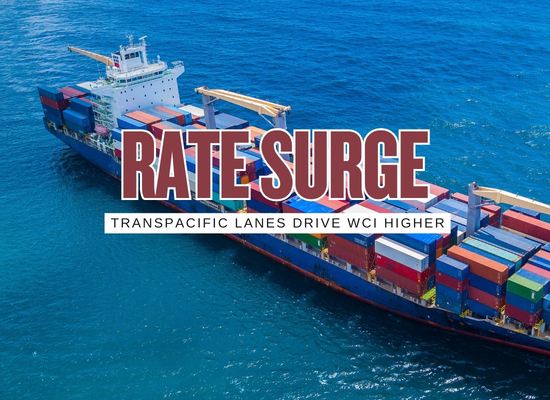
Drewry’s latest World Container Index update shows container spot rates still moving higher, with the composite WCI rising 5% to $4,166 per 40ft container in the June 25 assessment. The main driver is the Transpacific trade, where Shanghai to Los Angeles jumped 12% to $5,750 per 40ft container and Shanghai to New York rose 6% to $7,149. Asia-Europe rates were steadier but still elevated, with Shanghai to Rotterdam up 1% to $4,392 and Shanghai to Genoa unchanged at $5,759. Drewry’s readout points to a market still shaped by strong frontloaded cargo demand, tight vessel space, limited blank sailings, higher July rate actions, and bunker-related cost pressure. For shippers, carriers, forwarders, ports, and equipment planners, the latest WCI report shows a container market that is no longer rising evenly across every lane, but remains firm enough to keep freight budgets, contract exposure, and short-term booking strategy under pressure.
WCI Pushes Higher as Transpacific Rates Lead the Move
The latest Drewry update shows container spot pricing still firm, with the biggest weekly pressure landing on Asia to North America routes.
Transpacific Cost Pressure
Shanghai to Los Angeles rose 12% to $5,750 per 40ft container, while Shanghai to New York gained 6% to $7,149. This is the strongest lane signal in today’s WCI report.
Asia-Europe Firm But Stable
Shanghai to Rotterdam edged up 1% to $4,392 and Shanghai to Genoa held at $5,759, showing less weekly movement than the Transpacific but still elevated rate levels.
Space Constraint Signal
Limited blank sailings and tight capacity are supporting carrier pricing, especially as importers continue frontloading cargo ahead of possible tariff and bunker-related cost changes.
July Surcharge Window
Carrier rate actions, higher FAK levels, and peak season surcharges are adding another near-term cost layer for shippers planning July bookings.
Operator Readout
The latest WCI report shows a container market still moving upward, but not evenly across every lane. Transpacific lanes are carrying the clearest price momentum, while Asia-Europe is steadier but still expensive. For operators and shippers, the key planning issue is that freight quotes can shift quickly when capacity is tight, cargo is being pulled forward, and carriers are preparing higher July pricing actions. Procurement teams should separate spot exposure by lane, avoid relying on a blended index number, and refresh shipment budgets before confirming bookings.
Drewry WCI Update Shows Spot Rates Still Climbing
The composite index rose 5% to $4,166 per 40ft container, led by stronger Transpacific pricing.
Transpacific Lanes Are Driving the Latest Move
Drewry’s June 25 World Container Index update shows a container spot market that is still gaining altitude. The composite WCI rose 5% to $4,166 per 40ft container, with the most visible pressure on Asia to North America routes. Shanghai to Los Angeles increased 12% to $5,750 per 40ft container, while Shanghai to New York rose 6% to $7,149. The move keeps Transpacific freight pricing at the center of shipper budget discussions, especially for retailers, manufacturers, forwarders, and procurement teams that are trying to place cargo before additional July pricing actions take hold.
Latest Drewry World Container Index composite reading per 40ft container, up 5% week over week.
Shanghai to Los Angeles spot rate per 40ft container after a 12% weekly increase.
Shanghai to New York spot rate per 40ft container after a 6% weekly increase.
Asia-Europe Is Steadier But Still Expensive
Asia-Europe did not move with the same force as the Transpacific this week, but the price level remains elevated. Shanghai to Rotterdam rose 1% to $4,392 per 40ft container, while Shanghai to Genoa remained unchanged at $5,759. Drewry noted that only three blank sailings have been announced on the Asia to Europe trade route for the next week, pointing to constrained capacity despite a calmer weekly move in headline rates.
Booking desk signal: The WCI composite number is useful, but lane-level exposure matters more this week. Transpacific rates are rising faster, while Asia-Europe rates are holding high enough to keep July freight budgets under pressure.
Capacity Looks Tight Even With Low Cancellation Levels
The current market is unusual because higher spot rates are appearing alongside relatively low blank-sailing counts. Drewry’s broader capacity tracker shows a limited cancellation rate across major East-West trades, with most scheduled services still expected to operate. Normally, fewer blank sailings would suggest better space availability. In this case, strong frontloaded cargo, hub congestion, elevated bunker costs, and carrier pricing discipline are keeping the market tight enough for rate increases to continue.
The U.S.-Iran ceasefire has reduced some disruption anxiety around Strait of Hormuz transits, but Drewry still described conditions as fragile. At the same time, congestion at key Asian and European hubs is limiting vessel availability, while sustained cargo demand is giving carriers enough leverage to push surcharges and higher FAK levels. That creates a container market that feels more stable operationally than it did during the sharpest disruption headlines, but still expensive commercially.
Commercial Signals for Shippers and Carriers
- ①Transpacific importers: Budget exposure is rising quickly, especially for U.S. West Coast and U.S. East Coast cargo loaded from Shanghai.
- ②Asia-Europe shippers: Weekly movement is calmer, but elevated base rates and July surcharge actions keep landed-cost pressure in place.
- ③Forwarders: Quoting windows are shorter because spot levels can move before customers approve bookings.
- ④Carriers: Strong demand and tight space are supporting higher FAK rates, PSS activity, and short-term pricing power.
- ⑤Port and terminal planners: Frontloaded cargo and hub congestion can keep equipment, yard, and vessel schedule planning under pressure.
Drewry WCI Route Watch Table
| Route or Measure | Latest Signal | Weekly Move | Commercial Meaning | Watch Level |
|---|---|---|---|---|
| Composite WCI | $4,166 per 40ft container | Up 5% | Global East-West spot pricing is still firm and moving higher. | High |
| Shanghai to Los Angeles | $5,750 per 40ft container | Up 12% | Largest route increase in the report, adding pressure to U.S. West Coast import costs. | High |
| Shanghai to New York | $7,149 per 40ft container | Up 6% | East Coast import cargo remains expensive, with limited room for stale quotes. | High |
| Shanghai to Rotterdam | $4,392 per 40ft container | Up 1% | Asia-North Europe pricing is steadier this week, but still elevated. | Medium |
| Shanghai to Genoa | $5,759 per 40ft container | Unchanged | Mediterranean pricing is not rising this week, but the rate level remains high. | Medium |
| July pricing actions | Higher FAK and PSS activity | Forward pressure | Shippers may face higher all-in costs even on lanes that look stable week to week. | Watch |
| Blank sailings | Limited near-term cancellations | Capacity still tight | Low cancellation counts are not enough to loosen the market while demand remains strong. | Watch |
Risk note: The WCI is a spot-rate benchmark, not a full landed-cost model. Actual shipper exposure depends on contract coverage, premium service fees, FAK applicability, PSS, bunker adjustment factors, destination charges, chassis and drayage costs, equipment availability, and booking urgency.
WCI Freight Exposure Calculator
Estimate the current spot freight bill, weekly rate-change exposure, and route pressure using today’s Drewry WCI lane readings.
Estimated freight bill using the selected WCI route and shipment size before extra surcharge input.
Estimated difference between today’s route rate and your internal budget rate.
Estimated all-in exposure after applying the extra surcharge assumption.
Estimated dollar impact of the route’s weekly percentage move on the selected shipment size.
The selected WCI lane is meaningfully above the budget rate.
Refresh booking quoteThis tool is for quick editorial and commercial sensitivity checks. It does not include contract discounts, destination charges, chassis, drayage, customs, insurance, detention, demurrage, premium-service fees, equipment shortages, minimum quantity commitments, or carrier-specific contract terms.
We welcome your feedback, suggestions, corrections, and ideas for enhancements. Please click here to get in touch.