Port Call Cost Leaks that Owners Should Audit More Closely in 2026 and 2027
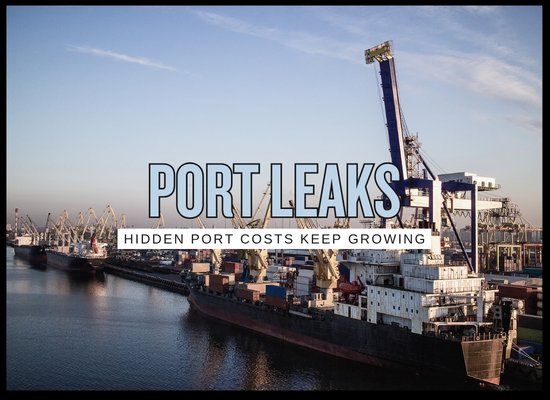
Port call inflation in 2026 is not just a story about one big fee line getting larger. It is a story about more cost layers attaching themselves to ordinary calls, then hiding inside disbursement accounts, agency handling, environmental compliance, overtime, launch logistics, and delay-linked service items that are easy to wave through when the vessel is busy. That matters more this year because EU ETS for shipping has reached 100% surrender for covered emissions in 2026 and now includes methane and nitrous oxide, while the MRV framework continues to count emissions within ports of call, including at berth and while moving within port. At the same time, California’s At Berth regime has expanded its practical impact, and port-cost management platforms are increasingly highlighting invoice benchmarking, outlier detection, sanctions screening, and bank verification as part of normal port-call financial control rather than optional back-office work.
Check out DA-Desk by Marcura if you want to take this kind of port-call cost review beyond a simple manual invoice check. The tool helps owners and operators gain better control, visibility, and validation around disbursement accounts and port expenses, which is exactly where many of the 2026 cost leaks can hide.
| # | Expense line | Why it deserves closer audit in 2026 | Common drift pattern | Best evidence to request | What owners often miss | Commercial consequence | Audit priority |
|---|---|---|---|---|---|---|---|
| 1️⃣ |
Agency fees and DA handling extras
The administrative layer around the port call is becoming more important, not less
|
Port-call finance is now wrapped around sanctions screening, bank verification, invoice support, and books-and-records expectations, which can create more scope for valid cost but also more scope for weakly challenged add-ons. | Extra documentation charges, communications fees, layered local service markups, and small pass-through items that become material in aggregate. | Full DA backup, local tariff references where applicable, vendor invoices, and evidence of whether the service was compulsory or discretionary. | Owners often focus on the biggest operational charges first and allow smaller admin lines to pass because they look routine. | Leakage compounds across frequent callers and can be especially painful when weak DA controls meet fragmented trade patterns. | High |
| 2️⃣ |
Pilotage including waiting, cancellation, and extra-movement charges
The tariff is only the starting point
|
Pilotage is often quoted as if it were a fixed harbor service, but actual exposure moves with waiting time, aborted movements, berth changes, tidal windows, and local overtime structure. | Quoted pilotage looks ordinary, while waiting and second-move charges expand after schedule changes or terminal congestion. | Pilot order logs, movement timeline, cancellation reason, and tariff basis for add-on items. | Owners sometimes audit the core pilot line but not the sequence of movements that multiplied it. | One disrupted movement can make a supposedly standard call much more expensive than the pro forma suggested. | Core |
| 3️⃣ |
Towage and tug standby
Tug economics can change fast when port conditions change
|
Towage is highly sensitive to weather, draft, berth, terminal preference, waiting time, and whether standby or cancelled tug orders are recoverable locally. | More tugs than expected, longer standby, or local minimum-charge logic that turns a short service disruption into a notable bill increase. | Tug order sequence, vessel movement record, local towage tariff, and explanation for tug number or standby duration. | Owners often challenge the hourly total but not the operational reason that created it. | Towage drift can materially raise a call cost in ports with congestion, weather exposure, or frequent berth changes. | High |
| 4️⃣ |
Mooring, line handling, and launch boat support
Small support services often become repetitive cost leakage
|
These items can look too operationally minor to challenge, yet they are often repeated, locally variable, and sensitive to shift work, weather, and call complexity. | Extra launch use, line-handler overtime, duplicate attendance, or support craft billed for longer than the real operational window. | Boat logs, attendance timing, crew transfer justification, and terminal instructions showing whether support was mandatory. | Because these lines are not huge individually, they often escape the strongest review. | Leakage becomes meaningful on high-frequency routes or in ports where boat logistics are routinely used. | Money |
| 5️⃣ |
Waste, sludge, and slops removal
Environmental service charges are getting harder to treat as simple port housekeeping
|
Reception-related charging is still highly local, and the commercial distinction between ordinary waste handling and more specialized environmental services can materially change cost. | Waste lines move from ordinary collection into premium handling, emergency scheduling, or vendor-specific surcharges with limited challenge at call closeout. | Waste receipts, quantity basis, vendor tariff logic, and whether the timing or disposal route made the charge genuinely exceptional. | Owners may accept environmental service items quickly because the reputational downside of arguing them feels larger than for a tug or pilot item. | These charges can widen sharply in certain ports and become a persistent OPEX leak if not benchmarked across calls. | Core |
| 6️⃣ |
Freshwater, stores delivery, and small supply runs
The service cost around the product can exceed the product itself
|
Owners often focus on quantity pricing while the real variance sits in barge attendance, boat transfer, weekend work, security handling, and port-side access restrictions. | Low-value supply orders accumulate high logistics charges because delivery windows and local rules were not scrutinized tightly enough. | Delivery timing, quantity confirmation, transfer method, and evidence that the chosen supply route was actually necessary. | Small supply jobs can have disproportionately large logistics wrappers. | These lines are especially worth auditing on ports where launch or terminal restrictions drive service complexity. | Money |
| 7️⃣ |
Customs, immigration, health, and overtime attendance
Official fees are one thing. Timing-generated extras are another
|
Government attendance can be straightforward until timing pushes a call into night work, holidays, repeat boarding, or extra documentation support. | Official fee base stays stable, but attendance timing and extra boarding logic push the total much higher. | Boarding timeline, local official schedule, and records showing why extra attendance became necessary. | Owners sometimes accept these charges as untouchable when the driver was actually poor timing or duplicate processing. | Weak review here can normalize avoidable premium attendance cost on repeat calls. | Core |
| 8️⃣ |
At-berth emissions and carbon-linked cost allocation
Environmental cost is increasingly attaching itself to ordinary port time
|
EU shipping ETS now reaches 100% surrender in 2026 for covered emissions and includes methane and nitrous oxide, while MRV continues to count emissions within ports of call, including at berth and intra-port movement. In California, the At Berth regime also continues to shape real port-call compliance cost for affected vessel categories. | Carbon cost is either hidden inside freight or fuel logic or passed through port-side and call-side economics without enough transparency for owners to check it properly. | At-berth time record, emissions basis, fuel basis, call allocation method, and any local shore-power or approved-control-strategy cost support. | Owners often still think of carbon as a voyage issue when parts of the cost logic are increasingly port-call sensitive. | Weak allocation review can distort call economics and hide what a berth or port is really costing in 2026. | High |
| 9️⃣ |
Security screening, sanctions checks, and bank-verification friction
The cost of safe payment execution is becoming more visible
|
Port-call payments now face more scrutiny around agent legitimacy, sanctions exposure, beneficiary verification, and frozen-payment risk, which can create both real protective cost and weakly priced processing layers. | Owners discover cost late because the payment-control work sits in the financial workflow rather than on the vessel movement side. | Screening support, bank-verification record, compliance process description, and proof that the charge reflects real work rather than generic padding. | What looks like small financial-process cost can actually be the difference between secure execution and payment disruption, but it still deserves discipline and benchmarking. | Too little control creates risk. Too little auditing creates chronic overpayment. | Money |
| 🔟 |
Delay-linked berth shifts, waiting fees, and terminal-side service spillover
The most expensive line may be the one created by all the others
|
Berth congestion, missed windows, slow documents, and service sequencing problems often trigger extra launch, tug, pilot, line-handler, and attendance charges all at once. | Owners challenge each small line separately and miss that the real problem is the delay chain that generated them. | Port timeline reconstruction, NOR or readiness sequence, berth instruction history, and clear split between vessel-caused and shore-caused delay. | Auditing single charges without auditing the sequence usually leaves the main value leak untouched. | Delay spillover can turn an average call into a meaningfully bad one with very little headline warning at the start. | High |
This is a directional owner tool. It does not replace tariff review, legal advice, or local agency verification. It helps readers decide which port-call cost buckets deserve the first serious audit.
We welcome your feedback, suggestions, corrections, and ideas for enhancements. Please click here to get in touch.