Hull Coatings or Air Lubrication: Which Upgrade Pays Back Faster in 2026
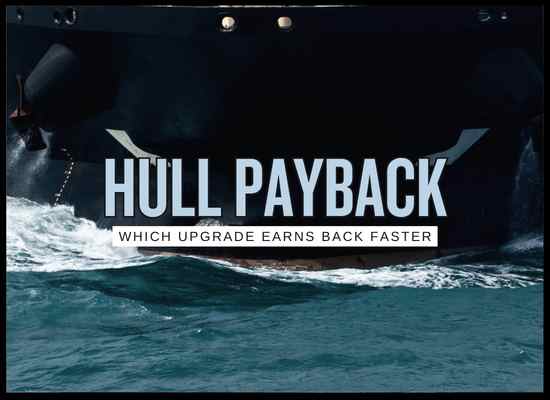
The answer is usually not the same for every ship, but one pattern keeps showing up clearly. Hull coatings tend to win the faster-payback argument more often because they usually cost less, fit more vessel types, and can be captured inside a normal docking cycle. Air lubrication can deliver larger fuel-saving upside on the right ships, but it usually asks for higher capital spend, more engineering, more yard complexity, and a more vessel-specific business case. EMSA’s 2026 study describes hull air lubrication systems as promising but still maturing in real service economics, while class and vendor material around coatings keeps pointing to broader applicability, easier deployment, and in many cases quicker return windows. That is why owners should usually start by asking not which technology sounds more advanced, but which one matches the ship’s remaining trading life, docking plan, route stability, and tolerance for retrofit complexity.
| Decision factor | Hull coatings | Air lubrication | Who usually wins | Why this affects payback | Owner takeaway |
|---|---|---|---|---|---|
|
Typical capital hurdle
How much money has to be earned back first
|
Usually lower incremental spend, especially when captured inside a routine docking cycle. | Usually much higher capital requirement with more equipment and engineering work. | Hull coatings | Lower capex usually shortens the recovery window if the savings are real enough. | Start by asking how much extra capital must be recovered, not just how attractive the technology sounds. |
|
Retrofit complexity
How hard the project is to execute properly
|
Much simpler. Owners, yards, and superintendents already work around coating cycles routinely. | Higher complexity with system integration, controls, equipment installation, and performance verification. | Hull coatings | More complexity means more execution risk and more chance that payback slips. | Faster payback normally favors the option with fewer moving parts and fewer installation surprises. |
|
Yard-time burden
How much extra pressure the docking schedule absorbs
|
Generally easier to fit inside a standard drydock event. | More likely to require a longer and more carefully managed docking period. | Hull coatings | Longer yard time raises off-hire cost and can quietly stretch the recovery case. | If the drydock window is already tight, coatings usually protect the economics better. |
|
Breadth of vessel fit
How many ship types can use it reasonably well
|
Broad fit across deep-sea vessel groups because every ship has a hull-performance issue. | More selective fit, with better logic on some ship types than on others. | Hull coatings | Broader applicability means more ships can justify the spend without special conditions. | Coatings win more often on sheer applicability. ALS wins where the ship profile is strong enough. |
|
Savings ceiling
How much upside the system can theoretically reach
|
Material and commercially attractive, but usually not the highest upside in the comparison. | Can be higher on the right ship because reducing frictional resistance through an air layer can create larger gains. | Air lubrication | Higher upside can offset higher cost, but only if the ship actually captures it in service. | Do not confuse a higher savings ceiling with faster payback. They are related, but they are not the same thing. |
|
Sensitivity to operating profile
How dependent performance is on real-world trading behavior
|
Still affected by fouling intensity, idle periods, and hull management, but less dependent on a narrow operating profile. | More sensitive to vessel design, draft, speed profile, and actual service conditions. | Hull coatings | Higher sensitivity can make savings less bankable, which delays true payback confidence. | ALS should be treated as a ship-specific investment, not a broad default across the fleet. |
|
Evidence comfort level
How mature the commercial decision feels to owners
|
Older, broader, and more familiar in day-to-day fleet practice. | Growing and increasingly credible, but still more dependent on ship-specific proof and technical confidence. | Hull coatings | Higher market comfort often speeds approval and reduces internal resistance. | ALS cases usually need tighter technical and commercial proof before investment approval. |
|
Long-interval value protection
How well the upgrade protects performance between dockings
|
Strong if coating selection matches the trade and the hull is managed properly. | Strong if the vessel is a good fit and the installed system performs reliably in service. | Depends on ship | The longer the in-service performance holds up, the stronger the business case becomes. | Coatings are often the lower-risk answer. ALS can be the higher-upside answer on very suitable ships. |
|
Who usually pays back faster
The final owner question
|
Most often the quicker-payback option because cost and deployment friction are lower. | Can beat coatings on a subset of ships, but usually only when the ship is a strong ALS candidate and the owner accepts the heavier retrofit path. | Hull coatings more often | Faster payback usually comes from the blend of lower cost, easier deployment, and dependable savings. | For many fleets the practical sequence is coatings first, then evaluate ALS where vessel fit is strongest. |
|
Best decision role
How owners should use the two options in practice
|
Broad fleet screening measure and common first-line efficiency upgrade. | Focused technical-commercial project for selected ships. | Different roles | Trying to judge both technologies by the same template often leads to weak decisions. | Think of coatings as the broader first move and ALS as the narrower higher-commitment move. |
A useful follow-up tool for this comparison should not pretend there is one universal winner. The real commercial question is whether a given ship has the cost profile, docking plan, operating pattern, and remaining trading life to recover the upgrade before the window closes. That is especially important here because coatings usually benefit from lower deployment friction and broader fleet fit, while air lubrication can require more vessel-specific conviction before the savings are bankable in service. EMSA’s 2026 ALS study explicitly describes the technology as interesting but still maturing in real service economics, while the coatings side of the market remains easier to integrate into standard docking cycles and broader fleet programs.
This tool is directional. It is meant to help compare recovery speed and commercial fit. It does not replace a ship-specific retrofit study, performance baseline, or yard plan.
We welcome your feedback, suggestions, corrections, and ideas for enhancements. Please click here to get in touch.